
Transition Networks S3290-24-NA vs Transition Networks S4224: Specification Comparison
Both the Transition Networks S3290-24-NA and S4224 are 24-port, unmanaged, industrial-temperature-rated Ethernet switches from the same manufacturer — a product class installers commonly cross-shop for surveillance backhaul, access control, and industrial IoT deployments where plug-and-play operation and environmental hardening matter. The key divergence is throughput tier and uplink media: the S3290-24-NA operates at 10 Gigabit speeds with flexible SFP fiber slots, while the S4224 operates at Gigabit speeds with multi-mode fiber connectivity and adds DIN rail mounting for panel integration.
In This Guide
- Which switch delivers more bandwidth and how are the ports configured?
- How far can each switch reach over fiber, and what fiber type does each support?
- How does each switch mount, and what are the operating environment and management capabilities?
- Which should you choose: the S3290-24-NA or the S4224?
- Side-by-Side Specs
- FAQ
Which switch delivers more bandwidth and how are the ports configured?
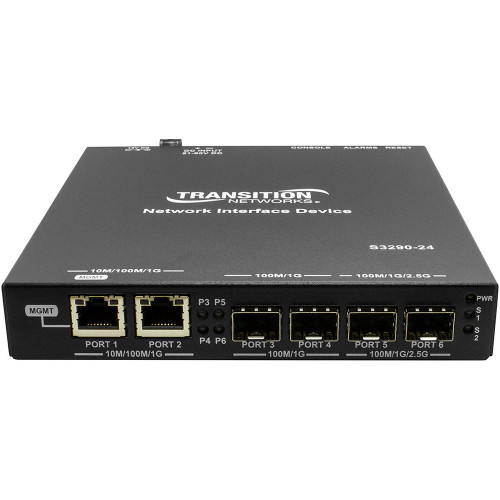
The S3290-24-NA provides 24 ports rated at 10G each, yielding a theoretical aggregate of 240 Gbps across its copper RJ45 ports. In addition, it includes 4 SFP module slots, giving installers fiber uplink flexibility beyond the 24 copper ports. Package contents confirm 2 twisted-pair ports and 4 SFP module slots are included, with the port configuration described as 24x 10G plus 4x SFP slots.
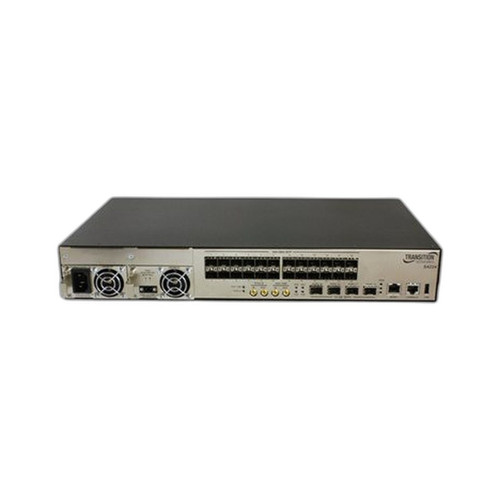
The S4224 provides 24 ports rated at Gigabit (1G) speeds. No additional uplink or expansion slots are specified in the provided data. At Gigabit throughput, the aggregate bandwidth is substantially lower than the S3290-24-NA. Buyers running high-bitrate 4K or multi-sensor cameras, or aggregating multiple downstream switches, will encounter the 1G ceiling sooner on the S4224.
How far can each switch reach over fiber, and what fiber type does each support?
The S3290-24-NA lists SFP module slots with fiber type noted as SFP (the transceiver form factor), and the datasheet tagline references reach to 10 km on single-mode fiber. However, the structured specs do not explicitly state a maximum fiber range value — the 10 km figure appears only in marketing bullet copy, not a dedicated spec field. Fiber type is listed as SFP (slot-based), meaning the actual reach depends on which SFP transceivers are installed; single-mode and multi-mode modules are both possible.
The S4224 explicitly specifies multi-mode fiber with a maximum range of 1,000 m (1 km). This is a fixed, spec-confirmed figure. Multi-mode fiber is typically used for intra-building or campus runs where the shorter reach is acceptable and the lower cost of multi-mode cable and transceivers is advantageous. The S4224 does not list SFP slots in its structured specs, suggesting the fiber port configuration is fixed rather than field-selectable.
How does each switch mount, and what are the operating environment and management capabilities?
Both switches share an unmanaged operating model — no IP address, VLAN configuration, or firmware management is required or available. Both are rated for industrial operating temperatures, appropriate for environments outside standard 0–40 °C commercial ranges, though neither spec set provides the exact temperature range in degrees.
The S4224 explicitly supports DIN rail mounting, making it suitable for integration into industrial control panels, electrical enclosures, and telecom cabinets — a common requirement in access control and building automation installations. The S3290-24-NA does not list a mount type in its structured specs; no DIN rail or rack-mount designation is provided in the available data. Both units carry a lifetime warranty per their respective spec sets.
Which should you choose: the S3290-24-NA or the S4224?
Our take: The S3290-24-NA is the stronger choice when backbone throughput and fiber flexibility are the primary requirements. Its 10G port speed versus the S4224's 1G represents a 10× bandwidth advantage per port — critical for aggregating multiple high-bitrate cameras or acting as a core switch feeding downstream closet switches. The S3290-24-NA also adds 4 field-selectable SFP slots, allowing installers to choose single-mode or multi-mode transceivers per run, whereas the S4224 locks to multi-mode fiber at a spec-confirmed 1,000 m maximum. Conversely, the S4224's explicit DIN rail mount makes it the correct choice for panel-integrated deployments — a mounting option not listed for the S3290-24-NA. For edge or closet locations requiring panel mounting, Gigabit speeds are sufficient, and multi-mode fiber runs under 1 km, the S4224 is the purpose-fit option. For core aggregation or high-density 4K/multi-sensor camera backhaul, the S3290-24-NA is the appropriate selection.
Side-by-Side Comparison
Spec-for-spec, from manufacturer data.
| Specification | Transition Networks S3290-24-NA | Transition Networks S4224 |
|---|---|---|
| SKU | S3290-24-NA | S4224 |
| Product Type | Switch | Switch |
| Port Count | 24 | 24 |
| Port Speed | 10G | Gigabit (1G) |
| SFP Expansion Slots | 4 | — |
| Fiber Type | SFP (slot-based; transceiver-dependent) | Multi-mode |
| Max Fiber Range (spec-confirmed) | — | 1,000 m |
| Copper Interface | RJ45 (2x twisted pair noted in package contents) | — |
| Managed / Unmanaged | Unmanaged | Unmanaged |
| Mount Type | — | DIN Rail |
| Operating Temperature | Industrial | Industrial |
| Warranty | Lifetime | Lifetime |
| Included in Package | Switch unit; 2x twisted pair ports; 4x SFP module slots | Not specified in provided data |
| Datasheet Available | Yes (/content/product-datasheets/S3290-24-NA.pdf) | Yes (/content/product-datasheets/S4224.pdf) |
Frequently Asked Questions
Which should you choose: the S3290-24-NA or the S4224?
The S3290-24-NA is the stronger choice when backbone throughput and fiber flexibility are the primary requirements. Its 10G port speed versus the S4224's 1G represents a 10× bandwidth advantage per port — critical for aggregating multiple high-bitrate cameras or acting as a core switch feeding downstream closet switches. The S3290-24-NA also adds 4 field-selectable SFP slots, allowing installers to choose single-mode or multi-mode transceivers per run, whereas the S4224 locks to multi-mode fiber at a spec-confirmed 1,000 m maximum. Conversely, the S4224's explicit DIN rail mount makes it the correct choice for panel-integrated deployments — a mounting option not listed for the S3290-24-NA. For edge or closet locations requiring panel mounting, Gigabit speeds are sufficient, and multi-mode fiber runs under 1 km, the S4224 is the purpose-fit option. For core aggregation or high-density 4K/multi-sensor camera backhaul, the S3290-24-NA is the appropriate selection.
Is the S3290-24-NA or S4224 better for larger deployments with many high-resolution cameras?
The S3290-24-NA is better suited for high-camera-count or high-bitrate deployments. Its 10G port speed provides ten times the per-port bandwidth of the S4224's Gigabit ports, reducing the risk of congestion when aggregating streams from multiple 4K or multi-sensor cameras. The S4224's 1G ports are appropriate for lower-bitrate or smaller-camera-count installations.
Can I install either switch inside an electrical panel or industrial enclosure?
The S4224 explicitly supports DIN rail mounting, which is the standard mounting method for industrial control panels and electrical enclosures. The S3290-24-NA does not list a mount type in the provided specifications, so DIN rail compatibility cannot be confirmed from the available data. Verify mounting options with the manufacturer or datasheet before specifying the S3290-24-NA for panel installations.
Which switch is better for long fiber runs between buildings?
Based on the available specs, the S3290-24-NA's SFP slots support field-selectable transceivers, including single-mode modules that can reach significantly farther than multi-mode fiber. The S4224 is spec-confirmed for multi-mode fiber up to 1,000 m. If runs exceed 1,000 m or single-mode infrastructure is already in place, the S3290-24-NA's SFP flexibility is the advantage — though the actual reach depends on which SFP transceivers are installed.
More Network Switch Comparisons
- TP-Link S5500-24GP4XF vs NETGEAR GS728TP-300NAS
- TP-Link S5500-24GP4XF vs Comnet CNGE24FX12TX12MSPOE
- TP-Link S5500-24GP4XF vs Ubiquiti USW-24
- TP-Link S5500-24GP4XF vs Ubiquiti USW-ENTERPRISEXG-24
- TP-Link S5500-24GP4XF vs TP-Link SL2428P
- TP-Link S5500-24GP4XF vs TP-Link SG3428XPP-M2
Network Switch Buying Guides
Get a Second Opinion on Your Camera Choice
Share your site layout, coverage goals, and budget. Our team will validate the camera selection, flag anything we would change, and recommend products that match the use case.