
TP-Link SX3832 vs Comnet CNGE24FX12TX12MSPOE: Specification Comparison
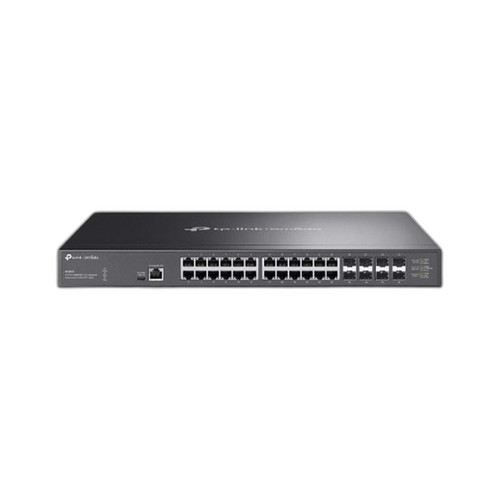
Both products are 24-port managed Ethernet switches, but they serve distinctly different deployment environments and buyer profiles. The TP-Link SX3832 is a commercial-grade L2+ switch built around 24-port native 10GBase-T copper with 8 SFP+ uplinks, designed for high-density enterprise LAN cores. The Comnet CNGE24FX12TX12MSPOE is a hardened managed switch with a mixed 12-port copper / 12-port fiber architecture, PoE+ delivery, and an extended operating temperature range targeting industrial, transit, and physical-security infrastructure. This comparison evaluates port density and throughput, environmental hardening and power delivery, and management and protocol depth.
In This Guide
- Which switch delivers more throughput and how are the ports allocated?
- How do these switches compare on environmental hardening and power delivery?
- What management capabilities and protocol depth does each switch offer?
- Which should you choose: the SX3832 or the CNGE24FX12TX12MSPOE?
- Side-by-Side Specs
- FAQ
Which switch delivers more throughput and how are the ports allocated?
The SX3832 provides 24 RJ45 ports all running at 10GBase-T (auto-negotiating 1/2.5/5/10G) plus 8 SFP+ slots that accept 1G or 10G fiber transceivers, for a total of 32 ports. Its switching capacity is specified at 640 Gbps with a forwarding rate of 240 Mpps. Maximum copper reach is 30 m at 10GBase-T.
The CNGE24FX12TX12MSPOE splits its 24 ports evenly: 12 RJ45 copper ports rated at 10/100/1000Base-TX and 12 SFP fiber ports. Switching bandwidth is specified at 54 Gbps. MAC address table size is 8K entries, VLAN capacity is 256, and jumbo frame support reaches 9.6K bytes. No forwarding rate in Mpps is provided in the available spec data.
On raw throughput the SX3832 is dramatically higher — 640 Gbps versus 54 Gbps — reflecting its all-10G copper port design. The CNGE24FX12TX12MSPOE's copper ports top out at 1G, making it unsuitable as a 10G access or aggregation layer, but its 12 fiber SFP slots natively support long-distance or single-mode fiber runs without additional transceivers.
How do these switches compare on environmental hardening and power delivery?
The SX3832 is rated for an operating temperature of -5 °C to +50 °C (23 °F to 122 °F) and draws a maximum of 106.5 W (no PoE capability is specified). It is a 1U rack- or column-mountable unit measuring 440 × 220 × 44 mm. No MTBF, shock, vibration, or EMI/EMS compliance data is provided in the available spec sheet.
The CNGE24FX12TX12MSPOE is designed for harsh environments: operating temperature spans -40 °C to +75 °C, storage temperature -40 °C to +85 °C, and operating humidity 5–95% non-condensing. It carries IEC 60068-2-27 shock, IEC 60068-2-6 vibration, IEC 60068-2-32 free-fall certifications, EN 50121-4 rail compliance, and full EMS/EMI listings (FCC Part 15, CISPR Class A, EN61000-4-2/3/4/5/6/8/11). MTBF exceeds 100,000 hours. Total PoE+ budget is not itemized beyond 30 W per port (IEEE 802.3at) across its 12 PoE-capable ports, with maximum system power consumption reaching 390 W.
For outdoor enclosures, transit stations, factory floors, or any site subject to temperature extremes, vibration, or electrical surge, the CNGE24FX12TX12MSPOE's hardening credentials are in a different class. The SX3832's 50 °C upper limit and lack of published environmental certifications restrict it to conditioned indoor spaces.
What management capabilities and protocol depth does each switch offer?
The SX3832 is an L2+ managed switch supporting Omada SDN, which enables both standalone operation and cloud or on-premises controller management through TP-Link's Omada platform. The spec references SNMP Trap/Inform and password recovery. Flash is 32 MB; DRAM is 512 MB. No VLAN count, MAC table size, or static routing depth is provided in the available spec data.
The CNGE24FX12TX12MSPOE provides 256 VLANs, an 8K MAC table, 32 static routes, and a 9.6K-byte jumbo frame size. DRAM is 1 GB and Flash is 128 MB — both substantially larger than the SX3832. Switching latency is specified at 7 μs. No SDN controller integration, cloud management platform, or comparable software ecosystem is referenced in the available spec data.
The SX3832's Omada SDN integration offers a unified management plane useful in multi-site commercial deployments already on the TP-Link ecosystem. The CNGE24FX12TX12MSPOE's 1 GB DRAM and 128 MB Flash suggest a more capable embedded OS for protocol handling, and its static routing capacity confirms Layer 3 functionality, but no controller platform is specified.
Which should you choose: the SX3832 or the CNGE24FX12TX12MSPOE?
Our take: The SX3832 is the stronger choice when the deployment is indoors, temperature-controlled, and demands high-density 10G copper access — its 640 Gbps switching capacity dwarfs the CNGE24FX12TX12MSPOE's 54 Gbps, all 24 RJ45 ports run at 10GBase-T versus the Comnet's 1G copper ceiling, and Omada SDN provides a managed controller path absent from the Comnet's spec sheet. Conversely, the CNGE24FX12TX12MSPOE is the correct selection for any site requiring environmental hardening: its -40 °C to +75 °C operating range, IEC 60068 shock/vibration/free-fall certifications, EN 50121-4 rail compliance, 100,000-hour MTBF, and 12-port PoE+ (30 W per port, IEEE 802.3at) make it purpose-built for physical-security infrastructure, transit installations, or industrial edge deployments. Buyers equipping a standard server room or enterprise wiring closet should evaluate the SX3832; buyers deploying in hardened or outdoor-adjacent enclosures, or powering IP cameras and access-control edge devices over PoE+, should evaluate the CNGE24FX12TX12MSPOE.
Side-by-Side Comparison
Spec-for-spec, from manufacturer data.
| Specification | TP-Link SX3832 | Comnet CNGE24FX12TX12MSPOE |
|---|---|---|
| Product Class | L2+ Managed Switch | Hardened Managed Switch |
| Total Ports | 32 (24 RJ45 + 8 SFP+) | 24 (12 RJ45 + 12 SFP) |
| RJ45 Port Speed | 10GBase-T (1/2.5/5/10G auto) | 10/100/1000Base-TX |
| SFP / Uplink Slots | 8 × 1/10GE SFP+ | 12 × SFP fiber |
| Switching Capacity | 640 Gbps | 54 Gbps |
| Forwarding Rate | 240 Mpps | — |
| Switching Latency | — | 7 μs |
| PoE Standard | None specified | IEEE 802.3at (PoE+) |
| PoE Ports | None specified | 12 |
| PoE Power Per Port | — | 30 W |
| Max Power Consumption | 106.5 W | 390 W |
| Operating Temperature | -5 °C to +50 °C | -40 °C to +75 °C |
| MTBF | — | > 100,000 hours |
| DRAM / Flash | 512 MB / 32 MB | 1 GB / 128 MB |
| Environmental Certifications | None specified | IEC60068-2-27/-6/-32, EN50121-4 |
| Management Platform | Omada SDN (cloud/on-prem/standalone) | — |
Frequently Asked Questions
Which should you choose: the SX3832 or the CNGE24FX12TX12MSPOE?
The SX3832 is the stronger choice when the deployment is indoors, temperature-controlled, and demands high-density 10G copper access — its 640 Gbps switching capacity dwarfs the CNGE24FX12TX12MSPOE's 54 Gbps, all 24 RJ45 ports run at 10GBase-T versus the Comnet's 1G copper ceiling, and Omada SDN provides a managed controller path absent from the Comnet's spec sheet. Conversely, the CNGE24FX12TX12MSPOE is the correct selection for any site requiring environmental hardening: its -40 °C to +75 °C operating range, IEC 60068 shock/vibration/free-fall certifications, EN 50121-4 rail compliance, 100,000-hour MTBF, and 12-port PoE+ (30 W per port, IEEE 802.3at) make it purpose-built for physical-security infrastructure, transit installations, or industrial edge deployments. Buyers equipping a standard server room or enterprise wiring closet should evaluate the SX3832; buyers deploying in hardened or outdoor-adjacent enclosures, or powering IP cameras and access-control edge devices over PoE+, should evaluate the CNGE24FX12TX12MSPOE.
Is the SX3832 or CNGE24FX12TX12MSPOE better for powering IP cameras and access-control devices?
The CNGE24FX12TX12MSPOE is the clear choice for PoE-powered edge devices: it provides 12 PoE+ ports at up to 30 W each (IEEE 802.3at), with a maximum system power consumption of 390 W. The SX3832 has no PoE capability specified in its available spec data, so it cannot power cameras or access-control hardware directly.
Can either switch be deployed in an outdoor cabinet or a location subject to temperature extremes?
Only the CNGE24FX12TX12MSPOE is rated for such environments. Its operating temperature range is -40 °C to +75 °C, and it carries IEC 60068-2-27 shock, IEC 60068-2-6 vibration, and EN 50121-4 rail certifications. The SX3832 is rated only to -5 °C to +50 °C with no published environmental hardening certifications, limiting it to conditioned indoor installations.
Which switch is better suited for a high-speed core or aggregation layer in a multi-floor enterprise building?
The SX3832 is better suited for that role. All 24 of its RJ45 ports operate at 10GBase-T, and its 8 SFP+ slots add 1G/10G fiber uplink capacity, yielding a 640 Gbps / 240 Mpps switching fabric. The CNGE24FX12TX12MSPOE's copper ports are limited to 1G and its switching bandwidth is 54 Gbps, which is not competitive for 10G desktop or server aggregation.
More Network Switch Comparisons
- TP-Link S5500-24GP4XF vs NETGEAR GS728TP-300NAS
- TP-Link S5500-24GP4XF vs Comnet CNGE24FX12TX12MSPOE
- TP-Link S5500-24GP4XF vs Ubiquiti USW-24
- TP-Link S5500-24GP4XF vs Ubiquiti USW-ENTERPRISEXG-24
- TP-Link S5500-24GP4XF vs TP-Link SL2428P
- TP-Link S5500-24GP4XF vs TP-Link SG3428XPP-M2
Network Switch Buying Guides
Get a Second Opinion on Your Camera Choice
Share your site layout, coverage goals, and budget. Our team will validate the camera selection, flag anything we would change, and recommend products that match the use case.