
TP-Link SG6428X vs Ubiquiti USW-ENTERPRISEXG-24: Specification Comparison
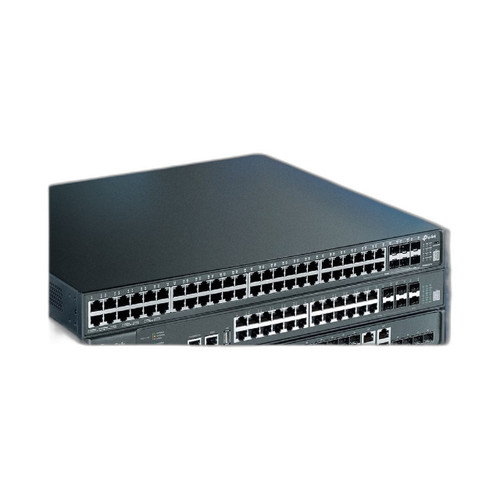
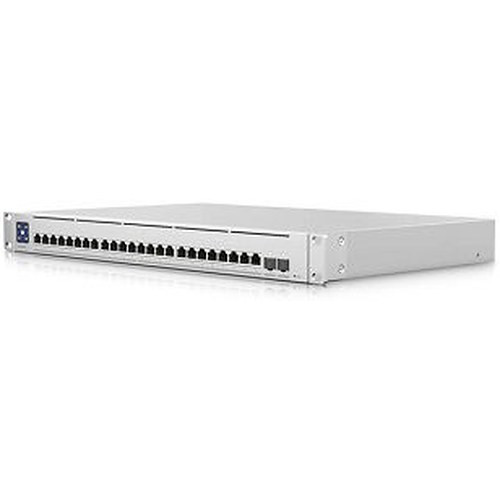
Both the TP-Link SG6428X and the Ubiquiti USW-ENTERPRISEXG-24 are rack-mount, 1U, Layer 3 managed switches targeting enterprise access and aggregation tiers. The SG6428X leads with 24 Gigabit RJ45 ports plus 4×10GE SFP+ uplinks, while the USW-ENTERPRISEXG-24 delivers 24×10GbE RJ45 ports plus 2×25G SFP28 uplinks. Both are non-PoE in the configurations specified. This comparison examines port-speed architecture and throughput, physical build and operating environment, and management ecosystem and Layer 3 routing capability to help installers and IT buyers select the right platform.
In This Guide
- Which switch delivers more bandwidth at the access and uplink layers?
- How do these switches compare in physical build, power draw, and thermal tolerance?
- Which switch offers broader management integration and Layer 3 routing capability?
- Which should you choose: the SG6428X or the USW-ENTERPRISEXG-24?
- Side-by-Side Specs
- FAQ
Which switch delivers more bandwidth at the access and uplink layers?
The SG6428X provides 24×1GbE RJ45 access ports with 4×10GE SFP+ uplinks, yielding a manufacturer-stated switching capacity of 128 Gbps. No forwarding rate in Mpps is listed in the provided specifications for the SG6428X.
The USW-ENTERPRISEXG-24 steps up every access port to 10GbE, providing 24×10GbE RJ45 ports, and uses 2×25G SFP28 uplinks. Its switching capacity is stated at 580 Gbps with a forwarding rate of 432 Mpps. The uplink tier is narrower by port count (2 vs 4) but each uplink runs at 25G versus 10G.
Buyers running high-density 4K/8K IP camera feeds, high-throughput NVRs, or aggregating 10GbE endpoints will find a material difference: the USW-ENTERPRISEXG-24 offers roughly 4.5× the switching capacity. The SG6428X is appropriate where edge devices are Gigabit-class and the 4×10G uplinks are sufficient for inter-switch or NVR links.
How do these switches compare in physical build, power draw, and thermal tolerance?
The SG6428X measures 440×420×44 mm and operates from -5 °C to 45 °C (23 °F to 113 °F) at up to 2,000 meters altitude. Power input is 100–240 V AC 50/60 Hz; no maximum power consumption figure is provided in the supplied specifications.
The USW-ENTERPRISEXG-24 measures 442×285×44 mm — notably shallower at 285 mm depth versus 420 mm — and is housed in SGCC steel. Operating temperature is rated -5 to 40 °C (23 to 104 °F). Power consumption is stated at 100 W with dual AC/DC input from 100–240 V AC. Weight without mounting brackets is 4.5 kg (9.9 lb).
The SG6428X's extra 5 °C upper thermal tolerance (45 °C vs 40 °C) may matter in less-controlled IDF closets. The USW-ENTERPRISEXG-24's shallower chassis (285 mm) fits tighter two-post racks. No chassis depth or power consumption figure is available for the SG6428X in the provided specs, so a direct power-draw comparison cannot be made.
Which switch offers broader management integration and Layer 3 routing capability?
The SG6428X is part of TP-Link's Omada SDN ecosystem and supports CLI, SNMP v1/v2c/v3, and RMON. Layer 3 routing protocols listed include RIP, OSPF, VRRP, ECMP, PIM-SM/DM, Static Routing, and Policy-Based Routing (PBR). The processor is a dual-core ARM at 1.5 GHz with 2×4 MB NOR flash and 8 GB eMMC storage. A dedicated management port (1×RJ45) is provided.
The USW-ENTERPRISEXG-24 integrates with Ubiquiti's UniFi Network platform and also supports SNMP, CLI, and Web UI. It is listed as NDAA compliant with certifications including CE, FCC, and IC. Specific Layer 3 routing protocols (e.g., OSPF, RIP) are not enumerated in the provided specifications. No dedicated out-of-band management port is listed.
Installers already standardized on Omada or UniFi will weight ecosystem lock-in heavily. The SG6428X's explicit OSPF, VRRP, and PBR support, plus a dedicated management port, suits complex multi-site routing deployments. The USW-ENTERPRISEXG-24's NDAA compliance is a differentiator for federal, state, or government-adjacent projects where supply-chain compliance is mandated.
Which should you choose: the SG6428X or the USW-ENTERPRISEXG-24?
Our take: The USW-ENTERPRISEXG-24 is the stronger choice when every access port must sustain 10GbE throughput and NDAA compliance is required. Its 580 Gbps switching capacity is 4.5× the SG6428X's 128 Gbps, and its 24×10GbE RJ45 ports versus the SG6428X's 24×1GbE ports represent a full generation of access-layer speed. The 25G SFP28 uplinks (vs 10G SFP+) also future-proof the aggregation link. However, the SG6428X counters with a broader documented Layer 3 routing stack — OSPF, VRRP, ECMP, PIM-SM/DM, and PBR — which the USW-ENTERPRISEXG-24's supplied specifications do not enumerate, plus a 5 °C higher maximum operating temperature (45 °C vs 40 °C) and four uplink ports versus two. The SG6428X suits Omada-standardized deployments with Gigabit edge devices and advanced routing requirements; the USW-ENTERPRISEXG-24 suits UniFi environments demanding 10GbE-to-the-edge density and federal procurement compliance.
Side-by-Side Comparison
Spec-for-spec, from manufacturer data.
| Specification | TP-Link SG6428X | Ubiquiti USW-ENTERPRISEXG-24 |
|---|---|---|
| Product Type | Omada Stackable L3 Managed Switch | L3 Managed Switch |
| Access Ports | 24 × 1GbE RJ45 | 24 × 10GbE RJ45 |
| Uplink Ports | 4 × 10GE SFP+ | 2 × 25G SFP28 |
| Total Port Count | 28 (24 RJ45 + 4 SFP+) | 26 (24 RJ45 + 2 SFP28) |
| Switching Capacity | 128 Gbps | 580 Gbps |
| Forwarding Rate | — | 432 Mpps |
| Layer | Layer 3 Managed | Layer 3 Managed |
| L3 Routing Protocols | RIP, OSPF, VRRP, ECMP, PIM-SM/DM, Static, PBR | Not specified in provided specs |
| Management | CLI, SNMP v1/v2c/v3, RMON, Omada SDN | SNMP, CLI, Web UI, UniFi Network |
| Dedicated Mgmt Port | 1 × RJ45 | — |
| PoE | 802.3af/at (PoE+ capable) | None listed |
| Power Consumption | — | 100 W |
| Power Input | 100–240 V AC, 50/60 Hz | 100–240 V AC, Dual AC/DC |
| Operating Temp | -5 °C to 45 °C (23 °F to 113 °F) | -5 °C to 40 °C (23 °F to 104 °F) |
| Dimensions (mm) | 440 × 420 × 44 | 442 × 285 × 44 |
| NDAA Compliant | — | Yes |
Frequently Asked Questions
Which should you choose: the SG6428X or the USW-ENTERPRISEXG-24?
The USW-ENTERPRISEXG-24 is the stronger choice when every access port must sustain 10GbE throughput and NDAA compliance is required. Its 580 Gbps switching capacity is 4.5× the SG6428X's 128 Gbps, and its 24×10GbE RJ45 ports versus the SG6428X's 24×1GbE ports represent a full generation of access-layer speed. The 25G SFP28 uplinks (vs 10G SFP+) also future-proof the aggregation link. However, the SG6428X counters with a broader documented Layer 3 routing stack — OSPF, VRRP, ECMP, PIM-SM/DM, and PBR — which the USW-ENTERPRISEXG-24's supplied specifications do not enumerate, plus a 5 °C higher maximum operating temperature (45 °C vs 40 °C) and four uplink ports versus two. The SG6428X suits Omada-standardized deployments with Gigabit edge devices and advanced routing requirements; the USW-ENTERPRISEXG-24 suits UniFi environments demanding 10GbE-to-the-edge density and federal procurement compliance.
Is the SG6428X or USW-ENTERPRISEXG-24 better for high-density IP camera deployments?
For high-density 4K/8K IP camera deployments where cameras connect at 10GbE, the USW-ENTERPRISEXG-24 is more appropriate: all 24 access ports run at 10GbE, and its 580 Gbps switching capacity (vs 128 Gbps on the SG6428X) provides substantially more backplane headroom. The SG6428X's 24 access ports are limited to 1GbE, which is sufficient for most current IP cameras but constrains future multi-sensor or high-bitrate devices.
Which switch is required if the project must meet NDAA compliance?
The USW-ENTERPRISEXG-24 is listed as NDAA compliant in the provided specifications. No NDAA compliance claim is present in the SG6428X specifications supplied. Buyers with federal, state, or government-adjacent procurement requirements that mandate NDAA compliance should select the USW-ENTERPRISEXG-24 and verify current compliance status with Ubiquiti directly.
Can the SG6428X replace a core routing switch where OSPF or PIM multicast is needed?
Based on the provided specifications, the SG6428X explicitly supports OSPF, VRRP, ECMP, PIM-SM/DM, Static Routing, and PBR, making it a viable candidate for a core or distribution switch in networks requiring dynamic routing or IP multicast. The USW-ENTERPRISEXG-24's supplied specifications do not enumerate specific Layer 3 routing protocols, so buyers with OSPF or multicast requirements should confirm UniFi's routing feature set directly with Ubiquiti before selecting that platform.
More Network Switch Comparisons
- TP-Link S5500-24GP4XF vs NETGEAR GS728TP-300NAS
- TP-Link S5500-24GP4XF vs Comnet CNGE24FX12TX12MSPOE
- TP-Link S5500-24GP4XF vs Ubiquiti USW-24
- TP-Link S5500-24GP4XF vs Ubiquiti USW-ENTERPRISEXG-24
- TP-Link S5500-24GP4XF vs TP-Link SL2428P
- TP-Link S5500-24GP4XF vs TP-Link SG3428XPP-M2
Network Switch Buying Guides
Get a Second Opinion on Your Camera Choice
Share your site layout, coverage goals, and budget. Our team will validate the camera selection, flag anything we would change, and recommend products that match the use case.