
TP-Link SG3428X-M2 vs Comnet CNGE24FX12TX12MSPOE: Specification Comparison
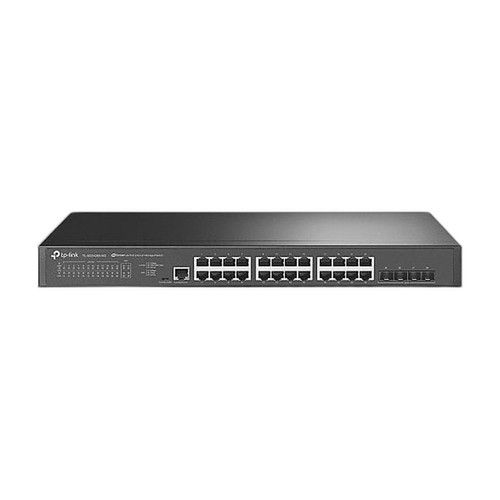
Both the TP-Link SG3428X-M2 and Comnet CNGE24FX12TX12MSPOE are 24-port managed Ethernet switches targeting enterprise and surveillance network deployments, but they serve meaningfully different installation profiles. The SG3428X-M2 is a commercial-grade L2+ switch with 2.5G copper uplinks and 10G SFP+ uplinks designed for IT-centric environments. The CNGE24FX12TX12MSPOE is a hardened managed switch built for industrial and harsh-environment deployments with mixed copper-fiber ports, PoE+, and wide-temperature operation. A buyer cross-shopping these two is typically weighing throughput and cloud management against environmental ruggedization and PoE power delivery.
In This Guide
- Which switch delivers more port density, speed, and throughput for your network?
- Which switch is rated for harsher physical environments and more demanding power conditions?
- Which switch offers more flexible management and ecosystem integration for security and IT operations?
- Which should you choose: the SG3428X-M2 or the CNGE24FX12TX12MSPOE?
- Side-by-Side Specs
- FAQ
Which switch delivers more port density, speed, and throughput for your network?
The SG3428X-M2 provides 24 × 2.5GBASE-T RJ45 ports plus 4 × 10G SFP+ uplinks, yielding a switching capacity of 200 Gbps and a forwarding rate of 148.8 Mpps. All 24 copper ports run at 2.5 Gbps, a significant step above legacy GbE for high-bandwidth camera feeds or workstations. The four 10G SFP+ slots support both single-mode (10GBASE-LR) and multi-mode (10GBASE-SR) fiber, with a maximum copper reach of 100 m on Cat6A.
The CNGE24FX12TX12MSPOE splits its 24 ports evenly: 12 × 10/100/1000BASE-TX RJ45 and 12 × SFP fiber ports, with a switching bandwidth of 54 Gbps and switching latency of 7 µs. Of the 12 copper ports, 12 also carry PoE+ at up to 30 W per port (IEEE 802.3at). Maximum copper port speed is 1 Gbps, and no 10G uplink speed is stated in the provided specifications. The SG3428X-M2 offers substantially higher aggregate throughput (200 Gbps vs. 54 Gbps) and faster per-port copper speeds (2.5G vs. 1G), while the Comnet model adds native fiber SFP ports and PoE+ delivery that the TP-Link does not provide.
Which switch is rated for harsher physical environments and more demanding power conditions?
The CNGE24FX12TX12MSPOE is explicitly designed for hardened deployment. Its operating temperature range is -40°C to +75°C and storage range is -40°C to +85°C—suitable for outdoor enclosures, transportation, and industrial control rooms. It is tested to IEC60068-2-27 (shock), IEC60068-2-32 (free fall), and IEC60068-2-6 (vibration), and carries railway compliance under EN50121-4. EMI/EMS compliance spans FCC Part 15 Class A, CISPR Class A, and a full suite of EN61000-4-x immunity standards. Safety is certified to EN60950-1. MTBF is specified at greater than 100,000 hours. Maximum power consumption is 390 W, driven largely by the 12-port PoE+ budget.
The SG3428X-M2 specifies an AC input of 100–240 V at 50/60 Hz, maximum power consumption of 37.9 W, and standby power of 14.9 W. No operating temperature range, vibration, shock, railway, or MTBF figures are provided in the supplied specifications. For installations in conditioned IT rooms, the TP-Link's low power draw is a practical advantage. For any installation outside a climate-controlled environment—traffic cabinets, industrial floors, transportation infrastructure—the Comnet's documented environmental ratings are decisive; the TP-Link provides no equivalent guarantees from the specs on hand.
Which switch offers more flexible management and ecosystem integration for security and IT operations?
The SG3428X-M2 is a Layer 2+ managed switch with dual operating modes: standalone control via web GUI, CLI, or SNMP, and cloud or on-premises controller mode through TP-Link's Omada SDN platform. Security features include 802.1X port authentication and RADIUS/TACACS+ support. ONVIF compatibility is listed in the provided specifications, indicating interoperability with ONVIF-compliant IP surveillance devices. Flash memory is 32 MB with 256 MB DRAM. Management connectivity includes a USB port.
The CNGE24FX12TX12MSPOE is a managed switch with a MAC table size of 8K entries, support for up to 256 VLANs, jumbo frame support to 9.6K bytes, and static routing capacity of 32 routes—indicating Layer 3 lite capability. No specific SDN platform, cloud controller, ONVIF listing, or authentication protocol (802.1X, RADIUS) is stated in the provided specifications. DRAM is 1 GB and Flash is 128 MB, substantially larger memory than the SG3428X-M2. The Comnet's static routing capacity and higher memory suggest richer local management for segmented industrial networks, while the TP-Link's Omada SDN integration provides centralized multi-site visibility more typical of enterprise IT deployments.
Which should you choose: the SG3428X-M2 or the CNGE24FX12TX12MSPOE?
Our take: The SG3428X-M2 is the stronger choice when deploying in a conditioned IT environment where higher throughput, 2.5G access speeds, and centralized Omada SDN management are priorities. It delivers 200 Gbps switching capacity versus the Comnet's 54 Gbps, provides 2.5G per copper port versus the Comnet's 1G maximum, and integrates with TP-Link's cloud and on-premises controller ecosystem with documented 802.1X and RADIUS/TACACS+ support. However, the CNGE24FX12TX12MSPOE is the correct selection for any hardened or harsh-environment deployment: it is rated to -40°C to +75°C operating temperature (no equivalent rating is provided for the SG3428X-M2), carries IEC shock, vibration, and EN50121-4 railway certifications, and delivers 12-port PoE+ at 30 W per port—a capability the SG3428X-M2 entirely lacks. Buyers running outdoor, industrial, or transportation infrastructure with powered edge devices should select the Comnet; buyers in enterprise IT or surveillance closets prioritizing speed and cloud management should select the SG3428X-M2.
Side-by-Side Comparison
Spec-for-spec, from manufacturer data.
| Specification | TP-Link SG3428X-M2 | Comnet CNGE24FX12TX12MSPOE |
|---|---|---|
| Product Type | 24-Port 2.5GBASE-T L2+ Managed Switch | 24-Port Hardened Managed Switch (PoE+) |
| Copper Ports | 24 × 2.5GBASE-T RJ45 | 12 × 10/100/1000BASE-TX RJ45 |
| Fiber/SFP Ports | 4 × 10G SFP+ | 12 × SFP (speed not specified in provided specs) |
| PoE Support | — | IEEE 802.3at (PoE+), 12 ports |
| PoE Power Per Port | — | 30 W |
| Switching Capacity | 200 Gbps | 54 Gbps |
| Forwarding Rate | 148.8 Mpps | — |
| Switching Latency | — | 7 µs |
| DRAM | 256 MB | 1 GB |
| Flash | 32 MB | 128 MB |
| Max VLANs | — | 256 |
| MAC Table Size | — | 8K |
| Static Routing | — | 32 routes |
| Operating Temperature | — | -40°C to +75°C |
| Max Power Consumption | 37.9 W | 390 W |
| Management | L2+; Omada SDN (cloud/on-prem); CLI; SNMP; 802.1X; RADIUS/TACACS+ | Managed; static routing; VLAN; no SDN platform stated in provided specs |
| ONVIF Listed | Yes | — |
| Dimensions | 440 × 180 × 44 mm | 431.8 × 254 × 38.1 mm (17 × 10 × 1.5 in) |
| Environmental Certifications | — | IEC60068-2-27 shock; IEC60068-2-6 vibration; EN50121-4 rail; EN60950-1 safety |
| MTBF | — | > 100,000 hours |
Frequently Asked Questions
Which should you choose: the SG3428X-M2 or the CNGE24FX12TX12MSPOE?
The SG3428X-M2 is the stronger choice when deploying in a conditioned IT environment where higher throughput, 2.5G access speeds, and centralized Omada SDN management are priorities. It delivers 200 Gbps switching capacity versus the Comnet's 54 Gbps, provides 2.5G per copper port versus the Comnet's 1G maximum, and integrates with TP-Link's cloud and on-premises controller ecosystem with documented 802.1X and RADIUS/TACACS+ support. However, the CNGE24FX12TX12MSPOE is the correct selection for any hardened or harsh-environment deployment: it is rated to -40°C to +75°C operating temperature (no equivalent rating is provided for the SG3428X-M2), carries IEC shock, vibration, and EN50121-4 railway certifications, and delivers 12-port PoE+ at 30 W per port—a capability the SG3428X-M2 entirely lacks. Buyers running outdoor, industrial, or transportation infrastructure with powered edge devices should select the Comnet; buyers in enterprise IT or surveillance closets prioritizing speed and cloud management should select the SG3428X-M2.
Can either switch power IP cameras directly via PoE?
Only the CNGE24FX12TX12MSPOE supports Power over Ethernet. It provides PoE+ (IEEE 802.3at) on 12 ports at up to 30 W per port, with a maximum system PoE power consumption of 390 W. The SG3428X-M2 does not list any PoE capability in the provided specifications, so cameras or access points requiring inline power would need a separate PoE injector or midspan when using the TP-Link switch.
Which switch is better suited for outdoor or transportation cabinet installations?
The CNGE24FX12TX12MSPOE is specifically designed for these environments. It is rated for -40°C to +75°C operation, tested to IEC60068-2-27 shock and IEC60068-2-6 vibration standards, and carries EN50121-4 railway compliance. The SG3428X-M2 provides no operating temperature range, shock, vibration, or outdoor environmental ratings in the supplied specifications, making it unsuitable for installations where those conditions apply.
Which switch provides higher network throughput for bandwidth-intensive video surveillance backbones?
The SG3428X-M2 offers substantially higher aggregate throughput at 200 Gbps switching capacity and 148.8 Mpps forwarding rate, with all 24 copper ports operating at 2.5 Gbps and four 10G SFP+ uplinks available. The CNGE24FX12TX12MSPOE is rated at 54 Gbps switching bandwidth with copper ports capped at 1 Gbps. For high-density, high-resolution camera deployments in climate-controlled environments, the SG3428X-M2 delivers significantly more headroom.
More Network Switch Comparisons
- TP-Link S5500-24GP4XF vs NETGEAR GS728TP-300NAS
- TP-Link S5500-24GP4XF vs Comnet CNGE24FX12TX12MSPOE
- TP-Link S5500-24GP4XF vs Ubiquiti USW-24
- TP-Link S5500-24GP4XF vs Ubiquiti USW-ENTERPRISEXG-24
- TP-Link S5500-24GP4XF vs TP-Link SL2428P
- TP-Link S5500-24GP4XF vs TP-Link SG3428XPP-M2
Network Switch Buying Guides
Get a Second Opinion on Your Camera Choice
Share your site layout, coverage goals, and budget. Our team will validate the camera selection, flag anything we would change, and recommend products that match the use case.