
Star Micronics 39657810 vs Epson C31CJ57012: Specification Comparison
Both the Star Micronics 39657810 POP10CBi-F and the Epson C31CJ57012 are direct thermal receipt printers intended for point-of-sale environments — no ribbon required, countertop-form-factor units printing on thermal roll media. A buyer evaluating either for a retail checkout lane, quick-service restaurant, or hospitality POS terminal would reasonably cross-shop them. The comparison covers print throughput and media handling, connectivity and integration flexibility, and long-term reliability and warranty coverage, using only the specifications provided by each manufacturer.
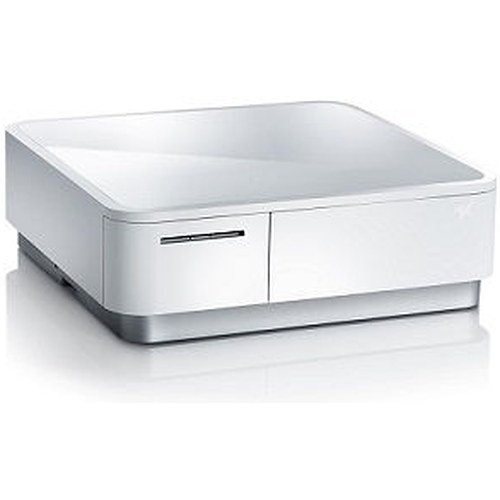
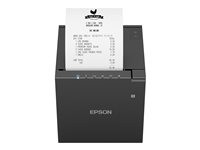
In This Guide
- Which printer delivers faster receipts and supports the media types your operation requires?
- Does the printer offer the interface options your POS platform and IT infrastructure require?
- Which unit is rated for higher duty cycles and offers stronger long-term coverage?
- Which should you choose: the 39657810 or the C31CJ57012?
- Side-by-Side Specs
- FAQ
Which printer delivers faster receipts and supports the media types your operation requires?
Print speed is the starkest divide between these two units. The Epson C31CJ57012 is rated at 500 mm/s (20 inches per second), while the Star Micronics 39657810 is rated at 58 mm/s — a ratio of roughly 8.6-to-1 in Epson's favor. At a busy checkout lane processing dozens of transactions per minute, the Epson's throughput advantage translates directly to shorter queue times.
On media flexibility, the Star 39657810 supports both standard receipt paper and linerless labels on a 58 mm (2.3-inch) paper width, making it a dual-purpose unit for retail environments that need shelf or price labeling alongside receipts. The Epson C31CJ57012 is specified for thermal receipt roll only, with no linerless label capability noted in its provided specs. If linerless label printing is part of the workflow, the Star is the only option of the two that addresses it.
Does the printer offer the interface options your POS platform and IT infrastructure require?
The Epson C31CJ57012 lists Serial, Ethernet, and USB connectivity, giving integrators three interface paths to work with. Serial supports legacy POS systems that pre-date USB standardization; Ethernet enables network-attached, multi-terminal deployments; and USB covers modern direct-host setups. The spec sheet also references an optional OT-WL06 wireless LAN interface, suggesting wireless capability is available as an add-on, though this is not included in the base SKU as specified.
The Star Micronics 39657810 is listed as Wired only, with no Serial or Ethernet interface identified in the provided specifications. The package contents note a bundled 1D/2D USB barcode scanner/imager, which adds scanning capability at the counter without a separate peripheral — a meaningful inclusion for retail environments where cashiers scan barcodes at the point of sale. Buyers requiring network-attached or multi-drop POS topologies will not find that capability confirmed in the Star's provided specs.
Which unit is rated for higher duty cycles and offers stronger long-term coverage?
The Star Micronics 39657810 carries a published MCBF (Mean Cycles Between Failures) rating of 18 million lines, which the manufacturer characterizes as equivalent to 3–5 years of continuous duty. This is a quantified mechanical reliability figure useful for specifying into high-transaction environments. The Epson C31CJ57012 does not include an MCBF or equivalent duty-cycle figure in the specifications provided, so a direct numerical comparison on this axis is not possible.
On warranty, the Star 39657810 offers a 2-year warranty versus the Epson C31CJ57012's 1-year warranty. For enterprise or multi-site deployments where service logistics carry real cost, the additional year of coverage is a concrete TCO factor. The Epson's print resolution is specified at 180 dpi; no print resolution figure is provided for the Star 39657810 in the supplied specs.
Which should you choose: the 39657810 or the C31CJ57012?
Our take: The C31CJ57012 is the stronger choice when raw throughput and multi-interface flexibility are the primary requirements. Its 500 mm/s print speed is 8.6 times faster than the Star 39657810's 58 mm/s, a decisive advantage for high-volume quick-service or retail lanes where receipt speed directly affects queue throughput. It also adds Serial and Ethernet interfaces absent from the Star's confirmed spec sheet, supporting legacy and networked POS topologies. The Star 39657810, however, is the only unit of the two confirmed to handle linerless labels in addition to receipts — a meaningful operational advantage in retail environments combining receipt and labeling workflows. It also ships with a bundled 1D/2D USB barcode scanner and backs the unit with an 18-million-line MCBF rating and a 2-year warranty versus Epson's 1-year. Choose the Epson for speed-critical, network-integrated POS; choose the Star where dual receipt-and-label media or a longer warranty matters more.
Side-by-Side Comparison
Spec-for-spec, from manufacturer data.
| Specification | Star Micronics 39657810 | Epson C31CJ57012 |
|---|---|---|
| Product Type | Label / Receipt Printer | Receipt Printer |
| Print Method | Direct Thermal | Direct Thermal |
| Print Speed | 58 mm/s | 500 mm/s (20 in/sec) |
| Print Resolution | — | 180 dpi monochrome |
| Paper / Media Width | 58 mm (2.3") | — |
| Media Types Supported | Receipt paper, linerless labels | Thermal receipt roll |
| Connectivity | Wired (USB implied) | Serial, Ethernet, USB |
| Wireless Option | — | Optional (OT-WL06 add-on) |
| Bundled Accessories | 1D/2D USB barcode scanner | — |
| MCBF Rating | 18 million lines | — |
| Form Factor | Countertop | Compact countertop / under-counter |
| Dimensions (L x W x H) | 12 x 12 x 4 in | — |
| Weight | 7.8 lbs | — |
| Warranty | 2-year | 1-year |
| Color Options | Black or White | — |
| Ribbon Required | No | No |
Frequently Asked Questions
Which should you choose: the 39657810 or the C31CJ57012?
The C31CJ57012 is the stronger choice when raw throughput and multi-interface flexibility are the primary requirements. Its 500 mm/s print speed is 8.6 times faster than the Star 39657810's 58 mm/s, a decisive advantage for high-volume quick-service or retail lanes where receipt speed directly affects queue throughput. It also adds Serial and Ethernet interfaces absent from the Star's confirmed spec sheet, supporting legacy and networked POS topologies. The Star 39657810, however, is the only unit of the two confirmed to handle linerless labels in addition to receipts — a meaningful operational advantage in retail environments combining receipt and labeling workflows. It also ships with a bundled 1D/2D USB barcode scanner and backs the unit with an 18-million-line MCBF rating and a 2-year warranty versus Epson's 1-year. Choose the Epson for speed-critical, network-integrated POS; choose the Star where dual receipt-and-label media or a longer warranty matters more.
Is the 39657810 or C31CJ57012 better for a high-volume quick-service restaurant with long lunch rush lines?
The Epson C31CJ57012 is better suited for that scenario. Its 500 mm/s print speed is 8.6 times faster than the Star 39657810's 58 mm/s, which directly reduces the time each transaction ties up the printer. No equivalent throughput rating is provided for the Star to close that gap.
Can either printer handle linerless label printing, not just standard receipts?
Only the Star Micronics 39657810 is specified to support linerless labels in addition to receipt paper. The Epson C31CJ57012's provided specs list thermal receipt roll only, with no linerless label capability noted.
Which printer works with a networked, multi-terminal POS setup?
The Epson C31CJ57012 lists Ethernet as one of its confirmed interfaces, making it compatible with network-attached, multi-terminal deployments. The Star 39657810 is specified as wired-only with no Ethernet interface listed in the provided specs.
More Label Printer Comparisons
- Epson C31CK00A9991 vs Brother RJ4230B
- Epson C31CK00A9991 vs Star Micronics TSP1043D
- Epson C31CK00A9991 vs Epson C31CJ99A9981
- Epson C31CK00A9991 vs Epson C31CJ57012
- Epson C31CJ99A9981 vs Brother RJ4230B
- Epson C31CJ99A9981 vs Star Micronics TSP1043D
Label Printer Buying Guides
Get a Second Opinion on Your Camera Choice
Share your site layout, coverage goals, and budget. Our team will validate the camera selection, flag anything we would change, and recommend products that match the use case.