
Epson C31CJ99A9981 vs Star Micronics TSP1043D: Specification Comparison
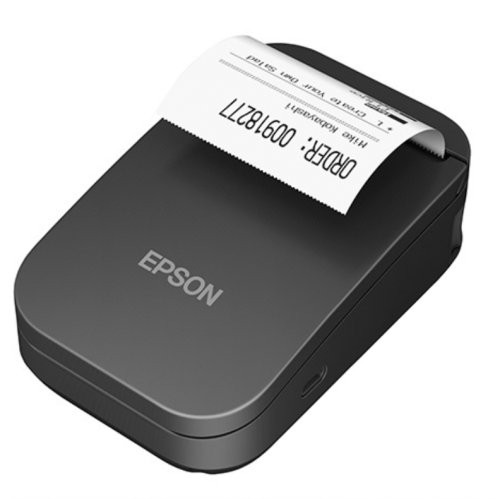
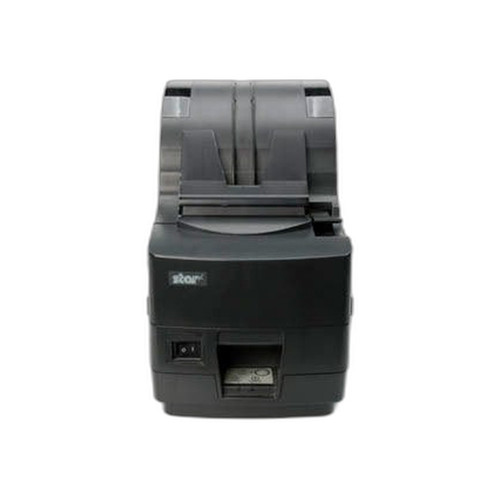
Both the Epson C31CJ99A9981 (P20II) and the Star Micronics TSP1043D (SKU 39462010) are direct thermal receipt printers targeting POS and hospitality environments. The Epson is a compact 2-inch wireless cradle-mount unit optimized for mobile and space-constrained deployments, while the Star is a wired desktop unit with a wider 3.15-inch roll format. Buyers evaluating receipt printing infrastructure will encounter both when balancing mobility, print width, connectivity options, and throughput requirements for retail or food-service point-of-sale applications.
In This Guide
- Which printer delivers higher throughput for high-volume receipt printing?
- How do paper width and connectivity options affect deployment fit?
- What do print resolution, reliability ratings, and warranty terms reveal about long-term value?
- Which should you choose: the C31CJ99A9981 or the TSP1043D?
- Side-by-Side Specs
- FAQ
Which printer delivers higher throughput for high-volume receipt printing?
The Epson C31CJ99A9981 is rated at 500 mm/s print speed — a standard thermal printer metric stated consistently across its spec fields. The Star Micronics TSP1043D presents a speed figure with a unit conflict in its supplied specs: one field states '425.2 ips' (inches per second) while another field labels the same number as '425.2 inches per minute.' At face value, 425.2 inches per second would be physically implausible for a thermal receipt printer (~10,800 mm/s); 425.2 inches per minute converts to approximately 180 mm/s, which is a plausible mid-range desktop thermal speed. Buyers should verify the Star's actual rated speed directly from Star Micronics documentation before drawing throughput conclusions.
On the spec data as provided, the Epson's 500 mm/s figure is unambiguous and represents strong throughput for a 2-inch printer. If the Star's speed is indeed ~180 mm/s (425.2 in/min), the Epson is substantially faster in linear print rate. If the Star's speed were somehow 425.2 in/s, it would far exceed the Epson — but this cannot be confirmed from the supplied data alone.
How do paper width and connectivity options affect deployment fit?
Paper width is a critical compatibility dimension: the Epson C31CJ99A9981 uses a 2-inch (approximately 58 mm) roll with a 2-inch print width, while the Star TSP1043D uses a 3.15-inch (approximately 80 mm) roll with a matching 3.15-inch print width. These are not interchangeable roll formats. Existing POS infrastructure, cash drawer setups, and receipt paper purchasing contracts must be evaluated against each printer's required roll width before selection.
On connectivity, the Epson C31CJ99A9981 offers a significantly broader interface set: Wi-Fi, USB, Ethernet, Serial, and Parallel — making it adaptable to legacy systems, modern network-connected POS, and mobile deployments. Its cradle form factor and wireless capability explicitly target mobile POS and field service scenarios. The Star TSP1043D is listed as wired-only with no wireless interface specified. For IT buyers needing cable-free or network-flexible receipt printing, the Epson's interface breadth is a material advantage; for fixed wired POS lanes, both are viable.
What do print resolution, reliability ratings, and warranty terms reveal about long-term value?
Print resolution is specified only for the Star TSP1043D at 203 dpi — a standard thermal receipt resolution adequate for text and simple barcodes. The Epson C31CJ99A9981 does not list a dpi resolution figure in the provided specs, so a direct resolution comparison cannot be made from available data.
On reliability, the Epson specs cite a printer reliability rating of 10 million printing lines, providing a concrete durability benchmark. The Star TSP1043D does not include an equivalent reliability or duty-cycle figure in its provided specs.
Warranty coverage favors the Star: the TSP1043D carries a 2-year warranty versus the Epson C31CJ99A9981's 1-year standard limited warranty (with optional extended service available for the Epson, though terms and cost of that extension are not specified). The Epson is also noted as RoHS compliant; no RoHS status is stated for the Star in the provided specs.
Which should you choose: the C31CJ99A9981 or the TSP1043D?
Our take: The C31CJ99A9981 is the stronger choice when wireless flexibility, multi-interface compatibility, and compact 2-inch mobile deployments are the priority. Its 500 mm/s print speed is unambiguous and high for its class, it supports five interface types (Wi-Fi, USB, Ethernet, Serial, Parallel) versus the Star's wired-only connectivity, and it carries a documented 10-million-line reliability rating the Star does not match in the provided specs. The TSP1043D holds meaningful advantages where they matter: a wider 3.15-inch roll format suits standard desktop POS receipt layouts, its 203 dpi resolution is explicitly stated (Epson's is not), and its 2-year warranty doubles the Epson's standard coverage. Note that the Star's speed spec contains a unit inconsistency (ips vs. in/min) in the supplied data — buyers should confirm actual throughput with Star Micronics before committing to high-volume fixed-lane deployments.
Side-by-Side Comparison
Spec-for-spec, from manufacturer data.
| Specification | Epson C31CJ99A9981 | Star Micronics TSP1043D |
|---|---|---|
| Product Type | Receipt Printer | Receipt Printer |
| Print Method | Thermal line printing | Direct Thermal |
| Paper Width | 2 inches (58 mm) | 3.15 inches (80 mm) |
| Print Width | 2 inches | 3.15 inches |
| Print Speed | 500 mm/s | 425.2 in/min (unit conflict in source specs — verify with manufacturer) |
| Print Resolution | — | 203 dpi |
| Connectivity | Wi-Fi; USB; Ethernet; Serial; Parallel | Wired only (interface type not specified) |
| Wireless | Yes (Wi-Fi) | No |
| Form Factor | Cradle | Desktop receipt printer |
| Cutter | Yes | Yes (auto-cutter) |
| Media Type | Receipts | Receipt roll |
| Output Type | — | Two-color monochrome |
| Printer Reliability | 10 million printing lines | — |
| Warranty | 1-year limited (optional extended available) | 2-year |
| RoHS Compliant | Yes | — |
| Compatible With | Mobile POS; field service | — |
Frequently Asked Questions
Which should you choose: the C31CJ99A9981 or the TSP1043D?
The C31CJ99A9981 is the stronger choice when wireless flexibility, multi-interface compatibility, and compact 2-inch mobile deployments are the priority. Its 500 mm/s print speed is unambiguous and high for its class, it supports five interface types (Wi-Fi, USB, Ethernet, Serial, Parallel) versus the Star's wired-only connectivity, and it carries a documented 10-million-line reliability rating the Star does not match in the provided specs. The TSP1043D holds meaningful advantages where they matter: a wider 3.15-inch roll format suits standard desktop POS receipt layouts, its 203 dpi resolution is explicitly stated (Epson's is not), and its 2-year warranty doubles the Epson's standard coverage. Note that the Star's speed spec contains a unit inconsistency (ips vs. in/min) in the supplied data — buyers should confirm actual throughput with Star Micronics before committing to high-volume fixed-lane deployments.
Can I use the same receipt paper rolls in both the Epson C31CJ99A9981 and the Star TSP1043D?
No. The Epson C31CJ99A9981 requires 2-inch (approximately 58 mm) paper rolls, while the Star TSP1043D uses 3.15-inch (approximately 80 mm) rolls. These are different, incompatible roll formats. You must stock the correct roll width for each printer, and any existing paper supply contract should be checked against the printer you select.
Is the Epson C31CJ99A9981 or the Star TSP1043D better for a fixed wired POS counter with a standard 3-inch receipt format?
Based on the provided specs, the Star TSP1043D is better suited for that scenario. Its 3.15-inch print width matches the common 80 mm desktop POS receipt format, and it is designed as a wired desktop unit. The Epson's 2-inch print width produces a narrower receipt that may not meet standard layout expectations for countertop POS, and its wireless/mobile-optimized design adds features you would not use in a fixed wired setup.
Which printer has the better warranty, and does either offer extended coverage?
The Star TSP1043D carries a 2-year warranty per its provided specs, compared to the Epson C31CJ99A9981's 1-year standard limited warranty — giving the Star a clear warranty-length advantage. The Epson specs mention optional extended service is available, but the terms, duration, and cost of that extension are not detailed in the provided specifications. No extended warranty option is mentioned for the Star in its provided specs.
More Label Printer Comparisons
- Epson C31CK00A9991 vs Brother RJ4230B
- Epson C31CK00A9991 vs Star Micronics TSP1043D
- Epson C31CK00A9991 vs Epson C31CJ99A9981
- Epson C31CK00A9991 vs Epson C31CJ57012
- Epson C31CJ99A9981 vs Brother RJ4230B
- Epson C31CJ99A9981 vs Epson C31CJ57012
Label Printer Buying Guides
Get a Second Opinion on Your Camera Choice
Share your site layout, coverage goals, and budget. Our team will validate the camera selection, flag anything we would change, and recommend products that match the use case.