
Epson C31CK00A9991 vs Epson C31CJ99A9981: Specification Comparison
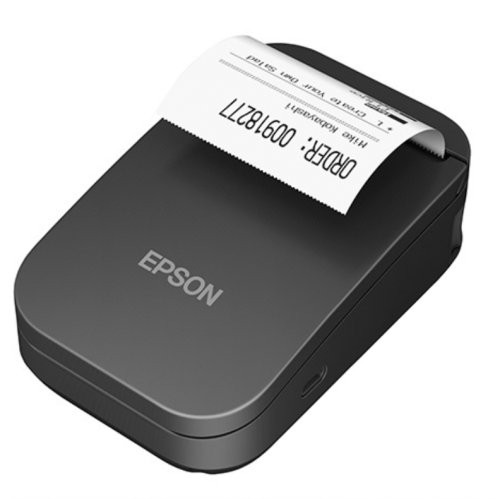
Both the Epson C31CK00A9991 (TM-P80II) and the Epson C31CJ99A9981 (P20II) are direct thermal mobile receipt printers in the same product class, aimed at point-of-sale and field-service deployments where compact, wireless printing is required. The TM-P80II prints on 3-inch media with Bluetooth connectivity, while the P20II handles 2-inch media with Wi-Fi and a broader wired interface suite. Buyers cross-shopping these units are typically evaluating print width against their receipt roll stock, connectivity protocol fit, and speed for their specific POS or field-service environment.

In This Guide
- Which printer matches my receipt roll width and how fast does each unit print?
- Which connectivity options does each printer support, and how do they integrate into existing POS or field networks?
- How do the physical design, power arrangement, and stated reliability compare for mobile or high-volume use?
- Which should you choose: the C31CK00A9991 or the C31CJ99A9981?
- Side-by-Side Specs
- FAQ
Which printer matches my receipt roll width and how fast does each unit print?
The C31CK00A9991 (TM-P80II) prints on 3-inch (approximately 80 mm) media at a stated speed of 236.2 inches per minute (ipm). The C31CJ99A9981 (P20II) is designed for 2-inch media and is rated at 500 mm/s. Converting for rough comparison: 236.2 ipm equals approximately 100 mm/s for the TM-P80II, while 500 mm/s is the P20II's stated figure — giving the P20II a substantial raw speed advantage on paper. However, the two units serve different roll widths: 3-inch rolls for the TM-P80II and 2-inch rolls for the P20II. Print width is a hard compatibility constraint — neither unit can substitute for the other if the deployment's receipt stock is already standardized. Buyers must confirm roll width first before treating speed as a differentiator.
Which connectivity options does each printer support, and how do they integrate into existing POS or field networks?
The C31CK00A9991 (TM-P80II) offers Bluetooth wireless plus a wired interface, making it suited for one-to-one paired mobile POS scenarios — typical of handheld terminal or tablet-based retail setups where Bluetooth range is sufficient. No Wi-Fi, USB, Ethernet, Serial, or Parallel interface is specified for this model.
The C31CJ99A9981 (P20II) supports Wi-Fi along with USB, Ethernet, Serial, and Parallel interfaces. This breadth of connectivity makes the P20II significantly more flexible for fixed or semi-fixed installations where wired fallback, network-based printing queues, or legacy serial/parallel POS systems are in use. A wireless security mode is noted in the specs, though specific protocol details (e.g., WPA2) are not provided in the supplied data. Buyers integrating into enterprise or multi-terminal networks will find the P20II's interface range more accommodating.
How do the physical design, power arrangement, and stated reliability compare for mobile or high-volume use?
The C31CK00A9991 (TM-P80II) is described as a mobile cradle form factor with a battery cradle enabling cordless operation, positioning it for on-the-go or roaming POS use. No physical dimensions are provided in the supplied specs.
The C31CJ99A9981 (P20II) also lists a cradle form factor and provides physical dimensions of 3.1 inches × 4.7 inches × 1.8 inches. It includes an integrated cutter, a feature not specified for the TM-P80II. The P20II's specs state a reliability rating of 10 million printing lines, giving buyers a concrete durability benchmark; no equivalent figure is provided for the TM-P80II. Both units carry a standard 1-year limited warranty, with optional extended service noted for the P20II. The P20II also carries a RoHS compliance notation; no equivalent environmental certification is listed for the TM-P80II in the provided specs.
Which should you choose: the C31CK00A9991 or the C31CJ99A9981?
Our take: The C31CK00A9991 (TM-P80II) is the stronger choice when a deployment is standardized on 3-inch receipt rolls and relies on Bluetooth-paired mobile terminals such as handheld tablets or smartphones. The C31CJ99A9981 (P20II) is the stronger choice when 2-inch roll stock is in use, higher raw print throughput matters (500 mm/s vs. approximately 100 mm/s equivalent for the TM-P80II), or multi-interface flexibility is required — the P20II supports Wi-Fi, USB, Ethernet, Serial, and Parallel versus the TM-P80II's Bluetooth-plus-wired configuration. The P20II also adds a built-in cutter and a stated 10-million-line reliability rating not present in the TM-P80II's specs. Roll width is the threshold decision: buyers locked into 3-inch stock must select the TM-P80II; those on 2-inch stock and prioritizing network integration or throughput should favor the P20II.
Side-by-Side Comparison
Spec-for-spec, from manufacturer data.
| Specification | Epson C31CK00A9991 | Epson C31CJ99A9981 |
|---|---|---|
| Model | TM-P80II | P20II |
| SKU | C31CK00A9991 | C31CJ99A9981 |
| Print Width | 3 inches | 2 inches |
| Paper Width | 3 inches | 2 inches |
| Print Method | Direct thermal | Thermal line printing |
| Print Speed | 236.2 ipm (~100 mm/s) | 500 mm/s |
| Print Resolution | 203 dpi monochrome | — |
| Wireless Interface | Bluetooth | Wi-Fi |
| Wired Interfaces | Wired (type not specified) | USB; Ethernet; Serial; Parallel |
| Form Factor | Mobile cradle | Cradle |
| Power | Battery cradle (cordless) | — |
| Built-in Cutter | — | Yes |
| Dimensions | — | 3.1" x 4.7" x 1.8" |
| Reliability Rating | — | 10 million printing lines |
| RoHS Compliant | — | Yes |
| Warranty | 1-year | 1-year (optional extended) |
Frequently Asked Questions
Which should you choose: the C31CK00A9991 or the C31CJ99A9981?
The C31CK00A9991 (TM-P80II) is the stronger choice when a deployment is standardized on 3-inch receipt rolls and relies on Bluetooth-paired mobile terminals such as handheld tablets or smartphones. The C31CJ99A9981 (P20II) is the stronger choice when 2-inch roll stock is in use, higher raw print throughput matters (500 mm/s vs. approximately 100 mm/s equivalent for the TM-P80II), or multi-interface flexibility is required — the P20II supports Wi-Fi, USB, Ethernet, Serial, and Parallel versus the TM-P80II's Bluetooth-plus-wired configuration. The P20II also adds a built-in cutter and a stated 10-million-line reliability rating not present in the TM-P80II's specs. Roll width is the threshold decision: buyers locked into 3-inch stock must select the TM-P80II; those on 2-inch stock and prioritizing network integration or throughput should favor the P20II.
Is the C31CK00A9991 or C31CJ99A9981 better for a Bluetooth-based mobile POS setup?
The C31CK00A9991 (TM-P80II) is specified with Bluetooth wireless connectivity, making it the direct fit for Bluetooth-paired mobile POS terminals. The C31CJ99A9981 (P20II) does not list Bluetooth in its provided specs — its wireless interface is Wi-Fi. If your POS system connects via Bluetooth, the TM-P80II is the applicable unit.
Which printer is faster — the C31CK00A9991 or the C31CJ99A9981?
Based on stated specs, the C31CJ99A9981 (P20II) is rated at 500 mm/s, while the C31CK00A9991 (TM-P80II) is rated at 236.2 inches per minute (approximately 100 mm/s). The P20II's stated speed is substantially higher. Note that these two models print on different media widths (2-inch vs. 3-inch), so speed alone should not drive the selection if roll width compatibility is the binding constraint.
Does either printer include a built-in cutter?
Yes — the C31CJ99A9981 (P20II) is specified with a cutter. The C31CK00A9991 (TM-P80II) does not list a cutter in the provided specifications. Deployments where automatic receipt cutting is required should factor this into the selection.
More Label Printer Comparisons
- Epson C31CK00A9991 vs Brother RJ4230B
- Epson C31CK00A9991 vs Star Micronics TSP1043D
- Epson C31CK00A9991 vs Epson C31CJ57012
- Epson C31CJ99A9981 vs Brother RJ4230B
- Epson C31CJ99A9981 vs Star Micronics TSP1043D
- Epson C31CJ99A9981 vs Epson C31CJ57012
Label Printer Buying Guides
Get a Second Opinion on Your Camera Choice
Share your site layout, coverage goals, and budget. Our team will validate the camera selection, flag anything we would change, and recommend products that match the use case.