Marty AllisonPerspective based on aggregated IP Security Depot and affiliated engineering team experience.
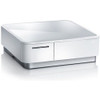
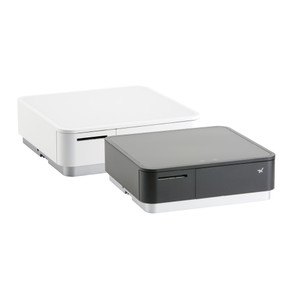
We've deployed the Star Micronics 39657810 across retail chains ranging from independent coffee shops to 30-location convenience store networks. This printer sits in the sweet spot between cost discipline and performance reliability. It's not a cutting-edge smart device; it's a workhorse that prints receipts and labels consistently without firmware drama, cloud connectivity headaches, or surprise paper-jam design flaws. In environments where POS uptime directly impacts revenue—checkout lanes, quick-service restaurants, pharmacies—the 39657810's simplicity is actually an advantage. No wireless reconnection issues, no cloud authentication timeouts, no vendor-controlled firmware updates that break driver compatibility. It boots, it prints, it stays out of the way.
The real differentiator versus older impact or inkjet receipt printers is total cost of ownership. Direct thermal eliminates ribbon cartridges, toner, and solvent waste. Over a 5-year deployment cycle at a 20-register location, that's meaningful capex recovery—easily $8,000–$12,000 in consumables not purchased. The included 1D/2D scanner also matters for integration costs; if you were sourcing that separately, you're looking at another $150–$400 per station. On a 50-printer rollout, bundled hardware changes the math meaningfully.
Technical Highlights:
- 18M Line MCBF: Direct thermal printheads degrade predictably by print volume, not calendar age. An 18M MCBF rating in a moderate-use location (5 operating hours daily) buys you 8–10 years before replacement becomes economical. In a high-frequency quick-service kitchen printing tickets and labels constantly, 18–24 months is realistic. Know your throughput baseline and budget printhead replacement as scheduled maintenance, not as a surprise failure.
- Drop-In Paper Loading: We've watched untrained staff reload this printer without a manual. Paper sits on a spring-loaded tray, lid closes, printer detects media, goes. Compare that to legacy thermal printers requiring ribbon threading or platen cleaning—downtime and operator frustration drop measurably when you eliminate fidgety mechanics on the sales floor.
- 58 mm/s Speed: A standard 3-inch receipt (80 mm height) prints in ~1.4 seconds. Linerless label batches (parking permits, event stickers, loyalty tags) process at 2–3 labels per second depending on label height. Fast enough that customers don't perceive delay; slow enough that you don't need heavy-duty media path engineering or frequent paper jam recovery.
- Compact Footprint + Included Scanner: The 12 x 12 x 4 inch form factor plus bundled 1D/2D reader means you can equip a checkout lane with printer + scanner in a space previously occupied by one older receipt printer. Saves counter real estate and reduces power-distribution load—both operational wins in retrofit or densification scenarios.
- Linerless Label Support: If your retail operation prints permits, inventory stickers, or promotional labels in-house, linerless media cuts waste and restocking frequency. Most standard thermal printers can't handle linerless without paper path modifications; the 39657810 handles both receipt and linerless rolls without adjustment, giving you flexibility to transition media types without hardware swaps.
Deployment Considerations:
- Direct thermal media is moisture-sensitive; store rolls in dry conditions (relative humidity <60%). Humid environments (beach locations, laundries, high-throughput dishwashing stations) can cause image fading after 6 months if receipts aren't sealed or archived properly. If you need long-term receipt archival, consider thermal-transfer printers instead, or laminate receipt stacks.
- Print speed maxes at 58 mm/s; if your POS software or kitchen management system is spooling 5+ label jobs per minute or 20+ receipt transactions per minute simultaneously, you may experience queue backup. Test spool volume before committing to a multi-location rollout.
- Wired connectivity is a strength for reliability but a constraint for portable checkouts. If you're adding mobile or wireless point-of-sale terminals, you'll need a separate portable printer or will need to invest in Bluetooth/wireless receipt printers for those stations.
- The included 1D/2D scanner is adequate for standard barcodes and QR codes but has a shorter working distance (~3-6 inches) than premium imaging scanners. If you're scanning small, high-density barcodes or printing micro-labels, test the bundled scanner in your environment first.
- Security lock slot accepts generic cable locks, but thicker cable (5mm+) may not fit smoothly. Source locks beforehand; don't assume your existing security cable stock will work without trial fit.
The Star Micronics 39657810 is the right choice for retail teams standardizing on direct thermal for transaction printing and linerless label in-house production. It's cost-effective to deploy in volume, reliable under daily checkout lane duty, and simple enough that staff rotation doesn't create support burden. For more details and alternative models in the Star portfolio, visit the Star Micronics catalog.