
Socket Mobile CX3754-2406 vs Socket Mobile CX4489-3691: Specification Comparison
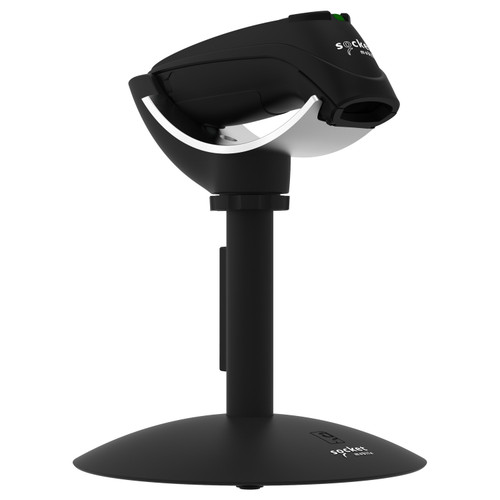
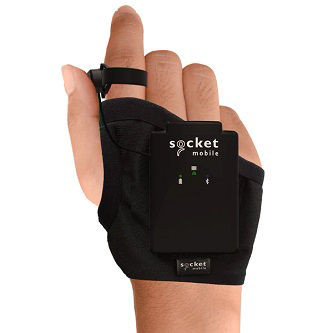
Both the Socket Mobile CX3754-2406 DuraScan D760 and the CX4489-3691 XScan XS962 Pro MR are handheld Bluetooth barcode scanners targeting mobile and point-of-sale workflows. Each supports 1D and 2D symbologies and pairs wirelessly with host devices, making them candidates a buyer would cross-shop for inventory management, logistics, or POS deployments. This comparison evaluates them across symbology breadth and scan engine capability, environmental and build ruggedness, and connectivity protocol and platform integration.
In This Guide
- Which scanner decodes a wider range of symbologies and what scan engine does each use?
- How do the two scanners compare on environmental protection and operating conditions?
- What are the differences in wireless protocol, interface options, and host platform compatibility?
- Which should you choose: the CX3754-2406 or the CX4489-3691?
- Side-by-Side Specs
- FAQ
Which scanner decodes a wider range of symbologies and what scan engine does each use?
The CX3754-2406 specifies a 1D imager with explicit QR Code and Data Matrix support, and its symbology list is fully enumerated: Code 128, Code 39, UPC (1D), plus QR Code, Data Matrix, and PDF417 (2D). Buyers can verify exactly which label types are supported before deployment.
The CX4489-3691 is listed as a 1D/2D scanner, but its documented symbology list contains only UPC. The broader '1D/2D symbologies including UPC' language in the product description is not backed by a complete enumerated spec. Buyers requiring confirmed support for Code 128, Code 39, PDF417, QR Code, or Data Matrix cannot verify coverage from the available data for this model.
For deployments where specific symbology support must be confirmed — such as GS1, healthcare, or logistics label standards — the CX3754-2406 provides a fully documented capability set; the CX4489-3691 does not.
How do the two scanners compare on environmental protection and operating conditions?
The CX4489-3691 carries an IP67 ingress protection rating, meaning it is rated dust-tight and can withstand immersion in water up to 1 meter for 30 minutes. This makes it suitable for wet, dusty, or splash-prone environments such as warehouses, loading docks, and outdoor receiving areas.
The CX3754-2406 specifies an operating temperature range of 0° to 45°C (32° to 113°F) but does not include an IP rating in the provided specifications. No ingress protection data is available for this model from the supplied spec set.
For deployments in harsh or wet environments, the CX4489-3691's IP67 rating is a documented, concrete advantage. The CX3754-2406's operating temperature range is informative for climate planning, but the absence of an IP rating means buyers cannot confirm its suitability for dusty or wet conditions from the available specs alone.
What are the differences in wireless protocol, interface options, and host platform compatibility?
The CX3754-2406 specifies Bluetooth connectivity and is documented as compatible with iOS, Android, and Windows mobile devices. No Bluetooth version or sub-protocol variant is specified in the provided data.
The CX4489-3691 specifies Bluetooth LE (Low Energy) as its wireless protocol and also lists USB as an additional interface option, giving it a wired fallback that the CX3754-2406 does not have documented. Its description references HID keyboard emulation, which allows connection to most WMS and POS platforms without custom drivers. However, platform-specific compatibility (iOS, Android, Windows) is not enumerated in the provided specs.
Buyers needing a dual-interface device (Bluetooth LE plus USB) or driver-free HID emulation will find relevant documented support in the CX4489-3691. Buyers who need confirmed multi-platform OS compatibility have explicit documentation only for the CX3754-2406.
Which should you choose: the CX3754-2406 or the CX4489-3691?
Our take: The CX3754-2406 is the stronger choice when confirmed multi-symbology coverage and documented multi-platform compatibility are the primary requirements. Its spec sheet explicitly lists six symbologies across 1D and 2D (Code 128, Code 39, UPC, QR Code, Data Matrix, PDF417), while the CX4489-3691 documents only UPC despite claiming broader 1D/2D capability. The CX3754-2406 also names iOS, Android, and Windows as verified host platforms, whereas the CX4489-3691 does not enumerate OS compatibility. Conversely, the CX4489-3691 holds a concrete ruggedness advantage with its IP67 rating — a spec entirely absent from the CX3754-2406's documentation — and adds USB as a second interface alongside Bluetooth LE. Both carry a 1-year warranty. Choose the CX3754-2406 for spec-verified symbology and platform breadth in controlled environments; choose the CX4489-3691 for wet or dusty deployments where IP67 protection and a wired USB fallback are operationally required.
Side-by-Side Comparison
Spec-for-spec, from manufacturer data.
| Specification | Socket Mobile CX3754-2406 | Socket Mobile CX4489-3691 |
|---|---|---|
| Product Name | DuraScan D760 | XScan XS962 Pro MR |
| SKU | CX3754-2406 | CX4489-3691 |
| Form Factor | Handheld | Handheld |
| Scan Engine | 1D imager with QR Code & Data Matrix support | 1D/2D (engine detail not specified) |
| Symbologies — 1D | Code 128, Code 39, UPC | UPC (only documented) |
| Symbologies — 2D | QR Code, Data Matrix, PDF417 | — (claimed but not enumerated) |
| Connectivity | Bluetooth | Bluetooth LE, USB |
| Bluetooth Protocol | Bluetooth (version not specified) | Bluetooth LE |
| USB Interface | — | Yes |
| IP Rating | — | IP67 |
| Operating Temperature | 0° to 45°C (32° to 113°F) | — (not specified) |
| Host Platform Compatibility | iOS, Android, Windows | — (not specified) |
| HID Keyboard Emulation | — (not specified) | Yes (per description) |
| Weight | — (not specified) | 0.05 (unit not specified) |
| RoHS Compliance | — | EN 50581 |
| Warranty | 1-year | 1-year |
Frequently Asked Questions
Which should you choose: the CX3754-2406 or the CX4489-3691?
The CX3754-2406 is the stronger choice when confirmed multi-symbology coverage and documented multi-platform compatibility are the primary requirements. Its spec sheet explicitly lists six symbologies across 1D and 2D (Code 128, Code 39, UPC, QR Code, Data Matrix, PDF417), while the CX4489-3691 documents only UPC despite claiming broader 1D/2D capability. The CX3754-2406 also names iOS, Android, and Windows as verified host platforms, whereas the CX4489-3691 does not enumerate OS compatibility. Conversely, the CX4489-3691 holds a concrete ruggedness advantage with its IP67 rating — a spec entirely absent from the CX3754-2406's documentation — and adds USB as a second interface alongside Bluetooth LE. Both carry a 1-year warranty. Choose the CX3754-2406 for spec-verified symbology and platform breadth in controlled environments; choose the CX4489-3691 for wet or dusty deployments where IP67 protection and a wired USB fallback are operationally required.
Is the CX3754-2406 or CX4489-3691 better for scanning QR codes and 2D barcodes in a warehouse?
The CX3754-2406 explicitly lists QR Code, Data Matrix, and PDF417 as supported 2D symbologies in its specifications. The CX4489-3691 claims 1D/2D capability but only documents UPC in its symbology spec; 2D support cannot be independently verified from the provided data. If confirmed QR and 2D coverage is required, the CX3754-2406 is the only model with a fully enumerated spec.
Which scanner is better suited for a wet or dusty environment like a loading dock or food processing area?
The CX4489-3691 carries an IP67 rating, confirming dust-tight construction and resistance to water immersion up to 1 meter. The CX3754-2406 does not have an IP rating listed in the provided specifications, so its suitability for wet or dusty conditions cannot be confirmed from the available data. For harsh environments, the CX4489-3691 is the documented choice.
Can either scanner connect via USB as well as Bluetooth, or are both Bluetooth-only?
The CX4489-3691 lists both USB and Bluetooth as interface options, providing a wired fallback for fixed POS or kiosk installations. The CX3754-2406's provided specifications document Bluetooth connectivity only; USB is not listed as an available interface for that model.
More Barcode Scanner Comparisons
- Zebra DS8108-SR vs Zebra DS8108-SR
- Zebra DS8108-SR vs Zebra DS8108-HC
- Datalogic 931061345 vs Datalogic 931024111-00053
- Datalogic 931061335 vs Datalogic 931061345
- Datalogic 931061335 vs Datalogic 931024111-00053
- Datalogic 957022201-00053 vs Datalogic 931061345
Barcode Scanner Buying Guides
Get a Second Opinion on Your Camera Choice
Share your site layout, coverage goals, and budget. Our team will validate the camera selection, flag anything we would change, and recommend products that match the use case.