
Best Barcode Scanners for Retail POS
Scanners for retail point-of-sale — hands-free presentation scanners and fast 2D imagers for checkout, including mobile coupons off screens.
Karl Wilson
Warehouse & Mobile Computing Specialist · Working integrator
Bottom line
For retail POS, the right scanner depends on how your checkout lane is staffed, whether you need to read damaged or screen-displayed barcodes, and how much physical abuse the unit will take. Presentation imagers like the Zebra DS8108 excel at high-throughput staffed lanes, while Bluetooth-enabled handhelds like the Honeywell 1202G give roving associates flexibility without a cable tether. Match your interface requirements to your POS terminal first — USB HID is universal, but RS-232 and specialty interfaces still appear in legacy installs.
What This Setup Needs
Retail POS scanning is a high-cycle, low-tolerance environment: a scanner that hesitates at peak hour or fails to read a crumpled mobile coupon costs real money per transaction. Here is what separates a spec-fit choice from an expensive mismatch.
- Scanning mode — hands-free presentation vs. triggered handheld: High-volume staffed checkouts benefit most from presentation (bioptic or single-window) imagers that read items swept past the glass without a trigger pull. Lower-volume or mobile-associate setups work better with handheld triggered imagers that draw less counter space.
- 1D-only vs. 2D imager: Any modern retail lane must handle QR and DataMatrix codes from mobile coupons, loyalty apps, and digital gift cards. A 2D area imager (CMOS-based) reads both 1D and 2D symbologies and also decodes barcodes displayed on phone screens, which laser-only scanners cannot reliably do.
- Interface compatibility: USB HID plug-and-play is the default for modern POS software, but verify whether your POS requires USB COM (virtual serial), RS-232, or a proprietary interface. Some units ship with one cable and require an accessory cable kit for alternate interfaces — confirm before purchasing.
- Connectivity — corded vs. Bluetooth cordless: Corded scanners eliminate battery management and provide deterministic throughput, making them the default for fixed lanes. Bluetooth models add mobility for line-busting, back-of-house receiving, or click-and-collect pickup desks, but require pairing management and periodic charging.
- Decode performance on damaged and low-contrast codes: Retail receives GS1 DataBar, truncated UPC, and worn or poorly printed labels regularly. Evaluate a scanner's stated decode capability on damaged codes — high-density or omnidirectional imagers with aggressive motion tolerance reduce missed scans and cashier frustration.
- IP rating and drop durability: A cashier counter is not a warehouse, but scanners get knocked off brackets and exposed to spilled liquids. IP52 provides basic dust and drip resistance adequate for most retail environments; IP65 adds full dust exclusion and low-pressure water jets — meaningful in food service or grocery produce sections.
- Form factor and mounting: Consider whether the scanner mounts in a stand, sits flat on a counter, or clips to a mobile device. MFi Lightning and USB-C direct-attach models let the scanner plug into an iPad-based POS without a separate hub or cable adapter, which matters in tablet-driven boutique or pop-up retail setups.
Our Picks
Selected from our catalog by spec-fit. All channel-direct and factory-new — not ranked by price.
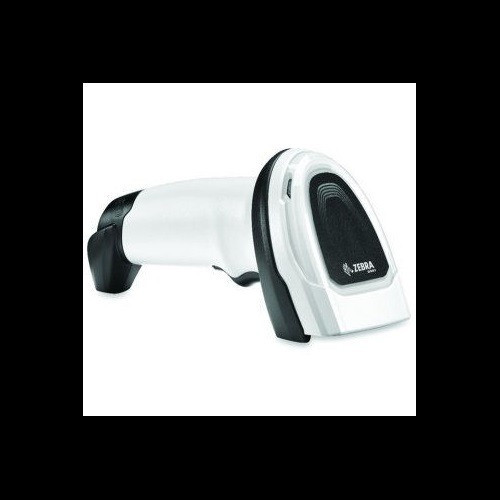
Zebra DS8108
Corded 2D
The Zebra DS8108 is a corded 2D presentation-capable imager well-suited for staffed retail checkout lanes that need omnidirectional 1D/2D decode including mobile coupons on phone screens; its 0–50°C operating range covers standard indoor retail environments and its single-window form factor fits compact counter brackets.
View product →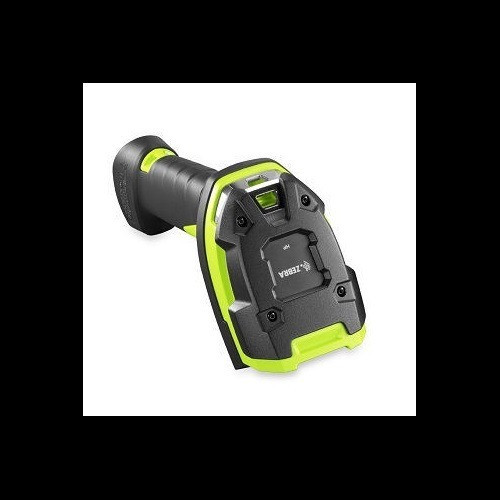
Zebra DS3608
Corded 2D
The Zebra DS3608 is a rugged corded 2D area imager in a high-density (HD) configuration, making it a strong fit when your retail environment also handles very small or densely packed barcodes such as jewelry tags, electronics serial labels, or pharmacy SKUs where standard-density optics struggle to resolve fine print.
View product →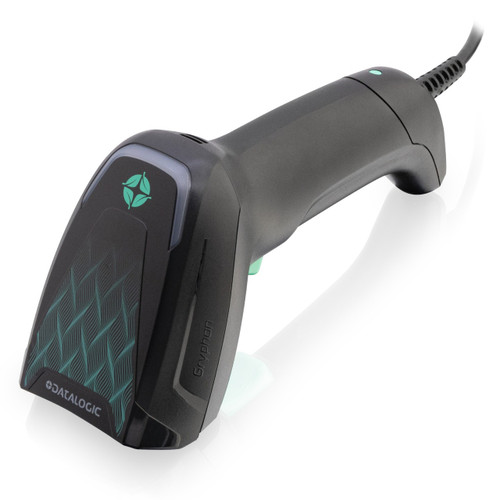
Datalogic GBT4600-HC-BTK1-HP
Corded 2D
The Datalogic GBT4600-HC with Bluetooth 5.2 Classic and Low Energy is well-suited for retail associates who need to move between a fixed charging base and a mobile scanning area — the Bluetooth 5.2 radio delivers lower latency and broader range than older BT versions, and USB plus RS-232 interface support covers both modern and legacy POS terminals; IP52 rating handles typical retail splash exposure.
View product →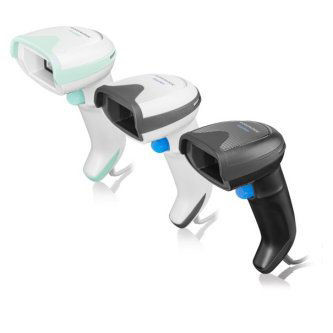
Datalogic GD4590-HCK10-HDR-B
Corded 2D
The Datalogic GD4590-HC is a corded 2D imager with Bluetooth 4.0 and both USB and RS-232 interfaces, making it a practical fit for established retail installations that require wired reliability at the register while retaining Bluetooth as an optional tethering path; IP52 construction suits standard dry-goods retail checkout counters.
View product →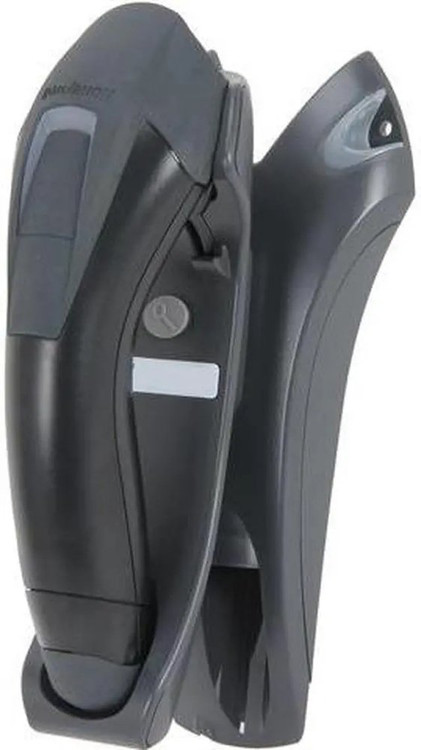
Honeywell 1202G-2USB-5BF-N
Corded 2D
The Honeywell 1202G is a Bluetooth 4.2 cordless 2D handheld rated IP65, making it a strong fit for line-busting, curbside pickup, and click-and-collect scenarios where associates roam and the scanner may be exposed to outdoor light rain or repeated washdowns; USB connectivity and the cable-included configuration allow it to fall back to corded operation when the base is occupied.
View product →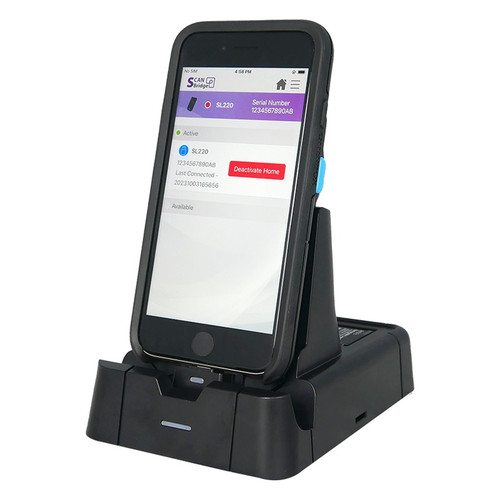
Unitech SL220-YMU0G0-SG-AZ3
Corded 2D
The Unitech SL220 is a corded 2D sled-style scanner with USB, Apple Lightning MFi, and USB-C interfaces rated IP65, making it well-suited for iPad-based or tablet-driven POS deployments — particularly boutique retail, pop-up shops, and food-service counters using iOS hardware — where a direct-connect scan engine eliminates the need for a separate Bluetooth pairing step or USB hub.
View product →Frequently Asked Questions
Can these barcode scanners read barcodes on phone screens and mobile coupons?
Yes — all six products are 2D area imagers, which use a CMOS image sensor rather than a laser. CMOS-based imagers can decode QR codes, DataMatrix, and standard barcodes displayed on LCD and OLED screens without the glare and reflection problems that plague laser scanners. This is a hard requirement for any retail lane that accepts digital coupons, loyalty app codes, or e-gift cards.
Do I need a 2D scanner or will a 1D laser still work for retail POS?
A 1D laser scanner handles standard UPC-A and EAN-13 barcodes reliably, but cannot decode QR codes or DataMatrix symbols — formats now common in mobile coupons, loyalty programs, and some GS1 DataBar applications. If any of your suppliers or promotions use 2D symbologies, or if you accept mobile-presented codes, a 2D imager is the right investment and the price difference between categories has narrowed considerably.
What is the difference between a presentation scanner and a handheld scanner for checkout?
A presentation scanner sits in a fixed bracket and reads items swept past its window without requiring a trigger pull, which speeds throughput in high-volume staffed lanes and reduces repetitive-strain injury for cashiers. A handheld triggered scanner requires the associate to aim and squeeze, giving more flexibility for awkward items, but at a slower per-scan cadence. Some 2D imagers like the DS8108 operate in both modes — presentation for counter use and triggered handheld when lifted from the stand.
What does IP52 vs. IP65 mean for a retail scanner, and does it matter at checkout?
IP52 means the device is protected against limited dust ingress and dripping water (vertical drips only) — adequate for dry-goods retail, general merchandise, and pharmacy counters. IP65 adds full dust-tight protection and resistance to low-pressure water jets from any direction, which is meaningful in grocery produce sections, food-service counters, or any environment with frequent surface cleaning using spray sanitizers. For a standard apparel or electronics checkout, IP52 is generally sufficient; for food retail or healthcare-adjacent environments, IP65 provides meaningful extra protection.
Can I use one of these scanners with an iPad-based POS system?
The Unitech SL220 is specifically designed for this use case, offering an Apple Lightning MFi connector for direct plug-in to iPad POS terminals — no hub, no pairing, no latency. The Bluetooth-capable models (Datalogic GBT4600, Honeywell 1202G) can pair to an iPad via Bluetooth HID, though iOS Bluetooth HID compatibility should be verified against your specific POS software version before deployment.
How do I choose between a corded and a Bluetooth wireless scanner for my store?
Corded scanners are the lower-complexity default for fixed checkout lanes — no battery to charge, no pairing to manage, and no radio interference to troubleshoot. Bluetooth models like the Honeywell 1202G pay off when associates need to roam for line-busting, receiving, or inventory counts away from the register. If your store has both fixed registers and a mobile-associate workflow, evaluate whether a single Bluetooth model used in both modes simplifies procurement, or whether a dedicated corded unit per lane plus a separate mobile scanner is a better operational fit.
Related Resources
- Barcode Scanner comparisons — head-to-head spec matchups
- Barcode Scanner Buying Guide
- Best Barcode Scanners for Warehouse Receiving
- Best 2D Barcode Scanners for Inventory
- All product comparisons
Speccing this for a project?
Send us your requirements and our senior specialists will confirm specs, compatibility, availability and pricing — free, usually within one business day. Channel-direct, factory-new, serving commercial integrators since 2014.
Get a Free QuoteComparing for a project?
Send us the models you are weighing and our team will confirm specs, compatibility, availability, and pricing — free, usually within one business day.