
Best 2D Barcode Scanners for Inventory
2D area-imager scanners for inventory and asset tracking — omnidirectional reading, damaged-label tolerance, and USB/keyboard-wedge connectivity.

Karl Wilson
Warehouse & Mobile Computing Specialist · Working integrator
Bottom line
For inventory and asset tracking, prioritize an area imager with omnidirectional decoding, solid damaged-label tolerance, and a connectivity interface that matches your host system — USB HID is the safe default, but Bluetooth cordless and multi-interface options (USB/RS-232/Lightning) serve mobile and legacy setups. Ruggedization tier matters most in warehouse and light-industrial environments: IP52 is adequate for clean stockrooms, while IP65 is the minimum for dock, cold-storage, or outdoor receiving areas. Match the scanner's depth-of-field and density capability to your label pitch — standard density for most shelf labels, high density for fine-pitch asset tags and small-pitch GS1.
What This Setup Needs
2D area imagers read any orientation simultaneously — no laser line to align — which cuts scan attempts per item and makes them the right default for inventory and asset tracking. Before spec-matching, nail down these seven decision factors:
- Imager type and density range: Standard-density engines handle EAN/UPC, Code 128, QR, and DataMatrix at normal label pitches. High-density (HD) engines resolve much finer pitch — critical for small GS1 DataMatrix on PCB components, pharmaceutical labels, or fine-pitch asset tags. Choosing HD when you don't need it adds cost; choosing standard when you do means missed reads.
- Damaged-label and low-contrast tolerance: Inventory labels suffer scuffs, fades, and partial tears. Look for imagers marketed with aggressive decode firmware (Zebra's PRZM Intelligent Imaging, Datalogic's 4-dot aiming, Honeywell's Adaptus/FlexRange) — these use full-frame image analysis rather than a single scan line, which dramatically improves first-read rate on degraded codes.
- Connectivity and host interface: USB HID (keyboard-wedge emulation) drops into any WMS or ERP with zero driver work. RS-232 is still required for older terminals and industrial PLCs. Bluetooth cordless is essential for picking aisles and receiving docks where a cable creates a trip hazard or limits reach. Multi-interface cables let you repurpose the same scanner body if the host changes.
- IP / ingress protection rating: IP52 (dust-protected, drip-resistant) covers clean indoor stockrooms and offices. IP65 (dust-tight, low-pressure water jet) is the right floor for receiving docks, food-adjacent areas, cold storage, and anywhere scanners get wiped down with cleaning agents. Don't buy IP52 for a wet-dock environment expecting it to survive.
- Drop and tumble durability: Inventory scanners get dropped. Check the rated drop spec (typically 4–6 ft onto concrete) and tumble cycle count. Industrial/rugged-class bodies survive far more abuse than presentation or retail-class bodies, which matters for shift-change handoffs and high-throughput lines.
- Form factor and scan trigger: Handheld pistol-grip with a manual trigger is the standard for pick/put-away. Compact or cable-attached sleds (Lightning, USB-C) pair with mobile devices when workers are already carrying a tablet or phone. Presentation/hands-free modes suit fixed receiving stations where both hands are occupied moving freight.
- Mobile device and OS ecosystem integration: If your WMS runs on iOS devices, an MFi Lightning interface eliminates the charging-port conflict and latency of Bluetooth. For Android-heavy operations, USB-C or Bluetooth 5.x pairings are the cleaner path. Verify the scanner ships with the correct cable or cradle for your host before ordering.
Our Picks
Selected from our catalog by spec-fit. All channel-direct and factory-new — not ranked by price.
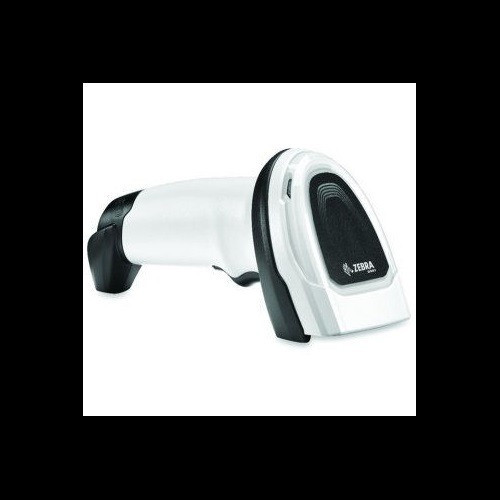
Zebra DS8108
Corded 2D
The Zebra DS8108 is a corded 2D area imager well-suited for general inventory and retail stockroom environments operating in the 32°–122°F range — its standard-density omnidirectional imaging handles UPC, Code 128, QR, and DataMatrix on typical shelf and carton labels, and the USB interface drops into any WMS as a keyboard-wedge device with no driver configuration.
View product →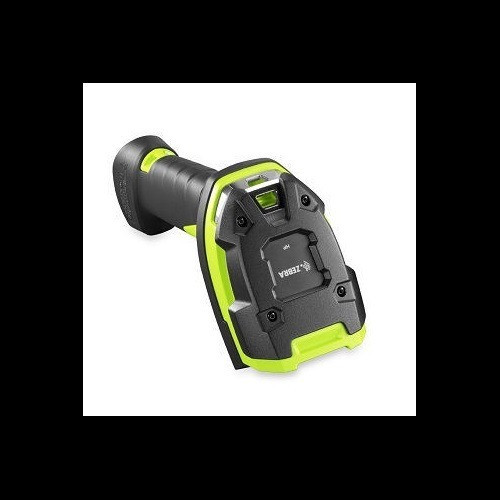
Zebra DS3608
Corded 2D
The Zebra DS3608 in High Density configuration is a strong fit when your inventory includes fine-pitch asset tags, small GS1 DataMatrix, or pharmaceutical/component labels where a standard-density engine misreads — its industrial-rugged body and HD imager are designed for harsh environments and label types that defeat lighter-duty scanners.
View product →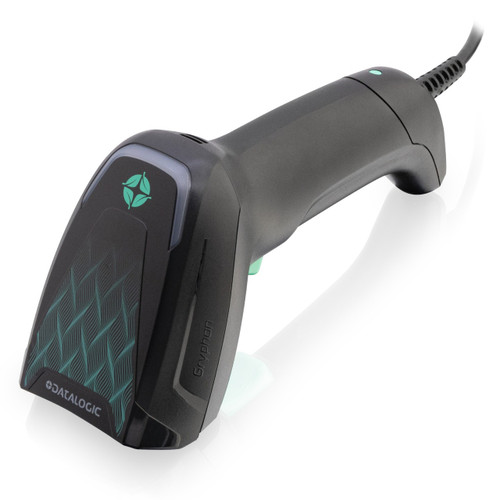
Datalogic GBT4600-HC-BTK1-HP
Corded 2D
The Datalogic GBT4600-HC-BTK1-HP is well-suited for mobile inventory workflows that need to toggle between a tethered host and cordless operation — Bluetooth 5.2 Classic & LE alongside USB and RS-232 on a single body gives you the flexibility to pair with both modern WMS stations and legacy RS-232 terminals, while IP52 covers clean indoor stockroom conditions.
View product →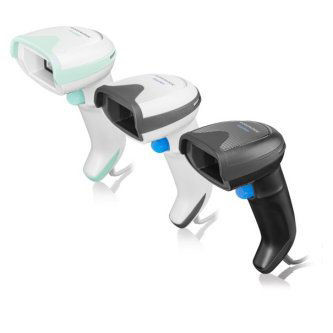
Datalogic GD4590-HCK10-HDR-B
Corded 2D
The Datalogic GD4590-HCK10-HDR-B is a solid fit for operations that need wired reliability with occasional cordless reach — Bluetooth 4.0 plus USB and RS-232 multi-interface support makes it adaptable across mixed host environments, and IP52 ingress protection is appropriate for climate-controlled distribution centers and indoor asset-tracking stations.
View product →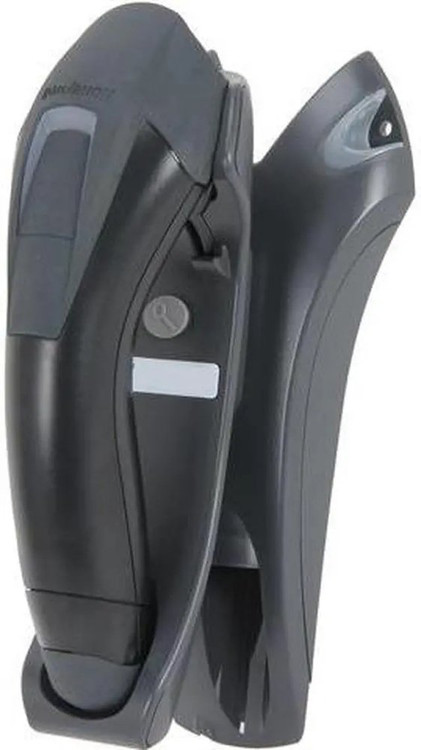
Honeywell 1202G-2USB-5BF-N
Corded 2D
The Honeywell 1202G in this configuration is well-suited for picking and receiving aisles where a tether is a workflow liability — Bluetooth 4.2 wireless paired with USB connectivity and an IP65 rating means it can handle the wiping-down and occasional splash exposure common on dock floors, while the cable-form cradle keeps it charged and ready between shifts.
View product →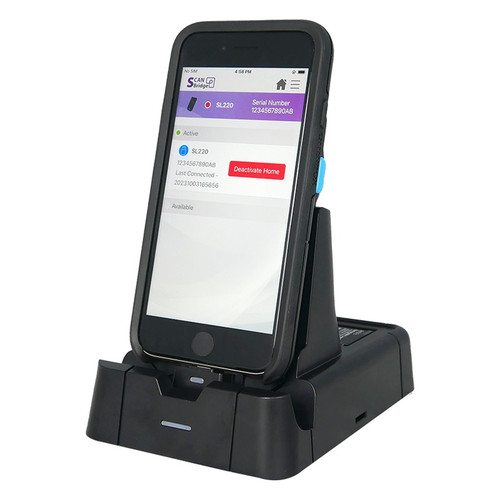
Unitech SL220-YMU0G0-SG-AZ3
Corded 2D
The Unitech SL220 is a strong fit for iOS- or USB-C-tablet-based WMS deployments — native Apple Lightning MFi and USB-C interfaces alongside standard USB let it attach directly to the worker's existing mobile device without fighting Bluetooth pairing or burning the charging port, and IP65 construction handles the physical demands of warehouse and light-industrial scan volumes.
View product →Frequently Asked Questions
What is the difference between a 1D laser scanner and a 2D area imager for inventory?
A 1D laser scanner projects a single horizontal line and can only decode linear barcodes (UPC, Code 128, Code 39) when aligned precisely with that line. A 2D area imager captures a full image frame, decodes all orientations simultaneously, and reads both linear and 2D symbologies (QR, DataMatrix, PDF417). For inventory, the area imager's omnidirectional capability means workers don't have to reorient the label — that alone measurably cuts scan time per item at scale.
Do I need a high-density imager or will a standard-density model cover most inventory labels?
Standard density covers the vast majority of inventory labels: full-size UPC/EAN, standard Code 128 carton labels, typical QR codes, and normal-pitch DataMatrix. You need a high-density engine when labels carry fine-pitch DataMatrix (common on PCBs, pharmaceutical unit-of-use packaging, and small asset tags), GS1 DataMatrix at very small print ratios, or any code where the bars or modules are physically small relative to the imager's field of view. When in doubt, measure the minimum element width (X-dimension) of your smallest label and compare it to the scanner's specified minimum decode pitch.
What IP rating do I need for a warehouse or receiving dock environment?
IP65 is the practical minimum for receiving docks, cold-storage areas, food-adjacent locations, and any environment where scanners get wiped with cleaning solutions or exposed to water spray. IP52 (dust-protected, drip-resistant) is adequate for clean, climate-controlled stockrooms and office inventory stations but should not be relied upon in wet-dock or outdoor conditions. Note that IP ratings do not cover chemical resistance — if harsh solvents are used for sanitation, verify the scanner's material compatibility with those specific agents.
Can I use a Bluetooth barcode scanner with our existing WMS without custom drivers?
In most cases, yes. Bluetooth scanners that pair in HID (Human Interface Device) profile appear to the host as a keyboard and inject decoded data as keystrokes — no driver or SDK integration is needed, and this works with virtually any WMS or ERP that accepts keyboard input. If your WMS uses a serial/COM port API or a scanner SDK for richer data handling (preambles, postambles, multi-code queuing), you may need the scanner's proprietary Bluetooth SPP profile or a cradle that presents a virtual COM port. Confirm your WMS vendor's scanner integration requirements before selecting a Bluetooth-only model.
What should I look for in a scanner for damaged or poorly printed barcodes?
The key is image-based decoding depth, not just optical resolution. Area imagers that use full-frame image analysis with aggressive error-correction algorithms — rather than a simple threshold pass — significantly outperform basic imagers on faded, wrinkled, torn, or low-contrast labels. Vendor firmware names like Zebra's PRZM Intelligent Imaging or Datalogic's decoding pipeline indicate this capability. In practice, first-read rate on damaged labels is the most telling benchmark; if your operation has a high percentage of re-used or weather-exposed labels, request a demo unit and test against your actual worst-case label stock before committing.
Is a corded USB scanner or a Bluetooth cordless scanner better for a small warehouse operation?
Corded USB is simpler to deploy and maintain — no battery charging, no pairing management, and no range concerns — making it the right default for fixed scan stations like receiving desks or pack-and-ship benches. Bluetooth cordless pays for itself when workers move continuously through picking aisles, between shelving bays, or in receiving areas where a cord creates a trip hazard or limits reach to high shelves. For a small operation with mixed fixed and mobile needs, a scanner that supports both USB (cradled/tethered) and Bluetooth (cordless) on the same body gives you the most flexibility without buying two separate SKUs.
Related Resources
- Barcode Scanner comparisons — head-to-head spec matchups
- Barcode Scanner Buying Guide
- Best Barcode Scanners for Warehouse Receiving
- Best Barcode Scanners for Retail POS
- All product comparisons
Speccing this for a project?
Send us your requirements and our senior specialists will confirm specs, compatibility, availability and pricing — free, usually within one business day. Channel-direct, factory-new, serving commercial integrators since 2014.
Get a Free QuoteComparing for a project?
Send us the models you are weighing and our team will confirm specs, compatibility, availability, and pricing — free, usually within one business day.