
Zebra DS8108-SR vs Zebra DS8108-SR: Specification Comparison
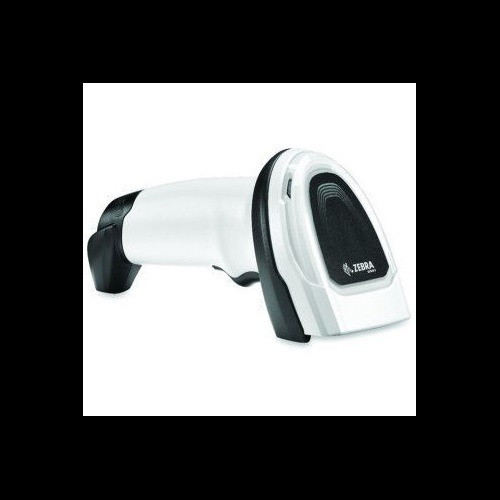
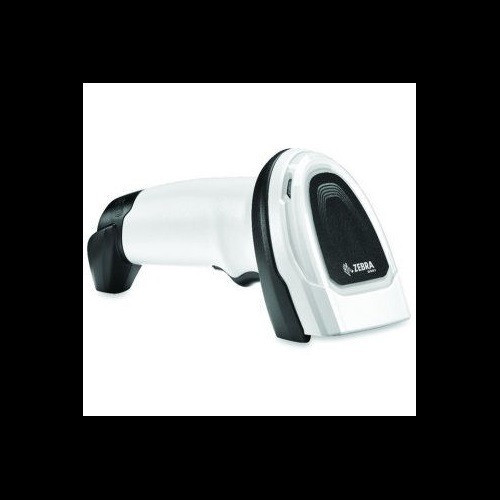
Both SKUs are the Zebra DS8108-SR cordless Bluetooth imager-based barcode scanner, sold as USB kit bundles with a cradle and a CBA-U21-S07ZBR cable. Product A (DS8108-SR7U2100SGW) is paired with a standard desk cradle, while Product B (DS8108-SR7U2100AZW) ships with a presentation cradle configuration. Buyers cross-shopping these two are essentially selecting between cradle form factors within the same scanner platform — the underlying DS8108-SR scanner hardware, wireless specs, battery, imager, and decode capabilities are identical across both.
In This Guide
- How do the physical configurations and included cradle form factors differ between these two kits?
- Are wireless performance, battery life, and scan throughput equivalent across both kits?
- How do host interface support and barcode decode capabilities compare for integration planning?
- Which should you choose: the DS8108-SR or the DS8108-SR?
- Side-by-Side Specs
- FAQ
How do the physical configurations and included cradle form factors differ between these two kits?
Product A (DS8108-SR7U2100SGW) includes both a desk cradle (2.8 in. H x 3.3 in. W x 8.3 in. D, 7.1 oz./202 g) and a presentation cradle (2.9 in. H x 3.7 in. W x 4.8 in. D, 6.5 oz./182 g), and separately lists the cordless scanner weight at 8.3 oz./235.3 g. Product B (DS8108-SR7U2100AZW) specifies only the presentation cradle (2.9 in. H x 3.7 in. W x 4.8 in. D, 6.5 oz./182 g) and does not list a desk cradle or a separate cordless scanner weight. The scanner body dimensions are identical in both kits: 6.6 in. H x 2.6 in. W x 4.2 in. D, 5.4 oz./154 g. The desk cradle in Product A has a notably deeper footprint (8.3 in. D vs. 4.8 in. D for the presentation cradle), which has direct implications for counter space in retail or warehouse deployments.
Are wireless performance, battery life, and scan throughput equivalent across both kits?
The cordless communication and battery specifications are identical between both products. Both support Bluetooth 4.0 with BLE, with Class 1 range of 330 ft. (100 m) and Class 2 range of 33 ft. (10 m). Both carry a 2,500 mAh Li-Ion battery rated for 65,000 scans per full charge and 83 hours of operating time, with a typical USB charge time of 7 hours 45 minutes. Product A specifies scanner operating current at 450 mA (typical) and cradle operating current at 470 mA (typical), and notes cordless cradle input voltage as 5V: 4.7–5.5 VDC or 12V: 10.8–13.2 VDC. Product B lists a single input voltage range of 4.5–5.5 VDC and does not itemize cradle operating current separately. These distinctions may reflect the inclusion of multi-cradle support data in Product A's spec sheet rather than a functional hardware difference.
How do host interface support and barcode decode capabilities compare for integration planning?
Both kits support USB, RS232, and Keyboard Wedge host interfaces. Product A lists RS485 as a supported host interface. Product B specifies 'TGCS (IBM) 46xx over RS485,' which is a more explicit description of the same RS485 connection in the context of IBM point-of-sale systems — a relevant distinction for retail POS integrators. Both support over 90 international keyboards. The imager specifications are identical: 1,280 x 960 pixel sensor, 48° H x 37° V field of view, 16% minimum print contrast, and +/- 60° skew/pitch with 0–360° roll tolerance. The 1D symbology sets listed are identical across both. Product A explicitly lists decode range tables (e.g., Code 39 3 mil: 2.2–5.0 in.; Code 39 20 mil: 0–36.8 in.) and minimum resolution figures (Code 39: 3.0 mil; Data Matrix: 6.0 mil; QR: 6.0 mil; PDF: 5.0 mil). Product B does not include decode range or minimum resolution tables. Product A also lists illumination details implicitly through decode ranges; Product B explicitly names the illumination source as two 645 nm Red LEDs.
Which should you choose: the DS8108-SR or the DS8108-SR?
Our take: The DS8108-SR7U2100SGW (Product A) is the stronger choice when a deployment requires both a desk cradle and a presentation cradle, or when detailed decode range data is needed for site planning. Product A's spec sheet documents the desk cradle (2.8 in. H x 3.3 in. W x 8.3 in. D, 7.1 oz./202 g) as an included component, which Product B does not list. Product A also provides full decode range tables — for example, Code 39 at 20 mil reads from 0 to 36.8 in. — and minimum resolution figures down to 3.0 mil for 1D codes, supporting accurate deployment scoping. Product B (DS8108-SR7U2100AZW) explicitly identifies IBM TGCS 46xx RS485 compatibility, making it the clearer specification fit for IBM POS environments. The underlying scanner hardware, Bluetooth range, battery life (65,000 scans, 83 hours), and decode engine are identical. Selection should be driven by cradle type needed and POS platform: IBM retail environments favor Product B; general-purpose or dual-cradle deployments favor Product A.
Side-by-Side Comparison
Spec-for-spec, from manufacturer data.
| Specification | Zebra DS8108-SR | Zebra DS8108-SR |
|---|---|---|
| SKU | DS8108-SR7U2100SGW | DS8108-SR7U2100AZW |
| Scanner Dimensions (H x W x D) | 6.6 x 2.6 x 4.2 in. | 6.6 x 2.6 x 4.2 in. |
| Scanner Weight | 5.4 oz. / 154 g | 5.4 oz. / 154 g |
| Desk Cradle Dimensions (H x W x D) | 2.8 x 3.3 x 8.3 in. | — |
| Desk Cradle Weight | 7.1 oz. / 202 g | — |
| Presentation Cradle Dimensions (H x W x D) | 2.9 x 3.7 x 4.8 in. | 2.9 x 3.7 x 4.8 in. |
| Presentation Cradle Weight | 6.5 oz. / 182 g | 6.5 oz. / 182 g |
| Drop Specification | 6.0 ft. / 1.8 m to concrete | 6.0 ft. / 1.8 m to concrete |
| IP Sealing | IP42 | IP42 |
| Bluetooth Standard | Bluetooth 4.0 with BLE | Bluetooth 4.0 with BLE |
| Bluetooth Range Class 1 / Class 2 | 330 ft. (100 m) / 33 ft. (10 m) | 330 ft. (100 m) / 33 ft. (10 m) |
| Battery Capacity | 2,500 mAh Li-Ion | 2,500 mAh Li-Ion |
| Scans Per Full Charge | 65,000 | 65,000 |
| Operating Time Per Full Charge | 83 hours | 83 hours |
| Host Interfaces | USB, RS232, Keyboard Wedge, RS485 | USB, RS232, Keyboard Wedge, TGCS (IBM) 46xx over RS485 |
| Decode Range Code 39 (20 mil) | 0 – 36.8 in. / 0 – 93.5 cm | — |
| Minimum Resolution (Code 39 / Data Matrix / QR) | 3.0 mil / 6.0 mil / 6.0 mil | — |
| Illumination | — | (2) 645 nm Red LEDs |
Frequently Asked Questions
Which should you choose: the DS8108-SR or the DS8108-SR?
The DS8108-SR7U2100SGW (Product A) is the stronger choice when a deployment requires both a desk cradle and a presentation cradle, or when detailed decode range data is needed for site planning. Product A's spec sheet documents the desk cradle (2.8 in. H x 3.3 in. W x 8.3 in. D, 7.1 oz./202 g) as an included component, which Product B does not list. Product A also provides full decode range tables — for example, Code 39 at 20 mil reads from 0 to 36.8 in. — and minimum resolution figures down to 3.0 mil for 1D codes, supporting accurate deployment scoping. Product B (DS8108-SR7U2100AZW) explicitly identifies IBM TGCS 46xx RS485 compatibility, making it the clearer specification fit for IBM POS environments. The underlying scanner hardware, Bluetooth range, battery life (65,000 scans, 83 hours), and decode engine are identical. Selection should be driven by cradle type needed and POS platform: IBM retail environments favor Product B; general-purpose or dual-cradle deployments favor Product A.
Is there any difference in the actual scanner between the DS8108-SR7U2100SGW and DS8108-SR7U2100AZW?
Based on the provided specifications, the scanner hardware is identical in both kits: same dimensions (6.6 in. H x 2.6 in. W x 4.2 in. D), same weight (5.4 oz./154 g), same 1,280 x 960 imager, same Bluetooth 4.0 with BLE at 330 ft. Class 1 range, same 2,500 mAh battery rated for 65,000 scans and 83 hours per charge, and the same 1D and 2D symbology support. The SKU difference reflects the cradle configuration bundled with each kit, not a change to the scanner unit itself.
Which kit is better suited for an IBM point-of-sale checkout environment?
Product B (DS8108-SR7U2100AZW) is the more explicitly documented choice for IBM POS environments. Its host interface specification calls out 'TGCS (IBM) 46xx over RS485' by name, which directly addresses compatibility with IBM 4600-series POS terminals. Product A lists RS485 generically without specifying IBM TGCS. If IBM 46xx integration is a deployment requirement, Product B's spec sheet provides the clearer confirmation.
Do both kits include a presentation cradle, and does either include a desk cradle?
Product B (DS8108-SR7U2100AZW) specifies a presentation cradle (2.9 in. H x 3.7 in. W x 4.8 in. D, 6.5 oz./182 g) and does not list a desk cradle. Product A (DS8108-SR7U2100SGW) lists both a desk cradle (2.8 in. H x 3.3 in. W x 8.3 in. D, 7.1 oz./202 g) and a presentation cradle (2.9 in. H x 3.7 in. W x 4.8 in. D, 6.5 oz./182 g) in its specification data. Buyers who need a traditional desk-stand cradle alongside or instead of a presentation cradle should reference Product A's spec sheet.
More Barcode Scanner Comparisons
- Zebra DS8108-SR vs Zebra DS8108-HC
- Datalogic 931061345 vs Datalogic 931024111-00053
- Datalogic 931061335 vs Datalogic 931061345
- Datalogic 931061335 vs Datalogic 931024111-00053
- Datalogic 957022201-00053 vs Datalogic 931061345
- Zebra DS9308-SR vs Datalogic 931061335
Barcode Scanner Buying Guides
Get a Second Opinion on Your Camera Choice
Share your site layout, coverage goals, and budget. Our team will validate the camera selection, flag anything we would change, and recommend products that match the use case.