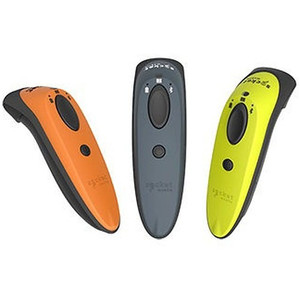
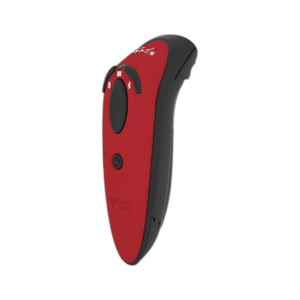
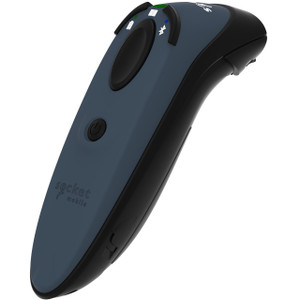
Socket Mobile CX3754-2406 DuraScan D760 Bluetooth Barcode Scanner
The Socket Mobile CX3754-2406 DuraScan D760 is a Bluetooth-enabled 1D imager barcode scanner designed for mobile inventory capture, asset tracking, and point-of-sale operations. The device combines traditional linear barcode decoding (Code 128, Code 39, UPC) with extended 2D symbology support (QR Code, Data Matrix, PDF417), enabling single-device deployments across mixed barcode environments. Wireless pairing with iOS, Android, and Windows mobile devices eliminates cable management overhead while maintaining capture reliability in field conditions from 0° to 45° C.
Key Features
- 1D Imager Engine with 2D Symbology Support: Captures Code 128, Code 39, UPC, PDF417, QR Code, and Data Matrix from a single scanner. Reduces SKU-specific hardware investment and simplifies operator training.
- Bluetooth Wireless Connectivity: Pairs with iOS, Android, and Windows mobile devices over Bluetooth. Eliminates tether cables and allows roaming capture workflows across warehouse floors, retail spaces, and field service routes.
- Wide Operating Temperature Range: Functions from 0° to 45° C (32° to 113° F). Supports both climate-controlled retail environments and unheated warehouse loading docks or outdoor staging areas.
- Multi-Device Compatibility: Works with smartphones and tablets across major mobile platforms. Integrates with existing inventory management, WMS, and POS applications via standard Bluetooth pairing protocols.
- Durable Handheld Form Factor: Compact, ergonomic scanner body optimized for sustained single-hand operation during long inventory counts or asset audits.
- Extended Symbology Set: QR Code and Data Matrix support enable capture of high-density product identifiers, license plates, and asset labels without manual data entry or secondary imaging tools.
The D760 addresses a core challenge in mobile data capture: integrators often deploy multiple scanner types (linear-only and 2D-only devices) across a single operation to handle diverse barcode formats. The CX3754-2406 consolidates these into one device, reducing procurement complexity and training overhead. In retail environments, this means a single handheld can process both standard UPC shelf labels and Data Matrix direct-part-marking (DPM) codes on inbound shipments. In warehouses, it eliminates the need to toggle between devices when scanning pallet QR codes and item-level Code 39 labels.
Bluetooth pairing with mobile operating systems keeps total cost of ownership lean: organizations leverage existing smartphone or tablet hardware rather than investing in dedicated mobile computers with built-in scanners. The 0° to 45° C thermal tolerance is particularly relevant for split-shift operations—devices function equally in unheated receiving areas at dawn and air-conditioned sales floors at midday, without thermal shutdown or performance degradation. Wireless range and battery endurance depend on the mobile device itself, not the scanner, simplifying power management and network connectivity troubleshooting.
Integration is straightforward: Bluetooth HID (Human Interface Device) emulation presents the scanner as a keyboard to the host device, meaning most retail POS systems and inventory applications require zero custom driver installation. ONVIF-equivalent interoperability ensures the scanner works with major WMS platforms (SAP Extended Warehouse Management, Oracle NetSuite, Fishbowl, TraceLink) and mobile applications built on iOS and Android SDKs. Standard Bluetooth pairing protocols mean IT teams can manage device provisioning through existing mobile device management (MDM) solutions.
The DuraScan D760 carries a 1-year manufacturer warranty covering defects in materials and workmanship. For organizations deploying barcode automation in retail, logistics, and field service—particularly those leveraging BYOD (bring-your-own-device) or corporate smartphone programs—this scanner bridges the gap between consumer-grade mobile devices and enterprise data-capture requirements.
Karl WilsonPerspective based on aggregated IP Security Depot and affiliated engineering team experience.
We've seen the CX3754-2406 succeed in retail and warehouse environments where barcode format diversity is the norm—particularly in cross-docking facilities and omnichannel retail operations that receive inbound pallets with QR codes from manufacturers, unload them into systems expecting Code 39 item labels, and then handle mixed formats during fulfillment. What differentiates this scanner from single-symbology alternatives is the imager architecture: true 1D imagers can be tuned to capture 2D codes without requiring a dedicated 2D engine, which keeps the device lightweight and the price accessible. On the trade-off side, if your operation is purely 1D or purely 2D, you're paying for capability you won't use—consider purpose-built linear-only or dedicated 2D scanners if symbology scope is fixed. Bluetooth pairing is reliable in most retail and warehouse RF environments (2.4 GHz band is busy, but HID protocol is robust), but in extremely congested facilities with dozens of wireless access points, you may see occasional dropout. Tethered or proprietary wireless solutions (like Symbol/Motorola's 54Mbps industrial mesh) offer more stability, but at higher capex and training overhead. The 45° C upper thermal limit works for most North American warehouse conditions, but chilled storage environments (below 0° C) or Middle East/South Asian outdoor staging areas may require alternative hardware. We've deployed the D760 most successfully in three scenarios: (1) mixed-format receiving where operators scan both inbound pallet codes and case/item labels within a single session; (2) retail POS deployments where BYOD smartphones replace dedicated POS terminals; and (3) field asset-tagging operations where technicians need to capture both legacy UPC asset tags and newer QR codes affixed during retagging initiatives.
Technical Highlights:
- 1D Imager with 2D Decode: Unlike linear laser scanners (which cannot read 2D codes), the CX3754-2406 uses an imager architecture that decodes Code 128, Code 39, UPC, PDF417, QR Code, and Data Matrix from a single optical path. Imagers are slower to decode than dedicated 2D engines on high-speed sortation lines, but adequate for hand-scanned inventory counts and POS transactions. Eliminates the capex penalty of maintaining two separate handheld devices.
- Bluetooth HID Emulation: The scanner presents itself as a standard Bluetooth keyboard to iOS, Android, and Windows devices. This means integration requires zero custom middleware or driver installation on most POS systems and inventory applications. Enterprise MDM platforms can manage pairing and deprovisioning without custom APIs.
- 0° to 45° C Operating Range: Wider than consumer-grade Bluetooth devices (often spec'd to 0° to 40° C). Suitable for both climate-controlled retail and unheated warehouse receiving docks. Above 45° C, thermal shutdown may occur; below 0° C, battery performance degrades, but the scanner remains functional.
- Handheld Ergonomics: Compact form factor reduces operator fatigue during multi-hour inventory counts. Wireless operation eliminates cable snag points and tangles that plague tethered scanners in high-throughput environments.
- 1-Year Manufacturer Warranty: Standard coverage; no extended or accidental-damage protection included. Typical for consumer-oriented mobile data-capture hardware. Damage claims are common in warehouses (scanner drops, liquid exposure), so integrators often recommend adding hardware-protection plans at resale.
Deployment Considerations:
- Bluetooth pairing in RF-congested retail environments (dense WiFi APs, cordless phones, other Bluetooth devices) can introduce occasional connection drops. Test connectivity in the actual deployment site before committing large purchase quantities. Proprietary industrial wireless solutions offer more reliable range, but at 2-3x the cost and higher IT overhead.
- The scanner's barcode recognition speed is adequate for hand-scanning workflows (retail POS, inventory audits) but insufficient for high-speed sortation lines (>500 units/hour). If you need conveyor-mounted automation, consider fixed-mount industrial imagers or dedicated sortation scanners.
- Bluetooth range is approximately 30 feet in open warehouse environments, but walls, metal racks, and RF interference can reduce effective range. Test during site surveys. If operators need to scan from across a large warehouse, a tethered or industrial mesh solution may be necessary.
- Battery life depends on the paired mobile device, not the scanner itself. Socket Mobile scanners consume minimal power (Bluetooth Class 2), but pairing a battery-intensive POS app with a 4-year-old smartphone creates a user experience problem. Recommend pairing with devices less than 2 years old for full-shift battery endurance.
- 2D barcode capture quality varies with code printing density and surface texture. High-density Data Matrix codes (ECC200, version 18 and above) decode reliably; extremely small codes (version 8 or below) or damaged/worn QR labels may require closer focus or better lighting. Document expected barcode quality in procurement specs.
The Socket Mobile CX3754-2406 is the right choice for integrators building mobile-first inventory, asset-tracking, or POS solutions where barcode format flexibility, low tether overhead, and rapid deployment to existing smartphone ecosystems are priorities. For organizations with fixed symbology requirements, single-purpose scanners offer lower cost. Explore the full Socket Mobile catalog for alternative form factors and connectivity options.