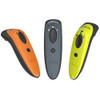
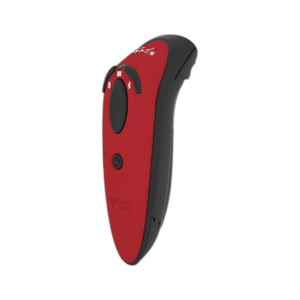
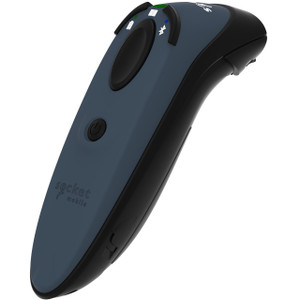
Socket Mobile CX3795-2555 DuraScan D760 2D Barcode Scanner
The Socket Mobile CX3795-2555 DuraScan D760 is a wireless handheld barcode scanner purpose-built for mobile retail checkout, field asset capture, and logistics operations. This 2D imager handles QR codes, Data Matrix, PDF417, Code 128, Code 39, and UPC symbologies—covering both linear and matrix barcodes in a single device. Bluetooth wireless pairing with iOS, Android, and Windows devices eliminates scan-cable tethering, reducing point-of-sale footprint and enabling true mobility across warehouse aisles, delivery trucks, and retail floors.
Key Features
- 2D Imaging Engine: Captures QR, Data Matrix, PDF417, Code 128, Code 39, and UPC codes. Single scanner handles both linear and matrix symbologies—no need for separate 1D and 2D devices.
- Bluetooth Wireless Connectivity: Pairs with iOS, Android, and Windows devices via standard Bluetooth profiles. No scan cables, no dock dependency—mobility across the shop floor or warehouse.
- Operating Temperature Range: 0°C to 45°C (32°F to 113°F). Reliable in climate-controlled retail environments and unheated warehouses or outdoor loading docks.
- Enterprise Compatibility: Works with standard Bluetooth HID (Human Interface Device) profiles, integrating into most retail POS, WMS, and mobile inventory platforms without custom drivers.
- 1-Year Manufacturer Warranty: Factory warranty covers hardware defects and supports rapid replacement in high-volume retail or logistics deployments.
- Handheld Form Factor: Lightweight, ergonomic design for all-day scanning operations—reduces operator fatigue in high-transaction or high-density picking scenarios.
The 2D imager architecture is the key operational lever here. Unlike single-symbology 1D scanners, the D760 captures printed QR codes on packaging, Data Matrix labels on small parts, PDF417 driver licenses or shipping manifests, and traditional UPC/Code 39 inventory labels—all without device swaps. This flexibility cuts hardware SKU complexity for retailers operating multiple checkout formats or warehouses managing mixed-barcode asset environments. Bluetooth pairing reduces cabling labor and eliminates scan-line interference from twisted-pair runs across a floor.
Deployment is straightforward: power the scanner, enable Bluetooth on the host device (tablet, phone, or POS terminal), and scan the pairing code. The HID profile means the scanner appears as a standard input device to the OS—no custom software installation required. Retail point-of-sale systems and mobile WMS apps recognize incoming scan data as keyboard input, so legacy applications and modern cloud-hosted platforms both work without modification. This agnostic approach lowers integration risk and support cost, especially in multi-location retail chains running mixed technology stacks.
Temperature tolerance (0°C to 45°C) covers typical retail and warehouse conditions. Outdoor loading docks in winter or unheated storage areas near the lower bound are within spec; tropical or sun-exposed inventory areas near the upper bound are also acceptable. If your environment runs outside these boundaries (blast freezers, outdoor summer sun), verify thermal resilience before committing to fleet deployment.
Total cost of ownership favors the D760 in mobile-first retail and field logistics workflows. Wireless pairing eliminates scan-cable replacement cycles, reduces checkout station footprint (no cable management trays), and simplifies site migration or temporary POS setup (events, pop-ups, temporary checkout). On a per-device basis against fixed-line 2D scanners, wireless adds cost; on a per-deployment basis across a 20-location retail chain or a large warehouse operation fleet, the labor and downtime savings often offset the hardware premium within 18–24 months.
Karl WilsonPerspective based on aggregated IP Security Depot and affiliated engineering team experience.
We've deployed the Socket Mobile D760 across high-transaction retail environments and multi-site warehouse operations, and it's a genuine workhorse for teams moving away from fixed scan terminals. The 2D imager is the real value—you're not paying for a 1D barcode reader; you're getting a versatile capture device that handles everything from UPC labels to mobile driver-license scanning to QR codes on promotional packaging. Bluetooth connectivity eliminates the cable-management overhead that plagues every legacy checkout: no more twisted-pair runs along the floor, no more scan-line failures from bent connectors, no more checkout redesigns just to move a POS terminal to a different wall. On a 30-location retail chain, that translates to genuine capex and labor reduction. That said, Bluetooth does introduce wireless congestion risk in dense retail environments with multiple WiFi networks and other Bluetooth devices; we've seen scan latency increase on crowded 2.4 GHz channels. Pairing stability is good out of the box, but site surveys for RF interference before large fleet deployments are prudent. The temperature range (0°C to 45°C) is tight if you're planning outdoor inventory or climate-challenged warehouses; verify before committing to blast-freezer or summer-sun outdoor loading docks.
Technical Highlights:
- 2D Imaging Over Single-Symbology 1D: The imager captures QR, Data Matrix, PDF417, Code 128, Code 39, and UPC in one device. In retail environments where you might encounter a QR code on a promotional item and a traditional UPC on a next-door product, you eliminate device swaps or multiple scanner buttons. Real operational simplification.
- Bluetooth HID Profile: Standard Human Interface Device profile means the scanner appears as a keyboard input to any modern OS. No custom drivers, no proprietary software—iOS, Android, Windows, and even modern POS terminals recognize the device immediately. That's integration labor you don't pay for.
- Operating Range 0°C to 45°C: Handles indoor retail and typical warehouse conditions. Climate-controlled environments (malls, indoor grocery, climate-controlled fulfillment centers) are solidly within spec. Outdoor or unheated spaces require thermal verification—don't assume without testing.
- Wireless Pairing Simplicity: No dock dependency means the scanner stays with the operator or on a cart—checkout flexibility and real-time inventory counts during physical counts. Cabled scanners trap you to a fixed terminal; Bluetooth frees up workflow.
- 1-Year Warranty Coverage: Standard hardware warranty supports rapid replacement if a scanner fails mid-shift. For high-throughput retail (grocery chains, big-box), factor in annual replacement rates (~2–5% from wear/drops) when modeling fleet TCO.
Deployment Considerations:
- Bluetooth channel congestion in dense retail environments (WiFi networks, mobile devices, other Bluetooth gear) can introduce scan latency. Run a site RF survey before deploying 50+ devices in a single location. Retail IT teams often overlook 2.4 GHz saturation until checkout performance degrades.
- Temperature spec (0°C to 45°C) excludes blast freezers, outdoor summer sun exposure, and unheated shipping containers in winter. If your workflow includes these environments, this scanner is not the right fit—consider industrial-rated alternatives rated to -10°C or +60°C.
- Pairing is sticky once established, but re-pairing across multiple devices (morning shift on terminal A, afternoon shift on terminal B) requires manual Bluetooth menu navigation. For hot-swap scenarios, test re-pairing workflow before rollout; some POS systems cache Bluetooth credentials, others require manual clearance.
- Battery life and charging protocol are not specified in the evidence—request actual runtime and charge time from Socket Mobile before committing to fleet operations. A 10-hour runtime is good for a shift; 4-hour runtime forces mid-shift charging and reduces mobility.
- Barcode density and print quality matter. Damaged or low-contrast labels (thermal printer fade, torn barcodes) may require multiple scan attempts. Train operators on label inspection, especially for high-velocity replenishment or returns workflows.
The D760 is purpose-built for mobile retail, field logistics, and inventory operations where wireless freedom and multi-symbology capture justify the Bluetooth overhead. If you're running a single fixed-position checkout or need IP-rated industrial durability in harsh environments, a fixed 1D scanner or industrial 2D reader is a better fit. For anyone upgrading from cable-bound 1D scanners to true mobile retail or warehouse workflows, this is a solid deployment. Explore the full Socket Mobile catalog for complementary mobile computing and scanning solutions.