
Sato WWCT04241-WDN vs Sato WWCT04241-WCN: Specification Comparison
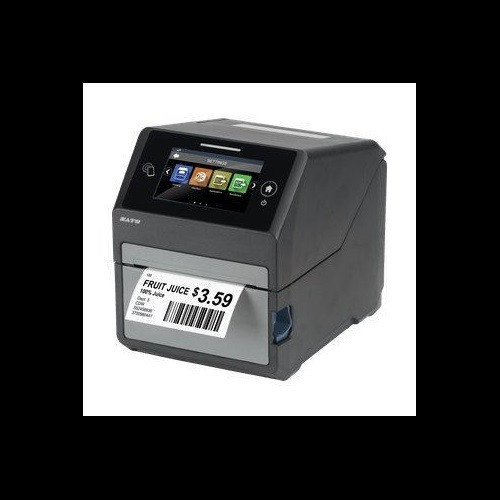
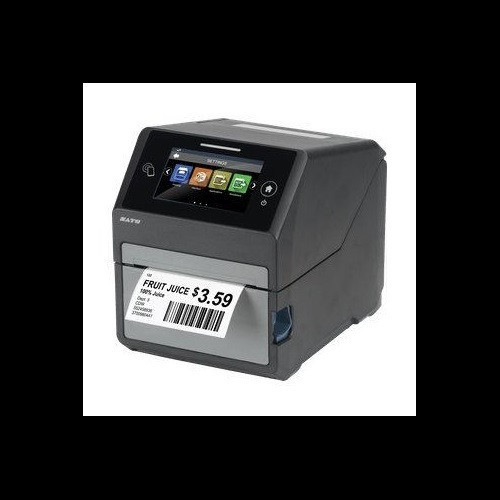
Both the WWCT04241-WDN and WWCT04241-WCN are Sato CT4-LX 305 dpi UHF RFID desktop thermal printers sharing the same physical chassis and core RFID architecture. Buyers evaluating either unit are selecting a mid-range desktop label printer with integrated UHF encoding for asset tracking, pharmaceutical compliance, or inventory labeling. The comparison focuses on the three dimensions that most differentiate these two SKUs for an installer or IT buyer: print throughput and speed, connectivity interface set, and environmental and media handling specifications.
In This Guide
- Which model delivers faster print throughput and how do the two SKUs differ on speed?
- Do the two models offer the same connectivity options, and are there interface differences that affect integration?
- Are there differences in media handling capacity, operating environment, or memory that affect deployment planning?
- Which should you choose: the WWCT04241-WDN or the WWCT04241-WCN?
- Side-by-Side Specs
- FAQ
Which model delivers faster print throughput and how do the two SKUs differ on speed?
The WWCT04241-WDN is specified at 8 inches per second (ips) in both its structured spec fields and its tilde-prefixed marketing data, giving a consistent declared speed across both data sources.
The WWCT04241-WCN presents a conflict: its structured spec field lists 8 ips, but the tilde-prefixed marketing data states 6 ips. Because the two data layers disagree, the actual certified throughput for the WCN cannot be confirmed from the provided specifications alone. Buyers requiring a guaranteed speed figure for the WCN should consult the model-specific datasheet at /content/product-datasheets/WWCT04241-WCN.pdf before committing.
The WCN marketing layer also cites '1,000–2,000 labels per hour on EPC C1G2 UHF inlays,' a throughput claim absent from the WDN's spec set. No equivalent labels-per-hour figure is provided for the WDN, so a direct throughput comparison on that metric is not possible from the available data.
Both models share a 305 dpi print resolution and a 4.09-inch maximum print width, so label quality and width capacity are equivalent across the two units.
Do the two models offer the same connectivity options, and are there interface differences that affect integration?
The WWCT04241-WDN's structured spec lists Ethernet, Wi-Fi, Bluetooth, and USB. Its tilde-prefixed data confirms USB 2.0, Ethernet, Wi-Fi, and Bluetooth, making Bluetooth a confirmed differentiator for this SKU.
The WWCT04241-WCN's structured spec also lists Ethernet, Wi-Fi, Bluetooth, and USB. However, its tilde-prefixed marketing data lists USB 2.0, Ethernet, NFC, and Wi-Fi — substituting NFC for Bluetooth. This creates a discrepancy within the WCN's own spec set: the structured field includes Bluetooth while the marketing layer replaces it with NFC.
NFC is not mentioned anywhere in the WDN's spec data. Bluetooth is confirmed for the WDN but is contradicted by the WCN's marketing layer. Buyers integrating with NFC-based provisioning workflows or Bluetooth-paired devices should verify the actual interface set for the WCN directly against its datasheet before deployment.
Both models share Ethernet and Wi-Fi, ensuring compatibility with standard wired and wireless network infrastructure in either case.
Are there differences in media handling capacity, operating environment, or memory that affect deployment planning?
Media handling specifications are nearly identical: both models support a maximum media roll diameter of 5 inches, a maximum media width of 4.1 inches, and a ribbon capacity of 984 feet. The WWCT04241-WCN additionally specifies a minimum media width of 1 inch; no minimum media width is stated for the WDN.
Both units operate from 32°F to 104°F (0°C to 40°C). The WCN explicitly states both Fahrenheit and Celsius ranges. The WDN states the Fahrenheit range; the Celsius equivalent is not separately listed in its spec fields, though the values are consistent.
Memory is identical across both SKUs: 4 GB Flash, 1 GB DDR3, and 2 GB user storage. Both units weigh 7.3 lbs (3.3 kg) and share the same physical footprint of 7.0" x 9.375" x 8.4375".
Both models carry a 1-year warranty and are powered by AC 100–240V, 50/60Hz, supporting global deployment without voltage conversion. No operating humidity range is specified for either model.
Which should you choose: the WWCT04241-WDN or the WWCT04241-WCN?
Our take: The WWCT04241-WDN is the stronger choice when confirmed 8 ips print speed and Bluetooth connectivity are required, as both are consistently documented across all spec layers for that SKU. The WDN's speed is unambiguous at 8 ips, whereas the WCN's tilde-prefixed data contradicts its structured field by citing 6 ips — a 25% speed reduction if accurate. On connectivity, the WDN confirms Bluetooth where the WCN's marketing layer substitutes NFC, introducing uncertainty for Bluetooth-dependent workflows. The WCN's marketing layer adds an NFC interface and a labels-per-hour throughput claim (1,000–2,000/hr) absent from the WDN's data, which may favor the WCN for NFC-provisioned deployments if that interface claim is verified. All physical, memory, media, environmental, and warranty specifications are identical between the two units. Buyers should resolve the WCN's internal speed and interface contradictions via its datasheet before finalizing a purchase decision.
Side-by-Side Comparison
Spec-for-spec, from manufacturer data.
| Specification | Sato WWCT04241-WDN | Sato WWCT04241-WCN |
|---|---|---|
| SKU | WWCT04241-WDN | WWCT04241-WCN |
| Model | CT4-LX | CT4-LX |
| Print Resolution | 305 dpi | 305 dpi |
| Print Speed (structured spec) | 8 ips | 8 ips |
| Print Speed (marketing data) | 8 ips | 6 ips |
| Print Method | Direct Thermal / Thermal Transfer | Direct Thermal / Thermal Transfer |
| Max Print Width | 4.09 inches | 4.09 inches |
| RFID Frequency | 860–960 MHz UHF | 860–960 MHz UHF |
| RFID Standard | EPC C1G2 | EPC C1G2 |
| Connectivity (structured spec) | Ethernet, Wi-Fi, Bluetooth, USB | Ethernet, Wi-Fi, Bluetooth, USB |
| Connectivity (marketing data) | Ethernet, Wi-Fi, Bluetooth, USB 2.0 | USB 2.0, Ethernet, NFC, Wi-Fi |
| Display | 4.3-inch full-color touchscreen | 4.3-inch full-color touchscreen |
| Memory Flash | 4 GB | 4 GB |
| Memory DDR3 | 1 GB | 1 GB |
| User Storage | 2 GB | 2 GB |
| Max Media Roll Diameter | 5 inches | 5 inches |
| Max Media Width | 4.1 inches | 4.1 inches |
| Min Media Width | — | 1 inch |
| Ribbon Capacity | 984 ft | 984 ft |
| Weight | 7.3 lbs / 3.3 kg | 7.3 lbs / 3.3 kg |
| Dimensions | 7.0" x 9.375" x 8.4375" | 7.0" x 9.375" x 8.4375" |
| Operating Temperature | 32°F to 104°F | 32°F to 104°F (0°C to 40°C) |
| Power | AC 100–240V, 50/60Hz | AC 100–240V, 50/60Hz |
| Mount Type | Desktop | Desktop |
| Warranty | 1-year | 1-year |
Frequently Asked Questions
Which should you choose: the WWCT04241-WDN or the WWCT04241-WCN?
The WWCT04241-WDN is the stronger choice when confirmed 8 ips print speed and Bluetooth connectivity are required, as both are consistently documented across all spec layers for that SKU. The WDN's speed is unambiguous at 8 ips, whereas the WCN's tilde-prefixed data contradicts its structured field by citing 6 ips — a 25% speed reduction if accurate. On connectivity, the WDN confirms Bluetooth where the WCN's marketing layer substitutes NFC, introducing uncertainty for Bluetooth-dependent workflows. The WCN's marketing layer adds an NFC interface and a labels-per-hour throughput claim (1,000–2,000/hr) absent from the WDN's data, which may favor the WCN for NFC-provisioned deployments if that interface claim is verified. All physical, memory, media, environmental, and warranty specifications are identical between the two units. Buyers should resolve the WCN's internal speed and interface contradictions via its datasheet before finalizing a purchase decision.
Is the WWCT04241-WDN or WWCT04241-WCN faster for high-volume label runs?
The WWCT04241-WDN is consistently specified at 8 ips across all provided data. The WWCT04241-WCN shows 8 ips in its structured spec field but 6 ips in its marketing data — a conflict that cannot be resolved from the provided specifications. Until that discrepancy is clarified via Sato's datasheet, the WDN is the safer choice for throughput-sensitive applications.
Does either model support Bluetooth, and does the WCN include NFC?
Bluetooth is confirmed for the WWCT04241-WDN across both spec layers. For the WWCT04241-WCN, the structured spec field lists Bluetooth, but the marketing data replaces it with NFC — creating an internal conflict. NFC is not mentioned anywhere in the WDN's data. Buyers requiring NFC or Bluetooth should verify the WCN's actual interface set against its published datasheet before ordering.
Are there any differences in media capacity or memory between the two models?
No meaningful differences exist in media or memory specs. Both models support 5-inch maximum roll diameter, 4.1-inch maximum media width, 984 ft ribbon capacity, 4 GB Flash, 1 GB DDR3, and 2 GB user storage. The WCN additionally specifies a 1-inch minimum media width; no minimum is stated for the WDN. All other media and memory parameters are identical.
More Label Printer Comparisons
- Brother TD4550DNWB vs Sato WWCT04241-WCN
- Brother TD4550DNWB vs Sato WWCT04241-NDR
- Brother TD4550DNWB vs Sato WT212-404CW-EX1-2
- Brother TD4550DNWB vs Sato WWCT04441-WDR
- Brother TD4550DNWB vs Brother TD4420DNC
- Brother TD4550DNWB vs Brother TD4410D
Label Printer Buying Guides
Get a Second Opinion on Your Camera Choice
Share your site layout, coverage goals, and budget. Our team will validate the camera selection, flag anything we would change, and recommend products that match the use case.