
Sato WWCT04241-WDN vs Brother TD4420DNC: Specification Comparison
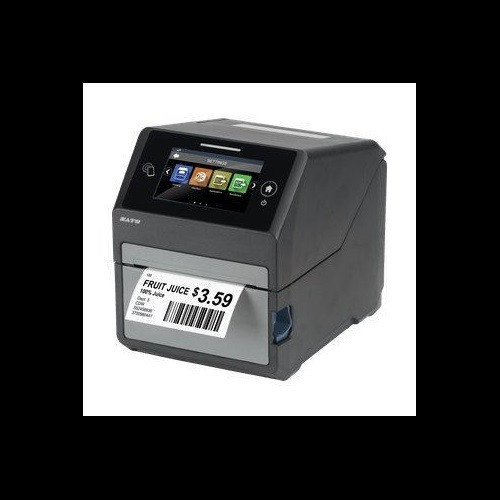
Both the Sato WWCT04241-WDN (CT4-LX) and the Brother TD4420DNC are desktop-footprint, direct thermal label and receipt printers running at 8 ips — a pairing a buyer would reasonably cross-shop when selecting a 4-inch-class desktop thermal printer for a warehouse, retail, or healthcare environment. The key differentiators center on print resolution and output quality, connectivity and interface breadth, and the presence or absence of thermal transfer capability and integrated UHF RFID encoding, each of which carries significant weight depending on the deployment use case.

In This Guide
- Which printer delivers the resolution and print-method flexibility this deployment needs?
- Does the connectivity and RFID capability match the infrastructure and labeling workflow?
- Are the memory, media handling, and operating environment adequate for the intended workload?
- Which should you choose: the WWCT04241-WDN or the TD4420DNC?
- Side-by-Side Specs
- FAQ
Which printer delivers the resolution and print-method flexibility this deployment needs?
The Sato WWCT04241-WDN prints at 305 dpi using either direct thermal or thermal transfer, giving operators the option to use ribbons for durable labels — wax, resin, or wax-resin — that resist heat, chemicals, and abrasion. Its 305 dpi resolution produces sharper fine text and high-density 2D barcodes compared to 203 dpi output.
The Brother TD4420DNC is direct thermal only at 203 dpi. It supports no ribbon path, so label durability depends entirely on thermal media stock. Its print width of 4.3 inches (or 4.27 inches per the alternate spec field) is marginally wider than the Sato's 4.09-inch maximum. Both units reach 8 ips print speed. The Brother's programming language support — ZPL II, CPCL, Raster, ESC P — is explicitly documented; the Sato's supported command languages are not listed in the provided specifications.
Does the connectivity and RFID capability match the infrastructure and labeling workflow?
The Sato WWCT04241-WDN ships with Ethernet, Wi-Fi, Bluetooth, and USB 2.0, and adds integrated UHF RFID encoding at 860–960 MHz (EPC Class 1 Gen 2). This makes it a single-device solution for simultaneous print-and-encode of RFID smart labels — relevant to pharmaceutical serialization, asset tracking, and supply-chain compliance mandates. Its 4.3-inch full-color touchscreen display supports operator-level interaction directly at the device.
The Brother TD4420DNC connects via USB, Serial, and Ethernet LAN. No Wi-Fi, no Bluetooth, and no RFID capability are listed in the provided specifications. It includes an integrated label cutter — not present in the Sato's listed specifications — which automates media separation for batch receipt or label jobs. Its display is listed as 4.3 inches but the display type is not specified in the provided data.
Are the memory, media handling, and operating environment adequate for the intended workload?
The Sato WWCT04241-WDN carries 4 GB flash, 1 GB DDR3 RAM, and 2 GB user storage — a substantial onboard resource for storing label templates, fonts, and graphics locally. It accommodates media rolls up to 5 inches in diameter and ribbon lengths up to 984 feet, supporting high-volume runs without frequent media changes. Operating temperature is specified at 32°F to 104°F (0°C to 40°C).
The Brother TD4420DNC specifies 64 MB flash (40 MB template/database) and 256 MB SDRAM — significantly less onboard memory than the Sato. Its paper width range is documented as 0.75 to 4.65 inches. Maximum media roll diameter and ribbon length are not applicable (direct thermal only) and not stated. Operating temperature is not listed in the provided specifications. The Brother weighs 5.3 lbs versus the Sato's 7.3 lbs.
Which should you choose: the WWCT04241-WDN or the TD4420DNC?
Our take: The WWCT04241-WDN is the stronger choice when the workflow requires RFID smart-label encoding, thermal transfer durability, higher print resolution, or wireless connectivity. Its 305 dpi versus the TD4420DNC's 203 dpi produces noticeably sharper output for small text and high-density barcodes; its four-interface connectivity (Ethernet, Wi-Fi, Bluetooth, USB) versus the TD4420DNC's three wired-only interfaces (USB, Serial, Ethernet) supports more flexible placement; and its integrated UHF RFID encoder (860–960 MHz, EPC C1G2) has no equivalent on the Brother. The TD4420DNC is the more appropriate selection when the deployment is strictly direct thermal, budget-sensitive, requires an integrated cutter for automated media separation, or runs ZPL II / CPCL command sets in an existing POS or WMS environment — the Brother's documented language support and lighter 5.3 lb weight suit high-turnover retail or point-of-care receipt printing where RFID and ribbon capability are unnecessary.
Side-by-Side Comparison
Spec-for-spec, from manufacturer data.
| Specification | Sato WWCT04241-WDN | Brother TD4420DNC |
|---|---|---|
| Print Resolution | 305 dpi | 203 dpi |
| Print Method | Direct Thermal / Thermal Transfer | Direct Thermal only |
| Print Speed | 8 ips | 8 ips |
| Max Print Width | 4.09" | 4.27" – 4.3" |
| Media Width Range | Up to 4.1" | 0.75" – 4.65" |
| Max Media Roll Diameter | 5" | Not specified |
| RFID | UHF 860–960 MHz, EPC C1G2 | — |
| Connectivity | Ethernet, Wi-Fi, Bluetooth, USB 2.0 | USB, Serial, Ethernet LAN |
| Display | 4.3" full-color touchscreen | 4.3" (type not specified) |
| Integrated Cutter | Not specified | Yes |
| Flash Memory | 4 GB | 64 MB (40 MB template/database) |
| RAM | 1 GB DDR3 | 256 MB SDRAM |
| User Storage | 2 GB | Not specified |
| Max Ribbon Length | 984 ft | Not applicable |
| Weight | 7.3 lbs (3.3 kg) | 5.3 lbs (2.41 kg) |
| Warranty | 1-year | Manufacturer warranty (duration not specified) |
Frequently Asked Questions
Which should you choose: the WWCT04241-WDN or the TD4420DNC?
The WWCT04241-WDN is the stronger choice when the workflow requires RFID smart-label encoding, thermal transfer durability, higher print resolution, or wireless connectivity. Its 305 dpi versus the TD4420DNC's 203 dpi produces noticeably sharper output for small text and high-density barcodes; its four-interface connectivity (Ethernet, Wi-Fi, Bluetooth, USB) versus the TD4420DNC's three wired-only interfaces (USB, Serial, Ethernet) supports more flexible placement; and its integrated UHF RFID encoder (860–960 MHz, EPC C1G2) has no equivalent on the Brother. The TD4420DNC is the more appropriate selection when the deployment is strictly direct thermal, budget-sensitive, requires an integrated cutter for automated media separation, or runs ZPL II / CPCL command sets in an existing POS or WMS environment — the Brother's documented language support and lighter 5.3 lb weight suit high-turnover retail or point-of-care receipt printing where RFID and ribbon capability are unnecessary.
Can the TD4420DNC encode RFID labels the way the WWCT04241-WDN can?
No. Based on the provided specifications, the Brother TD4420DNC has no RFID encoding capability. The Sato WWCT04241-WDN integrates a UHF RFID encoder operating at 860–960 MHz (EPC Class 1 Gen 2), enabling simultaneous print-and-encode of RFID smart labels in a single pass. If RFID encoding is a requirement, the TD4420DNC is not a substitute.
Which printer is better suited for durable outdoor or warehouse labels that need to survive heat and chemicals?
The Sato WWCT04241-WDN supports both direct thermal and thermal transfer printing, meaning it can use resin or wax-resin ribbons to produce labels that resist heat, moisture, and chemical exposure. The Brother TD4420DNC is direct thermal only; label durability is limited by the thermal media stock selected, with no ribbon option available per the provided specifications.
Does the Brother TD4420DNC support Wi-Fi or Bluetooth for wireless deployment?
The provided specifications for the TD4420DNC list USB, Serial, and Ethernet LAN as its connectivity options. No Wi-Fi or Bluetooth interfaces are listed. The Sato WWCT04241-WDN includes all four: Ethernet, Wi-Fi, Bluetooth, and USB 2.0, making it the only option of the two for wireless or Bluetooth-tethered deployments.
More Label Printer Comparisons
- Brother TD4550DNWB vs Sato WWCT04241-WCN
- Brother TD4550DNWB vs Sato WWCT04241-NDR
- Brother TD4550DNWB vs Sato WT212-404CW-EX1-2
- Brother TD4550DNWB vs Sato WWCT04441-WDR
- Brother TD4550DNWB vs Brother TD4420DNC
- Brother TD4550DNWB vs Brother TD4410D
Label Printer Buying Guides
Get a Second Opinion on Your Camera Choice
Share your site layout, coverage goals, and budget. Our team will validate the camera selection, flag anything we would change, and recommend products that match the use case.