
Sato WWCT04241-WDN vs Brother TD4410D: Specification Comparison
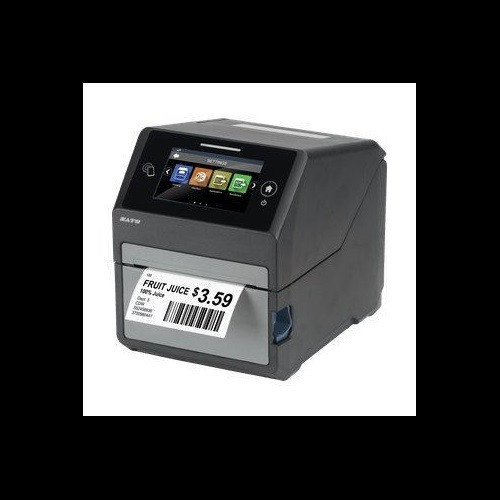
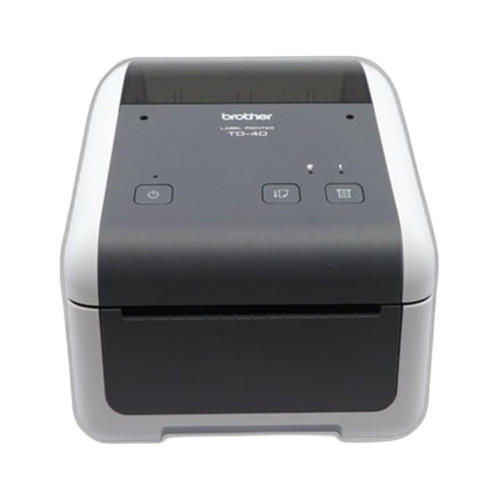
Both the Sato CT4-LX (WWCT04241-WDN) and the Brother TD4410D are desktop direct-thermal label printers targeting warehouse, logistics, and asset-tracking environments. Each prints at 8 ips on media up to roughly 4.1–4.3 inches wide, and both sit in the sub-10-lb desktop footprint. The comparison centers on resolution, connectivity breadth, RFID capability, memory/storage, and media flexibility — the axes that typically separate a feature-rich industrial unit from a leaner, connectivity-constrained alternative.
In This Guide
Which printer delivers higher resolution and broader media support?
The Sato WWCT04241-WDN prints at 305 dpi versus the Brother TD4410D's 203 dpi — a 50% resolution advantage that matters for fine-pitch barcodes, small human-readable text, and pharmaceutical compliance labels where legibility at reduced font sizes is required.
On print speed both units match at 8 ips, so throughput is equivalent for standard label runs.
Media width differs slightly: the Sato supports a maximum print width of 4.09 inches with media up to 4.1 inches wide, while the Brother specifies a print width of 4.3 inches (4.27 inches per structured spec) and accepts paper widths from 0.75 to 4.65 inches. The Brother's wider media acceptance range gives it more flexibility for wider stock and receipts.
The Sato adds thermal transfer capability (ribbon up to 984 ft) alongside direct thermal, enabling durable resin or wax-resin labels for outdoor or chemical-exposure environments. The Brother is direct thermal only — no ribbon, no thermal transfer option is specified.
How do connectivity and RFID capability differ between these two units?
The Sato WWCT04241-WDN offers Ethernet, Wi-Fi, Bluetooth, and USB — four interface options that support networked deployment, wireless carts, and mobile pairing without additional hardware.
The Brother TD4410D provides USB and Serial (9-pin) only. No Ethernet or wireless connectivity is specified. For network integration the Brother requires a host PC or external print server; for wireless operation it cannot connect natively.
The Sato carries an integrated UHF RFID encoder operating at 860–960 MHz (EPC Class 1 Gen 2 standard). This enables simultaneous label printing and RFID inlay programming in a single pass — critical for pharma serialization, asset tracking, and retail RAIN RFID mandates. No RFID capability is specified for the Brother TD4410D.
The Brother lists programming language support for ZPL II, CPCL, Raster Graphics, and ESC/P, which aids drop-in replacement in mixed Zebra/Honeywell/legacy environments. The Sato's supported command languages are not enumerated in the provided specifications.
Which unit has more on-board resources and a wider operating envelope?
The Sato WWCT04241-WDN provides 4 GB Flash, 1 GB DDR3 RAM, and 2 GB user storage — resources suited to storing large format libraries, fonts, and firmware updates locally.
The Brother TD4410D specifies 64 MB Flash (40 MB available for templates/databases) and 256 MB SDRAM. This is substantially less memory and storage than the Sato, which may limit the number of on-board templates and label formats available without a host connection.
Operating temperature for the Sato is specified at 32°F to 104°F (0°C to 40°C). No operating temperature range is provided in the Brother's specifications.
The Sato weighs 7.3 lbs; the Brother weighs 4.58 lbs — a meaningful difference for bench space and portability.
Power input for the Sato is AC 100–240V, 50/60Hz (universal). Power specifications for the Brother are not provided in the supplied data.
Warranty is stated as 1 year for the Sato. The Brother lists 'Manufacturer Warranty' without specifying duration.
Which should you choose: the WWCT04241-WDN or the TD4410D?
Our take: The WWCT04241-WDN is the stronger choice when the deployment requires RFID encoding, higher print resolution, or networked/wireless connectivity. Its 305 dpi resolution outpaces the TD4410D's 203 dpi by 50%, its integrated UHF RFID encoder (860–960 MHz, EPC C1G2) adds a capability the Brother entirely lacks, and its four-interface connectivity suite (Ethernet, Wi-Fi, Bluetooth, USB) versus the Brother's USB-and-Serial-only stack removes the need for external network hardware. The TD4410D is the more practical option for budget-conscious, single-workstation installations where direct thermal is sufficient, wider media acceptance (up to 4.65 inches) is needed, or drop-in ZPL II / CPCL language compatibility with an existing Zebra-based WMS is the primary integration requirement. The Brother's lighter weight (4.58 lbs vs. 7.3 lbs) and broader media width range also favor point-of-sale or light-duty receiving counter use cases.
Side-by-Side Comparison
Spec-for-spec, from manufacturer data.
| Specification | Sato WWCT04241-WDN | Brother TD4410D |
|---|---|---|
| Print Method | Direct Thermal / Thermal Transfer | Direct Thermal only |
| Print Resolution | 305 dpi | 203 dpi |
| Print Speed | 8 ips | 8 ips |
| Max Print Width | 4.09" | 4.27" – 4.3" |
| Media Width Range | Up to 4.1" | 0.75" – 4.65" |
| Max Media Roll Diameter | 5" | — |
| Max Ribbon Length | 984 ft | — (direct thermal only) |
| RFID | UHF 860–960 MHz, EPC C1G2 | — |
| Connectivity | Ethernet, Wi-Fi, Bluetooth, USB | USB, Serial (9-pin) |
| Display | 4.3" full-color touchscreen | — |
| Flash Memory | 4 GB | 64 MB (40 MB user) |
| RAM | 1 GB DDR3 | 256 MB SDRAM |
| User Storage | 2 GB | — |
| Programming Languages | — | ZPL II, CPCL, Raster, ESC/P |
| Weight | 7.3 lbs (3.3 kg) | 4.58 lbs |
| Dimensions (W × D × H) | 7.0" × 9.375" × 8.4375" | 7.08" × 8.82" × 6.10" |
| Operating Temperature | 32°F – 104°F | — |
| Power Input | AC 100–240V, 50/60Hz | — |
| Warranty | 1 year | Manufacturer Warranty (duration not specified) |
Frequently Asked Questions
Which should you choose: the WWCT04241-WDN or the TD4410D?
The WWCT04241-WDN is the stronger choice when the deployment requires RFID encoding, higher print resolution, or networked/wireless connectivity. Its 305 dpi resolution outpaces the TD4410D's 203 dpi by 50%, its integrated UHF RFID encoder (860–960 MHz, EPC C1G2) adds a capability the Brother entirely lacks, and its four-interface connectivity suite (Ethernet, Wi-Fi, Bluetooth, USB) versus the Brother's USB-and-Serial-only stack removes the need for external network hardware. The TD4410D is the more practical option for budget-conscious, single-workstation installations where direct thermal is sufficient, wider media acceptance (up to 4.65 inches) is needed, or drop-in ZPL II / CPCL language compatibility with an existing Zebra-based WMS is the primary integration requirement. The Brother's lighter weight (4.58 lbs vs. 7.3 lbs) and broader media width range also favor point-of-sale or light-duty receiving counter use cases.
Do I need the Sato WWCT04241-WDN if I'm not using RFID labels?
Not necessarily for RFID alone, but the Sato still offers 305 dpi resolution versus the Brother's 203 dpi, plus Ethernet and Wi-Fi connectivity that the TD4410D lacks. If you need network printing, wireless carts, finer barcode resolution, or thermal transfer durability, the Sato provides those regardless of RFID use. If your workload is direct thermal only, single-workstation, and USB-connected, the Brother TD4410D covers that narrower requirement.
Can the Brother TD4410D connect to our network without a PC in between?
Based on the provided specifications, no. The TD4410D lists only USB and Serial interfaces. No Ethernet or Wi-Fi is specified, so network printing would require a host computer or an external print server. The Sato WWCT04241-WDN includes native Ethernet and Wi-Fi and can connect directly to a network.
Which printer handles wider label stock?
The Brother TD4410D accepts media from 0.75 to 4.65 inches wide, with a print width of approximately 4.27–4.3 inches. The Sato WWCT04241-WDN specifies a maximum media width of 4.1 inches and a maximum print width of 4.09 inches. For wider stock the Brother has the edge on media acceptance range.
More Label Printer Comparisons
- Brother TD4550DNWB vs Sato WWCT04241-WCN
- Brother TD4550DNWB vs Sato WWCT04241-NDR
- Brother TD4550DNWB vs Sato WT212-404CW-EX1-2
- Brother TD4550DNWB vs Sato WWCT04441-WDR
- Brother TD4550DNWB vs Brother TD4420DNC
- Brother TD4550DNWB vs Brother TD4410D
Label Printer Buying Guides
Get a Second Opinion on Your Camera Choice
Share your site layout, coverage goals, and budget. Our team will validate the camera selection, flag anything we would change, and recommend products that match the use case.