
Sato WWCT04241-WCN vs Brother TD4210D: Specification Comparison
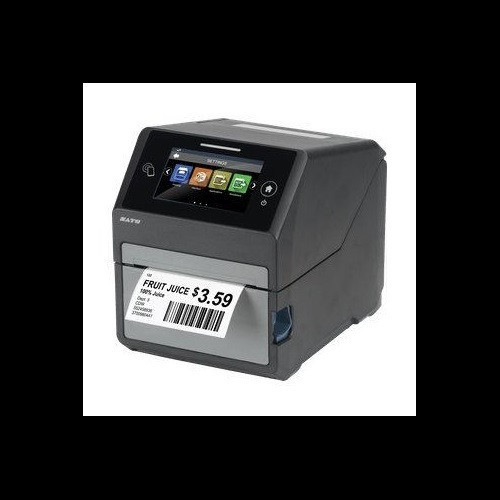
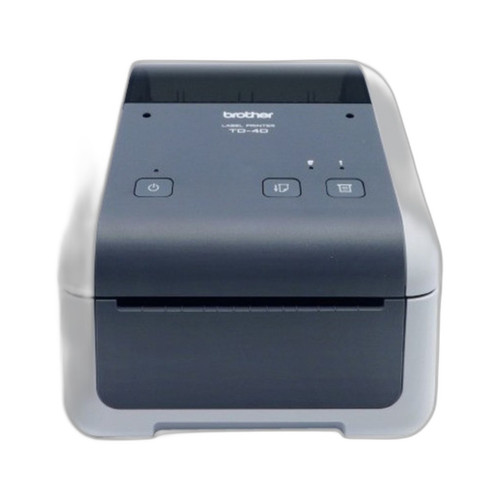
Both the Sato WWCT04241-WCN (CT4-LX) and the Brother TD4210D are desktop-form-factor direct thermal label and receipt printers aimed at B2B buyers needing barcode and label output without a dedicated print server. The Sato adds thermal transfer capability and integrated UHF RFID encoding; the Brother is a ribbon-free direct thermal-only unit. This comparison covers print performance, connectivity and integration depth, and RFID/media handling — the axes that most separate these two in real purchasing decisions.
In This Guide
- Which printer delivers higher resolution and faster throughput for barcode and label production?
- How do the two printers differ in connectivity options and system integration capability?
- Does RFID encoding capability, media handling range, or onboard memory differentiate these two printers for specialized workflows?
- Which should you choose: the WWCT04241-WCN or the TD4210D?
- Side-by-Side Specs
- FAQ
Which printer delivers higher resolution and faster throughput for barcode and label production?
The Sato WWCT04241-WCN prints at 305 dpi versus the Brother TD4210D's 203 dpi — a 50% resolution advantage that is meaningful when printing small 2D barcodes (QR, DataMatrix) or fine-pitch text at reduced label sizes. The Sato's specified print speed is listed as both 8 ips (structured spec field) and 6 ips (datasheet field); the lower 6 ips figure is used here as the conservative datasheet value. The Brother TD4210D prints at 5 ips. On throughput, the Sato's datasheet references 1,000–2,000 labels per hour on UHF inlays, though no equivalent volume figure is provided for the Brother.
The Sato supports both direct thermal and thermal transfer print methods, giving operators the option to use ribbon-based printing for longer-label durability or chemical resistance. The Brother TD4210D is direct thermal only — no ribbon capability is specified, which eliminates ribbon-jam downtime and consumable ribbon cost but limits label durability in harsh environments. The Sato's ribbon capacity is specified at 984 ft.
How do the two printers differ in connectivity options and system integration capability?
The Sato WWCT04241-WCN provides Ethernet, Wi-Fi, Bluetooth, and USB 2.0 interfaces. The structured spec also lists NFC. This breadth supports wired network deployment, wireless roaming carts, and mobile-device pairing via Bluetooth — relevant in warehouse, healthcare, and retail environments. The printer includes a 4.3-inch full-color touchscreen display, enabling on-device menu navigation and status monitoring without a host PC.
The Brother TD4210D is limited to USB and RS-232 serial connectivity. No Ethernet, Wi-Fi, or Bluetooth interface is specified. This restricts network-direct printing and makes the TD4210D dependent on a directly cabled host. The RS-232 port is a practical asset for legacy POS terminals and older warehouse management systems (WMS) that lack USB, but it does not substitute for network independence. No display size or type is specified for the Brother.
Does RFID encoding capability, media handling range, or onboard memory differentiate these two printers for specialized workflows?
The Sato WWCT04241-WCN includes an integrated UHF RFID encoder operating at 860–960 MHz to the EPC Class 1 Gen 2 standard. This allows the printer to encode RFID inlays inline during label production — a requirement in supply-chain, asset-tracking, and retail EPC mandates. No RFID capability is specified for the Brother TD4210D.
On media handling, the Sato accepts media widths from 1.0 inch to 4.1 inches on rolls up to 5 inches in outer diameter. The Brother's max print width is 4.3 inches, which is slightly wider, but no minimum media width or max roll diameter is specified for the Brother. The Sato carries 4 GB Flash and 1 GB DDR3 RAM with 2 GB user-accessible storage, supporting large label-format libraries and on-device firmware. No memory specification is provided for the Brother TD4210D.
Which should you choose: the WWCT04241-WCN or the TD4210D?
Our take: The WWCT04241-WCN is the stronger choice when the deployment requires RFID encoding, network connectivity, or higher print resolution. Its 305 dpi output exceeds the TD4210D's 203 dpi by 50%, its 6 ips datasheet speed edges the Brother's 5 ips, and it adds Ethernet, Wi-Fi, and Bluetooth versus the Brother's USB/RS-232 only — critical for network-direct or wireless label workflows. The integrated UHF RFID encoder (860–960 MHz, EPC C1G2) is absent entirely from the TD4210D, making the Sato the only viable option for RFID label mandates. The Brother TD4210D is appropriate where the use case is purely direct thermal receipt or label output via a single cabled host, ribbon-free simplicity is the priority, and RS-232 legacy compatibility is needed — at a likely lower acquisition cost, though no pricing data is present in the provided specifications.
Side-by-Side Comparison
Spec-for-spec, from manufacturer data.
| Specification | Sato WWCT04241-WCN | Brother TD4210D |
|---|---|---|
| Print Method | Direct Thermal + Thermal Transfer | Direct Thermal only |
| Print Resolution | 305 dpi | 203 dpi |
| Print Speed | 6 ips (datasheet) / 8 ips (spec field) | 5 ips |
| Max Print Width | 4.09 inches | 4.3 inches |
| Min Media Width | 1.0 inch | — |
| Max Media Roll Diameter | 5 inches | — |
| Ribbon Capacity | 984 ft | — (ribbon-free only) |
| Connectivity | USB, Ethernet, Wi-Fi, Bluetooth, NFC | USB, RS-232 Serial |
| RFID Encoding | UHF 860–960 MHz, EPC C1G2 | — |
| Display | 4.3-inch full-color touchscreen | — |
| Flash Memory | 4 GB | — |
| RAM | 1 GB DDR3 | — |
| User Storage | 2 GB | — |
| Operating Temperature | 32°F–104°F (0°C–40°C) | — |
| Power Supply | AC 100–240V, 50/60 Hz | — |
| Warranty | 1-year | Manufacturer Warranty (duration not specified) |
Frequently Asked Questions
Which should you choose: the WWCT04241-WCN or the TD4210D?
The WWCT04241-WCN is the stronger choice when the deployment requires RFID encoding, network connectivity, or higher print resolution. Its 305 dpi output exceeds the TD4210D's 203 dpi by 50%, its 6 ips datasheet speed edges the Brother's 5 ips, and it adds Ethernet, Wi-Fi, and Bluetooth versus the Brother's USB/RS-232 only — critical for network-direct or wireless label workflows. The integrated UHF RFID encoder (860–960 MHz, EPC C1G2) is absent entirely from the TD4210D, making the Sato the only viable option for RFID label mandates. The Brother TD4210D is appropriate where the use case is purely direct thermal receipt or label output via a single cabled host, ribbon-free simplicity is the priority, and RS-232 legacy compatibility is needed — at a likely lower acquisition cost, though no pricing data is present in the provided specifications.
Can the Brother TD4210D encode RFID labels like the Sato CT4-LX?
No. RFID encoding capability is not specified for the Brother TD4210D. Only the Sato WWCT04241-WCN includes an integrated UHF RFID encoder (860–960 MHz, EPC C1G2). If your workflow requires printing and encoding RFID inlays in a single pass, the TD4210D cannot fulfill that requirement based on the provided specifications.
Which printer works better in a networked warehouse where printers need to connect over Wi-Fi?
The Sato WWCT04241-WCN. It specifies Ethernet, Wi-Fi, and Bluetooth connectivity, enabling network-direct printing and wireless deployment on mobile carts without a tethered host PC. The Brother TD4210D specifies only USB and RS-232 serial interfaces — neither Ethernet nor Wi-Fi is listed, so it must be cabled directly to a host computer.
Is the Brother TD4210D's 4.3-inch print width wider than the Sato's, and does that matter for label selection?
The Brother TD4210D's specified print width is 4.3 inches versus the Sato's 4.09 inches — a 0.21-inch difference. This may matter if your label stock is exactly 4.3 inches wide, as the Sato's maximum media width is listed at 4.1 inches. However, most standard 4-inch label formats fit both. No minimum media width or roll diameter is provided for the Brother, so verify media compatibility with Brother directly if you use narrow or large-roll stock.
More Label Printer Comparisons
- Brother TD4550DNWB vs Sato WWCT04241-WCN
- Brother TD4550DNWB vs Sato WWCT04241-NDR
- Brother TD4550DNWB vs Sato WT212-404CW-EX1-2
- Brother TD4550DNWB vs Sato WWCT04441-WDR
- Brother TD4550DNWB vs Brother TD4420DNC
- Brother TD4550DNWB vs Brother TD4410D
Label Printer Buying Guides
Get a Second Opinion on Your Camera Choice
Share your site layout, coverage goals, and budget. Our team will validate the camera selection, flag anything we would change, and recommend products that match the use case.