
Sato WWCT04241-NDR vs Sato WT212-404CW-EX1-2: Specification Comparison
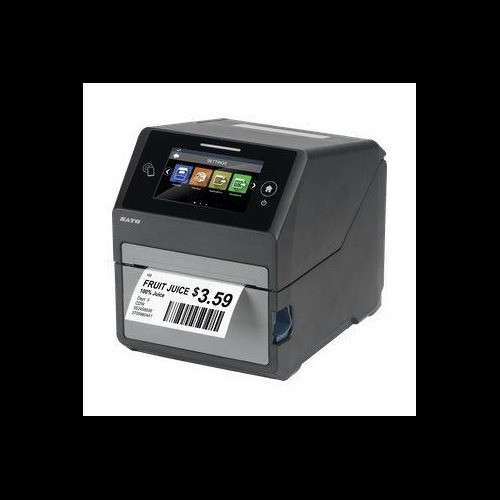
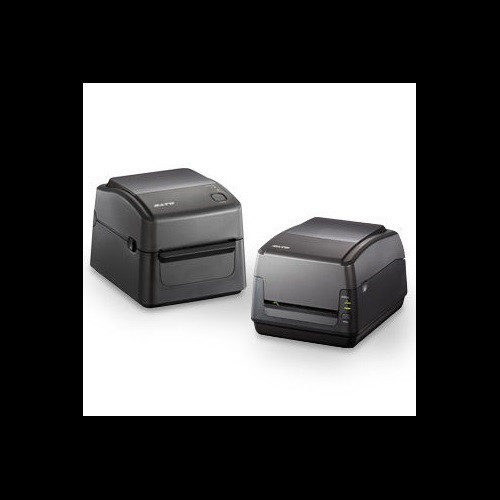
Both the Sato CT4-LX (WWCT04241-NDR) and the Sato WT212-404CW-EX1-2 are desktop thermal label printers supporting Direct Thermal and Thermal Transfer print methods, sharing the same 4.09-inch maximum print width, identical connectivity suite, and the same ribbon length capacity. A buyer evaluating either unit is selecting a compact, AC-powered desktop label printer for enterprise or industrial labeling workflows. The key differentiators lie in print resolution and speed, RFID capability, onboard memory, and display interface — dimensions that matter significantly depending on the application's data demands and encoding requirements.
In This Guide
- Which printer delivers higher resolution, faster throughput, and RFID encoding capability?
- How do onboard memory, display interface, and serviceability compare between the two models?
- What are the differences in media handling, operating environment, and physical footprint?
- Which should you choose: the WWCT04241-NDR or the WT212-404CW-EX1-2?
- Side-by-Side Specs
- FAQ
Which printer delivers higher resolution, faster throughput, and RFID encoding capability?
The WWCT04241-NDR prints at 305 dpi versus the WT212-404CW-EX1-2's 203 dpi — a 50% resolution advantage that directly affects barcode density, fine-font legibility, and label quality on small media. Print speed follows the same hierarchy: the CT4-LX runs at 8 ips versus 6 ips on the WT212, a 33% throughput gain relevant in high-volume print runs.
The WWCT04241-NDR also integrates UHF RFID encoding at 860–960 MHz EPC Class 1 Gen 2, enabling simultaneous print-and-encode for asset tracking, inventory, or compliance labeling. The WT212-404CW-EX1-2 has no stated RFID capability in its specifications. For any deployment requiring RFID smart labels, the CT4-LX is the only option of the two.
How do onboard memory, display interface, and serviceability compare between the two models?
Memory is sharply divided. The WWCT04241-NDR carries 4 GB Flash, 1 GB DDR3 RAM, and 2 GB user storage — specifications suited for storing large label template libraries, firmware, and fonts locally. The WT212-404CW-EX1-2 provides 16 MB Flash, 32 MB SDRAM, and 16 MB user storage, which is sufficient for standard label formats but constraining for complex graphic-heavy or multi-language template sets.
For the operator interface, the CT4-LX features a 4.3-inch full-color touchscreen, enabling on-device template selection, parameter adjustment, and status monitoring without a connected host. The WT212 uses an LCD display — adequate for status feedback but not specified as touch-enabled or color. On serviceability, the WT212-404CW-EX1-2 explicitly specifies tool-free printhead replacement and includes a built-in automatic cutter, reducing both service downtime and the need for an external cutter accessory. The CT4-LX specifications do not mention tool-free maintenance or a built-in cutter.
What are the differences in media handling, operating environment, and physical footprint?
Maximum media width differs slightly: the WT212 accepts media up to 4.65 inches wide versus 4.1 inches on the CT4-LX, giving the WT212 a marginal advantage for wider label stock. Both units support a maximum media outer diameter of 5 inches and a maximum ribbon length of 984 ft (300 m), making roll capacity equivalent.
The operating temperature floor differs: the CT4-LX is rated from 32°F (0°C) while the WT212 starts at 41°F (5°C), giving the CT4-LX a slight advantage in colder environments such as cooler staging areas. Both share a 104°F (40°C) upper limit. Physically, the CT4-LX is lighter at 7.3 lbs versus the WT212's 5.46 lbs — note the CT4-LX is heavier, not lighter. Footprint also differs: the CT4-LX measures 7.0" × 9.375" × 8.4375" while the WT212 is 8.69" × 10.96" × 7.38", making the WT212 wider and taller but shallower. Both are AC 100–240V universal-input units with identical 1-year warranties.
Which should you choose: the WWCT04241-NDR or the WT212-404CW-EX1-2?
Our take: The WWCT04241-NDR is the stronger choice when resolution quality, RFID encoding, and local memory capacity are decision drivers. Its 305 dpi resolution exceeds the WT212's 203 dpi by 50%, its 8 ips print speed outpaces the WT212's 6 ips by 33%, and its integrated UHF RFID (860–960 MHz EPC C1G2) is absent entirely from the WT212 — making the CT4-LX the only viable option for print-and-encode workflows. Its 4 GB Flash and 1 GB DDR3 RAM dwarf the WT212's 16 MB Flash and 32 MB SDRAM, supporting far larger on-device template libraries. Conversely, the WT212-404CW-EX1-2 is the pragmatic choice for cost-sensitive, standard-resolution labeling where a built-in automatic cutter and tool-free printhead replacement reduce operational friction and accessories spend. Its 4.65-inch media width also edges out the CT4-LX's 4.1-inch limit. Choose the CT4-LX for RFID, high-resolution, or memory-intensive deployments; choose the WT212 for straightforward thermal labeling with lower maintenance overhead.
Side-by-Side Comparison
Spec-for-spec, from manufacturer data.
| Specification | Sato WWCT04241-NDR | Sato WT212-404CW-EX1-2 |
|---|---|---|
| SKU | WWCT04241-NDR | WT212-404CW-EX1-2 |
| Print Resolution | 305 dpi | 203 dpi |
| Print Speed | 8 ips | 6 ips |
| Print Method | Direct Thermal / Thermal Transfer | Direct Thermal / Thermal Transfer |
| Max Print Width | 4.09" | 4.09" |
| Media Width Range | 1" to 4.1" | 1" to 4.65" |
| RFID Capability | UHF 860–960 MHz EPC C1G2 | — |
| Flash Memory | 4 GB | 16 MB |
| RAM | 1 GB DDR3 | 32 MB SDRAM |
| User Storage | 2 GB | 16 MB |
| Display | 4.3" Full-Color Touchscreen | LCD Display |
| Built-in Cutter | — | Yes (automatic) |
| Tool-Free Printhead | — | Yes |
| Max Media Diameter | 5" | 5" |
| Max Ribbon Length | 984 ft (300 m) | 984 ft (300 m) |
| Operating Temperature | 32°F–104°F (0°C–40°C) | 41°F–104°F (5°C–40°C) |
| Connectivity | Ethernet, Wi-Fi, Bluetooth, USB | Ethernet, Wi-Fi, Bluetooth, USB |
| Power | AC 100–240V, 50/60Hz | AC 100–240V, 50/60Hz |
| Weight | 7.3 lbs (3.3 kg) | 5.46 lbs (2.48 kg) |
| Dimensions (W×D×H) | 7.0" × 9.375" × 8.4375" | 8.69" × 10.96" × 7.38" |
| Form Factor | Desktop | Desktop |
| Warranty | 1-year | 1-year |
Frequently Asked Questions
Which should you choose: the WWCT04241-NDR or the WT212-404CW-EX1-2?
The WWCT04241-NDR is the stronger choice when resolution quality, RFID encoding, and local memory capacity are decision drivers. Its 305 dpi resolution exceeds the WT212's 203 dpi by 50%, its 8 ips print speed outpaces the WT212's 6 ips by 33%, and its integrated UHF RFID (860–960 MHz EPC C1G2) is absent entirely from the WT212 — making the CT4-LX the only viable option for print-and-encode workflows. Its 4 GB Flash and 1 GB DDR3 RAM dwarf the WT212's 16 MB Flash and 32 MB SDRAM, supporting far larger on-device template libraries. Conversely, the WT212-404CW-EX1-2 is the pragmatic choice for cost-sensitive, standard-resolution labeling where a built-in automatic cutter and tool-free printhead replacement reduce operational friction and accessories spend. Its 4.65-inch media width also edges out the CT4-LX's 4.1-inch limit. Choose the CT4-LX for RFID, high-resolution, or memory-intensive deployments; choose the WT212 for straightforward thermal labeling with lower maintenance overhead.
Is the WWCT04241-NDR or WT212-404CW-EX1-2 better for RFID smart label printing?
The WWCT04241-NDR (CT4-LX) is the only option of the two with RFID capability. It encodes UHF RFID at 860–960 MHz EPC Class 1 Gen 2. The WT212-404CW-EX1-2 specifications list no RFID functionality, so it cannot be used for print-and-encode smart label applications.
Which model is easier to maintain in the field?
The WT212-404CW-EX1-2 specifies tool-free printhead replacement and includes a built-in automatic cutter, both of which reduce service time and eliminate the need for external tooling or a separate cutter accessory. The WWCT04241-NDR specifications do not mention tool-free maintenance or a built-in cutter.
Does either printer support wider media, and does that matter for my label stock?
The WT212-404CW-EX1-2 handles media up to 4.65 inches wide; the WWCT04241-NDR tops out at 4.1 inches. Both share a 4.09-inch maximum print width, so the actual printed area is identical. The WT212's wider media path only matters if your label stock or liner exceeds 4.1 inches in total width.
More Label Printer Comparisons
- Brother TD4550DNWB vs Sato WWCT04241-WCN
- Brother TD4550DNWB vs Sato WWCT04241-NDR
- Brother TD4550DNWB vs Sato WT212-404CW-EX1-2
- Brother TD4550DNWB vs Sato WWCT04441-WDR
- Brother TD4550DNWB vs Brother TD4420DNC
- Brother TD4550DNWB vs Brother TD4410D
Label Printer Buying Guides
Get a Second Opinion on Your Camera Choice
Share your site layout, coverage goals, and budget. Our team will validate the camera selection, flag anything we would change, and recommend products that match the use case.