
Sato WWCLP3001-WMR vs Brother TJ4520TN: Specification Comparison
Both the Sato WWCLP3001-WMR (CL4NX Plus) and the Brother TJ4520TN are industrial-grade thermal label printers designed for high-volume, demanding production environments. This comparison examines the three dimensions that most often drive purchasing decisions in this class: print resolution and speed, media handling and build quality, and connectivity plus interface options. Neither unit is an accessory or a consumer device; both are direct cross-shop candidates for operations teams evaluating industrial label printing infrastructure.
In This Guide
- Which printer delivers higher resolution and faster throughput for demanding label applications?
- How do these printers compare on media handling range, memory, and physical build?
- Which printer offers broader connectivity and interface flexibility for enterprise and mixed environments?
- Which should you choose: the WWCLP3001-WMR or the TJ4520TN?
- Side-by-Side Specs
- FAQ
Which printer delivers higher resolution and faster throughput for demanding label applications?
The Sato WWCLP3001-WMR prints at 609 dpi versus the Brother TJ4520TN's 300 dpi — more than double the resolution. This difference is material for applications requiring fine-pitch text, small 2D barcodes, or pharmaceutical-grade serialization where symbol quality and human-readable characters must remain legible at very small sizes.
On throughput, the WWCLP3001-WMR also leads with a rated print speed of 14 ips compared to the TJ4520TN's 12 ips. While both are competitive for industrial duty cycles, the 2 ips advantage at the WWCLP3001-WMR's higher resolution is notable — many printers sacrifice speed as dpi increases, making this combination less common at this price class.
The TJ4520TN's 300 dpi at 12 ips is entirely adequate for standard 1D and 2D barcode compliance labeling (GS1-128, QR, Data Matrix at typical sizes), but it cannot match the WWCLP3001-WMR for miniaturized or high-density print requirements.
How do these printers compare on media handling range, memory, and physical build?
Media width handling favors the TJ4520TN at a 4.5-inch maximum print width versus the WWCLP3001-WMR's 4.09 inches. Buyers printing wider labels — shipping labels, wide-format asset tags, or compliance labels that use the full 4-inch-plus width — should note this 0.41-inch difference. The WWCLP3001-WMR accepts media widths from 0.87 inches to 5.04 inches (load width), though its maximum print width remains 4.09 inches.
The WWCLP3001-WMR specifies its frame as rigid cast aluminum and weighs 33 lbs (15 kg), indicating a robust industrial chassis. The TJ4520TN's frame material and weight are not stated in the provided specifications.
On memory, the WWCLP3001-WMR provides 2 GB Flash and 256 MB SDRAM with 100 MB user storage — useful for storing large label libraries, fonts, and graphics onboard. The TJ4520TN does not list memory specifications. The WWCLP3001-WMR also supports ribbon lengths up to 1,968 ft (600 m) and roll diameters up to 10 inches; equivalent ribbon and roll capacity figures are absent from the TJ4520TN's specifications.
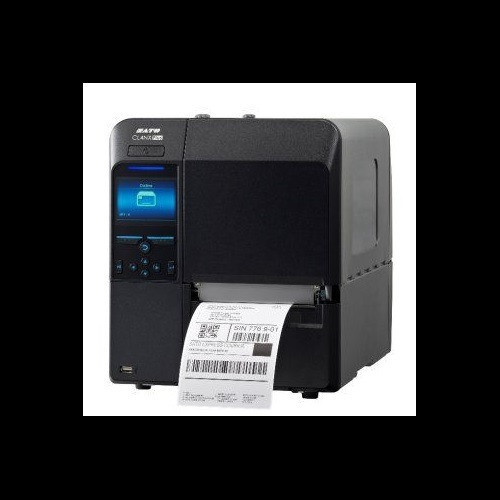
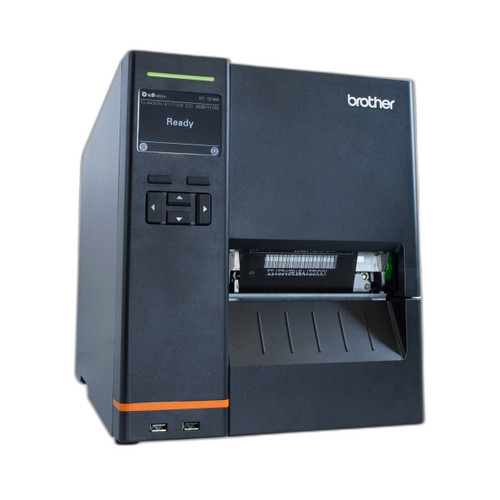
Both units support direct-on-machine operation: the WWCLP3001-WMR includes a 3.5-inch full-color LCD, while the TJ4520TN is described as having a color HVGA LCD touchscreen — a touchscreen interface not specified for the Sato unit.
Which printer offers broader connectivity and interface flexibility for enterprise and mixed environments?
The Brother TJ4520TN lists Ethernet, Wi-Fi, Bluetooth, USB 2.0, and RS232C Serial as interface options (Wi-Fi and Bluetooth described as optional modules). This gives it four distinct interface types, including Bluetooth for mobile printing workflows and RS232C for legacy PLC or host system integration — neither of which is listed for the WWCLP3001-WMR.
The Sato WWCLP3001-WMR specifies Ethernet, Wi-Fi, and USB. RS232C serial and Bluetooth are not listed in the provided specifications. For environments requiring serial host connections or Bluetooth-enabled mobile label printing, the TJ4520TN's interface breadth is an advantage based on the available data.
Both units include wired Ethernet and Wi-Fi for network integration. The WWCLP3001-WMR supports both direct thermal and thermal transfer print modes from a single unit, providing operational flexibility when switching between media types. The TJ4520TN is rated for thermal transfer only per the provided specifications.
Warranty terms differ: the WWCLP3001-WMR carries a stated 1-year warranty; the TJ4520TN is listed with a 2-year Premier Limited warranty that explicitly includes printhead coverage — a meaningful cost-of-ownership consideration given printhead replacement costs in industrial use.
Which should you choose: the WWCLP3001-WMR or the TJ4520TN?
Our take: The WWCLP3001-WMR is the stronger choice when print quality is the primary driver — its 609 dpi resolution at 14 ips is decisive for pharmaceutical serialization, miniaturized electronics labeling, or any application where barcode density and fine-print legibility are non-negotiable. Concretely: resolution is more than double (609 vs 300 dpi), speed edges ahead by 2 ips (14 vs 12 ips), and its cast-aluminum chassis and 2 GB onboard flash support demanding 24/7 production environments. The TJ4520TN is the stronger choice when interface flexibility, wider label output (4.5-inch vs 4.09-inch print width), and a 2-year warranty with printhead coverage are priorities — particularly in environments requiring Bluetooth mobile printing or RS232C legacy host connections, neither of which is listed for the Sato unit. Buyers standardizing on thermal-transfer-only media will find the TJ4520TN sufficient; those needing dual direct-thermal and thermal-transfer capability in a single unit should select the WWCLP3001-WMR.
Side-by-Side Comparison
Spec-for-spec, from manufacturer data.
| Specification | Sato WWCLP3001-WMR | Brother TJ4520TN |
|---|---|---|
| Print Resolution | 609 dpi | 300 dpi |
| Print Speed | 14 ips | 12 ips |
| Maximum Print Width | 4.09" | 4.5" |
| Print Method | Direct Thermal and Thermal Transfer | Thermal Transfer only |
| Display | 3.5" Full-Color LCD | Color HVGA LCD Touchscreen |
| Connectivity | Ethernet, Wi-Fi, USB | Ethernet, Wi-Fi, Bluetooth, USB 2.0, RS232C Serial |
| Bluetooth | — | Optional module |
| RS232C Serial | — | Standard |
| Memory (Flash) | 2 GB | — |
| Memory (SDRAM) | 256 MB | — |
| User Storage | 100 MB | — |
| Media Width Range | 0.87" to 5.04" | — |
| Max Roll Diameter | 10" | — |
| Max Ribbon Length | 1,968 ft (600 m) | — |
| Frame Material | Rigid cast aluminum | — |
| Warranty | 1 year | 2-year Premier Limited (incl. printhead) |
Frequently Asked Questions
Which should you choose: the WWCLP3001-WMR or the TJ4520TN?
The WWCLP3001-WMR is the stronger choice when print quality is the primary driver — its 609 dpi resolution at 14 ips is decisive for pharmaceutical serialization, miniaturized electronics labeling, or any application where barcode density and fine-print legibility are non-negotiable. Concretely: resolution is more than double (609 vs 300 dpi), speed edges ahead by 2 ips (14 vs 12 ips), and its cast-aluminum chassis and 2 GB onboard flash support demanding 24/7 production environments. The TJ4520TN is the stronger choice when interface flexibility, wider label output (4.5-inch vs 4.09-inch print width), and a 2-year warranty with printhead coverage are priorities — particularly in environments requiring Bluetooth mobile printing or RS232C legacy host connections, neither of which is listed for the Sato unit. Buyers standardizing on thermal-transfer-only media will find the TJ4520TN sufficient; those needing dual direct-thermal and thermal-transfer capability in a single unit should select the WWCLP3001-WMR.
Is the WWCLP3001-WMR or TJ4520TN better for pharmaceutical or small-part electronics labeling?
The WWCLP3001-WMR is the better fit for those applications based on the provided specs. Its 609 dpi resolution — more than double the TJ4520TN's 300 dpi — produces finer dot pitch, which is critical for small 2D barcodes, GS1 DataMatrix symbols, and human-readable text at reduced font sizes common in pharma serialization and electronics traceability.
Which printer is better suited for environments that also need Bluetooth or serial (RS232C) connectivity?
The TJ4520TN, per the provided specifications, lists optional Wi-Fi/Bluetooth modules and RS232C Serial as available interfaces. The WWCLP3001-WMR's listed connectivity is Ethernet, Wi-Fi, and USB; Bluetooth and RS232C are not specified for that unit. If your environment requires mobile Bluetooth printing or legacy serial host integration, the TJ4520TN has the advantage based on the available data.
Which printer has the better warranty, and does printhead coverage matter for total cost of ownership?
The TJ4520TN specifies a 2-year Premier Limited warranty that explicitly includes printhead coverage, versus the WWCLP3001-WMR's stated 1-year warranty with no printhead coverage detail provided. Printheads are one of the highest-wear and highest-cost consumable components in industrial thermal printers, so explicit printhead warranty coverage can meaningfully reduce total cost of ownership over a multi-year deployment — a real advantage for the TJ4520TN if operating budgets are a consideration.
More Label Printer Comparisons
- Honeywell PX940 vs Sato WWCLP3B01-WAR
- Honeywell PX940 vs Sato WWCLP3801-NAR
- Honeywell PX940 vs Sato WWCLP3801-WAR
- Honeywell PX940 vs Wasp WPL408
- Honeywell PX940 vs Honeywell PX4654-020
- Honeywell PX940 vs Honeywell PX6654-000
Label Printer Buying Guides
Get a Second Opinion on Your Camera Choice
Share your site layout, coverage goals, and budget. Our team will validate the camera selection, flag anything we would change, and recommend products that match the use case.