
Sato WWCLP3001-WAN vs Sato WWCLP3B01-WAR: Specification Comparison
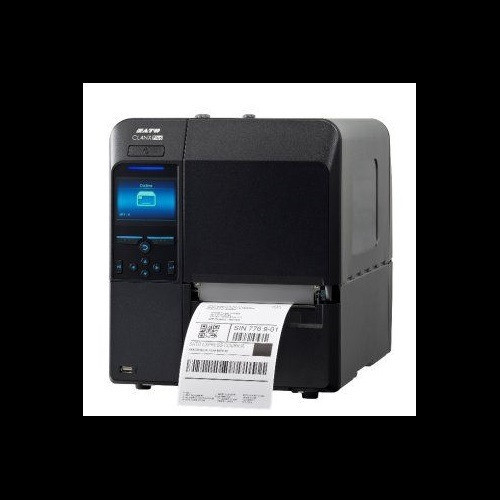
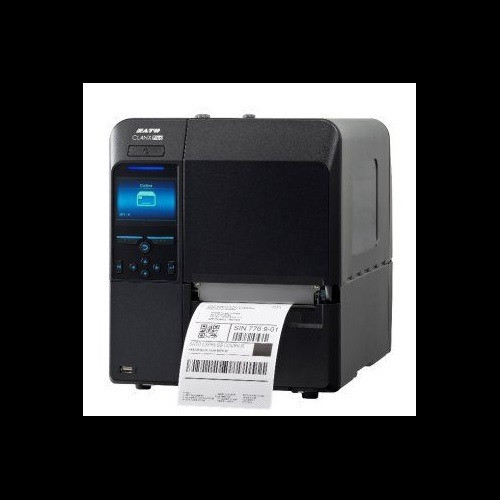
Both the WWCLP3001-WAN and WWCLP3B01-WAR are Sato CL4NX Plus 609 dpi industrial thermal printers built for high-volume label production in demanding environments. They share the same physical platform, print engine, memory architecture, and connectivity stack. The core distinction a buyer must evaluate is whether the application requires HF RFID tag encoding: the WWCLP3B01-WAR adds 13.56 MHz HF RFID capability, while the WWCLP3001-WAN is a barcode-and-label-only unit. All other published specifications are functionally identical.
In This Guide
- How do print resolution, speed, and media handling compare between the two models?
- Which model supports RFID encoding, and what does the WWCLP3B01-WAR's HF capability mean for label applications?
- Are there any differences in physical build, operating environment, power, or memory between the two units?
- Which should you choose: the WWCLP3001-WAN or the WWCLP3B01-WAR?
- Side-by-Side Specs
- FAQ
How do print resolution, speed, and media handling compare between the two models?
Both models are rated at 609 dpi resolution and 14 ips print speed, with a maximum print width of 4.09 inches. Media width range is identical at 0.87 to 5.04 inches, maximum media roll diameter is 10 inches on both, and maximum ribbon length is 1,968 ft on both. Print methods supported — direct thermal and thermal transfer — are the same across both units. No spec difference exists between the two models on any print-performance or media-handling dimension based on the provided specifications.
Which model supports RFID encoding, and what does the WWCLP3B01-WAR's HF capability mean for label applications?
The WWCLP3B01-WAR includes an integrated 13.56 MHz HF RFID encoder with auto-antenna tuning (auto-optimization), as stated in its specifications. This enables simultaneous printing and RFID tag encoding onto HF-enabled label stock — relevant for applications such as pharmaceutical track-and-trace, library asset management, access-badge labeling, and supply-chain serialization using HF RFID standards (e.g., ISO 15693, ISO 14443).
The WWCLP3001-WAN carries no RFID specification whatsoever. It is a print-only unit. Buyers whose workflow requires any form of RFID encoding must select the WWCLP3B01-WAR; the WWCLP3001-WAN cannot be field-upgraded to RFID based on any published specification.
Are there any differences in physical build, operating environment, power, or memory between the two units?
Dimensions are identical on both models at 10.66" x 17.99" x 12.63", and weight is 33 lbs / 15 kg on both. Power input is AC 100–240V, 50/60 Hz on both. Operating temperature range is 41°F–104°F (5°C–40°C) on both.
Memory is 2 GB Flash and 256 MB SDRAM with 100 MB user storage on both. Display is a 3.5" full-color LCD touchscreen on both. Connectivity is Ethernet, Wi-Fi, and USB on both — the WWCLP3B01-WAR specification notes USB 2.0 specifically; the WWCLP3001-WAN specification does not specify the USB version.
One frame-material difference is present in the specs: the WWCLP3001-WAN lists 'rigid cast aluminum,' while the WWCLP3B01-WAR lists 'rigid cast aluminum with corrosion-resistant material.' The WWCLP3001-WAN specification does not describe a corrosion-resistant treatment. Both carry a 1-year warranty. No other build or environmental differences are present in the provided specifications.
Which should you choose: the WWCLP3001-WAN or the WWCLP3B01-WAR?
Our take: The WWCLP3001-WAN is the stronger choice when the application is purely barcode and label printing with no RFID requirement, as it avoids paying for RFID hardware that will go unused. The WWCLP3B01-WAR is the only viable option when HF RFID tag encoding is required, given that it integrates a 13.56 MHz encoder with auto-optimization absent from the WWCLP3001-WAN, which has no RFID capability in its published specifications. On every other measurable dimension — 609 dpi, 14 ips, 4.09" max print width, 2 GB Flash, 256 MB SDRAM, identical media and ribbon capacity, same power input, same operating temperature range, and same 1-year warranty — the two units are spec-for-spec identical. The WWCLP3B01-WAR also specifies a corrosion-resistant frame treatment and USB 2.0 explicitly, which the WWCLP3001-WAN spec does not confirm. Select by RFID requirement first; all other factors are a wash.
Side-by-Side Comparison
Spec-for-spec, from manufacturer data.
| Specification | Sato WWCLP3001-WAN | Sato WWCLP3B01-WAR |
|---|---|---|
| SKU | WWCLP3001-WAN | WWCLP3B01-WAR |
| Resolution | 609 dpi | 609 dpi |
| Print Speed | 14 ips | 14 ips |
| Max Print Width | 4.09" | 4.09" |
| Print Methods | Direct Thermal, Thermal Transfer | Direct Thermal, Thermal Transfer |
| RFID Capability | — | 13.56 MHz HF with auto-optimization |
| Display | 3.5" Full-Color LCD touchscreen | 3.5" Full-Color LCD touchscreen |
| Connectivity | Ethernet, Wi-Fi, USB | Ethernet, Wi-Fi, USB 2.0 |
| Memory Flash | 2 GB | 2 GB |
| Memory SDRAM | 256 MB | 256 MB |
| User Storage | 100 MB | 100 MB |
| Media Width Range | 0.87" to 5.04" | 0.87" to 5.04" |
| Max Media Roll Diameter | 10" | 10" |
| Max Ribbon Length | 1,968 ft | 1,968 ft |
| Frame Material | Rigid cast aluminum | Rigid cast aluminum with corrosion-resistant material |
| Operating Temperature | 41°F–104°F (5°C–40°C) | 41°F–104°F (5°C–40°C) |
| Power Input | AC 100–240V, 50/60 Hz | AC 100–240V, 50/60 Hz |
| Weight | 33 lbs / 15 kg | 33 lbs / 15 kg |
| Warranty | 1-year | 1-year |
Frequently Asked Questions
Which should you choose: the WWCLP3001-WAN or the WWCLP3B01-WAR?
The WWCLP3001-WAN is the stronger choice when the application is purely barcode and label printing with no RFID requirement, as it avoids paying for RFID hardware that will go unused. The WWCLP3B01-WAR is the only viable option when HF RFID tag encoding is required, given that it integrates a 13.56 MHz encoder with auto-optimization absent from the WWCLP3001-WAN, which has no RFID capability in its published specifications. On every other measurable dimension — 609 dpi, 14 ips, 4.09" max print width, 2 GB Flash, 256 MB SDRAM, identical media and ribbon capacity, same power input, same operating temperature range, and same 1-year warranty — the two units are spec-for-spec identical. The WWCLP3B01-WAR also specifies a corrosion-resistant frame treatment and USB 2.0 explicitly, which the WWCLP3001-WAN spec does not confirm. Select by RFID requirement first; all other factors are a wash.
Can the WWCLP3001-WAN be upgraded to support RFID encoding later?
No field-upgrade path for RFID is described in the WWCLP3001-WAN specifications. RFID encoding at 13.56 MHz HF is a built-in feature exclusive to the WWCLP3B01-WAR. If RFID encoding is a current or anticipated requirement, the WWCLP3B01-WAR is the correct selection.
Is print quality or speed any different between the WWCLP3001-WAN and the WWCLP3B01-WAR?
No. Both models are rated identically at 609 dpi resolution and 14 ips print speed, with the same 4.09-inch maximum print width and the same media width range of 0.87 to 5.04 inches. The provided specifications show no print-performance difference between the two units.
What types of RFID applications is the WWCLP3B01-WAR suited for, and what frequency does it use?
The WWCLP3B01-WAR operates at 13.56 MHz, which is the HF (High Frequency) RFID band. The specification notes auto-optimization of the antenna. HF RFID at 13.56 MHz is commonly used in pharmaceutical serialization, library management, access credentials, and near-field supply-chain labeling. The WWCLP3001-WAN supports none of these RFID use cases.
More Label Printer Comparisons
- Honeywell PX940 vs Sato WWCLP3B01-WAR
- Honeywell PX940 vs Sato WWCLP3801-NAR
- Honeywell PX940 vs Sato WWCLP3801-WAR
- Honeywell PX940 vs Wasp WPL408
- Honeywell PX940 vs Honeywell PX4654-020
- Honeywell PX940 vs Honeywell PX6654-000
Label Printer Buying Guides
Get a Second Opinion on Your Camera Choice
Share your site layout, coverage goals, and budget. Our team will validate the camera selection, flag anything we would change, and recommend products that match the use case.