
Sato WM8460241 vs Wasp WPL408: Specification Comparison
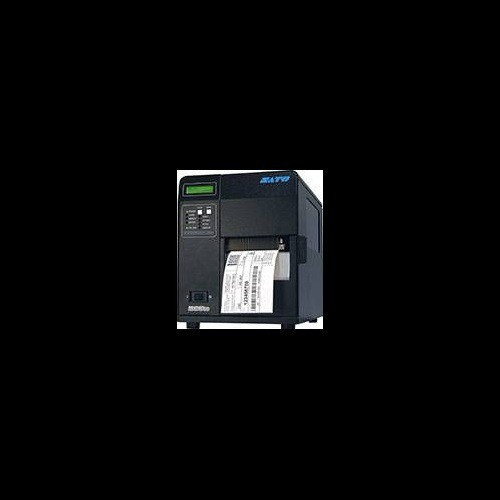
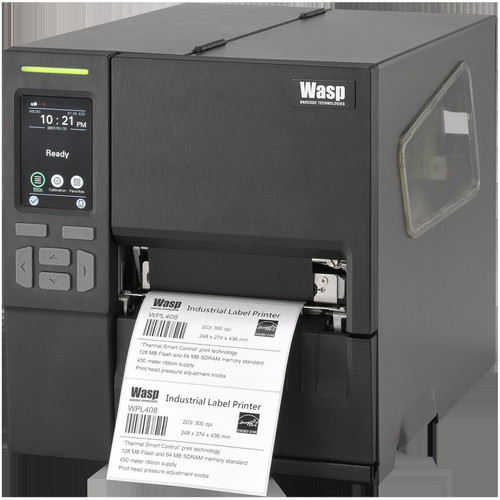
Both the Sato M84Pro (WM8460241) and the Wasp WPL408 (633809007170) are 4-inch industrial thermal label printers targeting mid-to-high-volume barcode and labeling applications in warehousing, manufacturing, and logistics environments. Both support dual-mode direct thermal and thermal transfer printing at 203 dpi and 10 ips, making them direct cross-shop candidates for buyers evaluating industrial desktop label printers in the same performance and price tier. The comparison covers print performance and media handling, connectivity and processing resources, and physical deployment factors.
In This Guide
- How do print performance and media handling compare between the WM8460241 and WPL408?
- Which printer offers stronger connectivity and processing resources for integrated or networked deployments?
- How do the physical footprint, weight, and operating environment specs affect deployment decisions?
- Which should you choose: the WM8460241 or the WPL408?
- Side-by-Side Specs
- FAQ
How do print performance and media handling compare between the WM8460241 and WPL408?
Both printers share identical headline print specs: 203 dpi resolution and 10 ips print speed, with dual direct thermal and thermal transfer modes. Maximum print width differs slightly — the Sato WM8460241 offers 4.1 inches versus the Wasp WPL408's 4.25 inches, a 3.5% wider print path on the WPL408 that may matter for labels requiring wider barcodes or text fields near the edge of 4-inch stock.
On media capacity, the WM8460241 accepts media widths from 1 inch to 4.5 inches with a maximum media roll diameter of 8.6 inches and a 3-inch core, and supports ribbon lengths up to 1,968 feet. The WPL408 handles paper widths of 1.6 inches to 4.3 inches — a narrower floor than the Sato's 1-inch minimum — with a maximum ribbon length of 1,474 feet. Maximum roll diameter and core size are not specified for the WPL408. For operations using very narrow labels or requiring longer ribbon runs between changes, the Sato holds a measurable advantage.
Which printer offers stronger connectivity and processing resources for integrated or networked deployments?
The Wasp WPL408 specifies significantly more onboard processing and memory: a 32-bit RISC CPU, 128 MB Flash, and 128 MB SDRAM. The Sato WM8460241 lists 2 MB Flash, 16 MB SDRAM, and 2 MB user storage — a substantial difference that affects how many label formats, fonts, and graphics can reside on the printer and how quickly complex labels are processed at rated speed.
On connectivity, the WPL408 lists USB 2.0, RS-232, Ethernet 10/100 Mbps, USB host, and a WiFi slot, offering wireless capability that the WM8460241 does not specify. The WM8460241 lists USB, Ethernet, RS-232C, and Parallel per its datasheet-sourced spec — the Parallel port is an advantage for legacy host systems. The WPL408's WiFi slot enables mobile or cable-free placement; its Ethernet is rated at 10/100 Mbps. Both include a 3.5-inch color LCD touchscreen display.
How do the physical footprint, weight, and operating environment specs affect deployment decisions?
The two printers differ considerably in physical size and weight. The Sato WM8460241 measures 15.0 inches wide by 10.6 inches deep by 11.6 inches tall and weighs 39.7 lbs (18.0 kg per spec, though the listed kg value is 11.0 — buyers should verify against the datasheet). The Wasp WPL408 measures 9.76 inches wide by 17.17 inches deep by 10.79 inches tall and weighs 20.28 lbs. The WPL408 is approximately half the weight and has a smaller bench footprint width, making it meaningfully easier to relocate or deploy in space-constrained stations.
The Sato WM8460241 specifies an operating temperature range of 41°F to 104°F (5°C to 40°C). The Wasp WPL408's listed storage temperature range is -40°F to 140°F (-40°C to 60°C), but an operating temperature range is not explicitly stated in the provided specs — buyers should confirm this with the WPL408 datasheet before deploying in temperature-controlled or potentially warm environments. The Sato runs on AC 100-240V, 50/60Hz (universal input); WPL408 power supply specs are not provided in the available data.
Which should you choose: the WM8460241 or the WPL408?
Our take: The WPL408 is the stronger choice when processing headroom, wireless flexibility, and compact bench footprint are priorities — its 128 MB SDRAM and 128 MB Flash dwarf the Sato's 16 MB SDRAM and 2 MB Flash, its WiFi slot enables cable-free placement, and at 20.28 lbs it is roughly half the weight of the 39.7-lb WM8460241. The WM8460241 holds advantages in media versatility — accepting narrower labels down to 1 inch versus the WPL408's 1.6-inch minimum, a larger maximum roll diameter of 8.6 inches, and longer ribbon capacity at 1,968 feet versus 1,474 feet — plus a legacy Parallel port for older host systems. Both match on 203 dpi and 10 ips. Choose the WM8460241 for high-volume ribbon runs, very narrow media, or legacy parallel-port host integration; choose the WPL408 for networked or wireless deployments, complex label formats requiring onboard memory, or space-constrained print stations.
Side-by-Side Comparison
Spec-for-spec, from manufacturer data.
| Specification | Sato WM8460241 | Wasp WPL408 |
|---|---|---|
| Print Method | Direct Thermal / Thermal Transfer | Direct Thermal / Thermal Transfer |
| Resolution | 203 dpi | 203 dpi |
| Print Speed | 10 ips | 10 ips |
| Max Print Width | 4.1" | 4.25" |
| Media Width Range | 1" to 4.5" | 1.6" to 4.3" |
| Max Media Roll Diameter | 8.6" | — |
| Media Core Size | 3" | — |
| Max Ribbon Length | 1,968 ft | 1,474 ft |
| Display | 3.5" Color LCD | 3.5" Color LCD Touchscreen HVGA, 6 buttons |
| Connectivity | USB 2.0, Ethernet, RS-232C, Parallel | USB 2.0, RS-232, Ethernet 10/100 Mbps, USB host, WiFi slot |
| Processor | — | 32-bit RISC CPU |
| Flash Memory | 2 MB | 128 MB |
| SDRAM | 16 MB | 128 MB |
| Weight | 39.7 lbs | 20.28 lbs |
| Dimensions (W x H x D) | 15.0" x 11.6" x 10.6" | 9.76" x 10.79" x 17.17" |
| Operating Temperature | 41°F to 104°F (5°C to 40°C) | — |
| Power Input | AC 100-240V, 50/60 Hz | — |
| Warranty | 1-year | — |
Frequently Asked Questions
Which should you choose: the WM8460241 or the WPL408?
The WPL408 is the stronger choice when processing headroom, wireless flexibility, and compact bench footprint are priorities — its 128 MB SDRAM and 128 MB Flash dwarf the Sato's 16 MB SDRAM and 2 MB Flash, its WiFi slot enables cable-free placement, and at 20.28 lbs it is roughly half the weight of the 39.7-lb WM8460241. The WM8460241 holds advantages in media versatility — accepting narrower labels down to 1 inch versus the WPL408's 1.6-inch minimum, a larger maximum roll diameter of 8.6 inches, and longer ribbon capacity at 1,968 feet versus 1,474 feet — plus a legacy Parallel port for older host systems. Both match on 203 dpi and 10 ips. Choose the WM8460241 for high-volume ribbon runs, very narrow media, or legacy parallel-port host integration; choose the WPL408 for networked or wireless deployments, complex label formats requiring onboard memory, or space-constrained print stations.
Is the WM8460241 or WPL408 better for wireless network deployment?
The WPL408 is the only model of the two that specifies a WiFi slot in its connectivity list (USB 2.0, RS-232, Ethernet 10/100, USB host, and WiFi slot). The WM8460241 does not list any wireless interface in the provided specs. If wireless connectivity is required, the WPL408 is the appropriate choice; verify that the WiFi module is included or available as an accessory before purchasing.
Which printer handles a higher volume of complex label formats without slowdown?
The WPL408 specifies a 32-bit RISC CPU, 128 MB SDRAM, and 128 MB Flash — substantially more processing and storage than the WM8460241's 16 MB SDRAM and 2 MB Flash. For label formats with large graphics, many stored templates, or high-frequency printing of variable data, the WPL408's memory and processor specifications indicate a stronger capability. The WM8460241's memory specs are not detailed enough to confirm equivalent throughput on complex jobs.
Which printer is better suited for operations using very narrow labels or long ribbon rolls?
The WM8460241 accepts media as narrow as 1 inch (versus 1.6 inches minimum for the WPL408) and supports ribbon lengths up to 1,968 feet (versus 1,474 feet for the WPL408). For operations printing narrow tags or wanting to extend ribbon change intervals, the WM8460241's media handling specifications offer a practical advantage. Its maximum roll diameter of 8.6 inches is also specified; the WPL408's maximum roll diameter is not stated in the available specs.
More Label Printer Comparisons
- Honeywell PX940 vs Sato WWCLP3B01-WAR
- Honeywell PX940 vs Sato WWCLP3801-NAR
- Honeywell PX940 vs Sato WWCLP3801-WAR
- Honeywell PX940 vs Wasp WPL408
- Honeywell PX940 vs Honeywell PX4654-020
- Honeywell PX940 vs Honeywell PX6654-000
Label Printer Buying Guides
Get a Second Opinion on Your Camera Choice
Share your site layout, coverage goals, and budget. Our team will validate the camera selection, flag anything we would change, and recommend products that match the use case.