
Sato WM8460241 vs Sato WWCLP3B01-WAR: Specification Comparison
Both the Sato M84Pro (WM8460241) and the Sato CL4NX Plus (WWCLP3B01-WAR) are industrial-grade 4-inch direct thermal and thermal transfer label printers designed for high-volume, demanding environments. A buyer evaluating either unit is likely choosing between a cost-effective workhorse for standard barcode and label printing versus a high-resolution, RFID-capable platform for advanced labeling workflows. This comparison examines print performance, media and memory capacity, and connectivity and integration capabilities across both models.
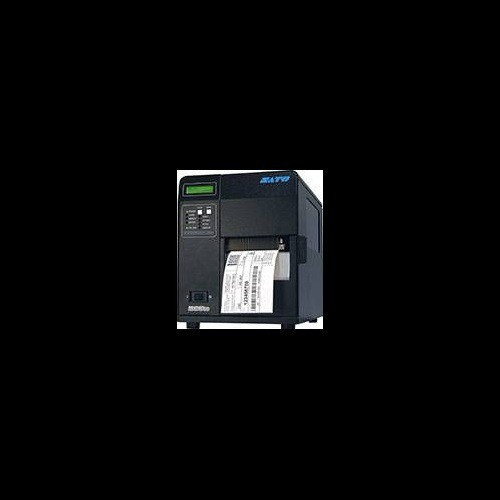
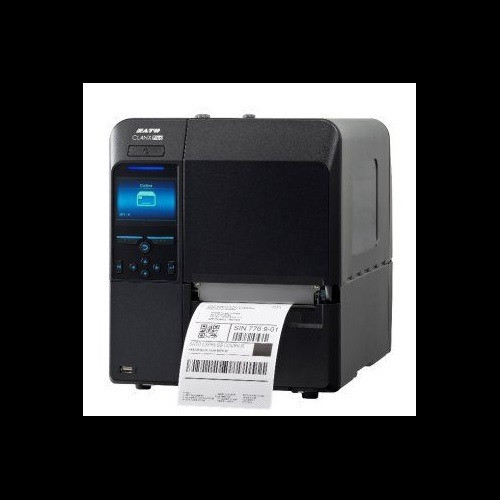
In This Guide
- Which printer delivers higher resolution and faster throughput for demanding label jobs?
- Which unit supports larger media rolls and has more onboard memory for complex label formats?
- Which printer offers broader connectivity and integration options, including RFID?
- Which should you choose: the WM8460241 or the WWCLP3B01-WAR?
- Side-by-Side Specs
- FAQ
Which printer delivers higher resolution and faster throughput for demanding label jobs?
The WWCLP3B01-WAR holds a decisive resolution advantage: its specified print resolution is 609 dpi versus the WM8460241's 203 dpi — a 3× difference that directly impacts the legibility of fine text, dense 2D barcodes, and small graphics. For applications requiring crisp micro-print or high-density QR codes, the CL4NX Plus is the only option between the two.
Print speed also favors the WWCLP3B01-WAR at 14 ips compared to the WM8460241's 10 ips — a 40% throughput advantage that matters in high-volume line environments where printer cycle time is a bottleneck.
Maximum print width is effectively equivalent: 4.1 inches on the WM8460241 versus 4.09 inches on the WWCLP3B01-WAR. Neither model has a meaningful edge here. Both support the same two printing modes — direct thermal and thermal transfer — so consumable flexibility is identical on this axis.
Which unit supports larger media rolls and has more onboard memory for complex label formats?
The WWCLP3B01-WAR accepts media rolls up to 10 inches in diameter, compared to 8.6 inches on the WM8460241. Larger roll capacity reduces changeover frequency, which matters on high-volume production lines. Media width range is also broader on the CL4NX Plus: 0.87 inches to 5.04 inches versus 1 inch to 4.5 inches on the M84Pro, giving it more flexibility with narrow and wide stock.
Memory is not a close comparison. The WWCLP3B01-WAR specifies 2 GB Flash and 256 MB SDRAM, while the WM8460241 specifies 2 MB Flash and 16 MB SDRAM. That is a 1,000× flash difference and a 16× SDRAM difference. Buyers storing large format libraries, complex graphics, or multiple firmware images onboard will find the CL4NX Plus substantially more capable.
User storage follows the same pattern: 100 MB on the WWCLP3B01-WAR versus 2 MB on the WM8460241. Maximum ribbon length is identical at 1,968 ft for both units. The WM8460241 specifies a 3-inch media core; the WWCLP3B01-WAR does not list core diameter in the provided specifications.
Which printer offers broader connectivity and integration options, including RFID?
The WWCLP3B01-WAR includes a defining capability absent from the WM8460241: 13.56 MHz HF RFID encoding with auto-antenna tuning. For operations requiring RFID tag programming — retail item-level tracking, healthcare asset management, access card encoding, or supply chain compliance — the CL4NX Plus is the only viable choice between the two.
Both units share Ethernet and USB connectivity. The WWCLP3B01-WAR adds Wi-Fi, which the WM8460241 does not list. The WM8460241's datasheet tagline references RS-232C and parallel ports in addition to USB 2.0 and Ethernet; the WWCLP3B01-WAR's provided specifications do not enumerate serial or parallel interfaces.
Both models feature a 3.5-inch full-color LCD touchscreen display and share the same operating temperature range of 41°F to 104°F (5°C to 40°C) and identical AC 100–240V, 50/60Hz power input. The WWCLP3B01-WAR specifies a rigid cast aluminum frame with corrosion-resistant material; no frame material is stated for the WM8460241. The WM8460241 lists Windows OS compatibility; no OS specification is provided for the WWCLP3B01-WAR.
Which should you choose: the WM8460241 or the WWCLP3B01-WAR?
Our take: The WWCLP3B01-WAR is the stronger choice when print resolution, RFID encoding, memory capacity, or wireless connectivity are requirements. It delivers 609 dpi versus 203 dpi on the WM8460241 — a 3× resolution advantage — prints at 14 ips versus 10 ips, and includes 13.56 MHz HF RFID encoding that the WM8460241 does not offer at all. Its 2 GB Flash and 256 MB SDRAM dwarf the WM8460241's 2 MB Flash and 16 MB SDRAM, making it suitable for large format libraries and complex label templates. The WM8460241 is the appropriate selection for operations that need only standard 203 dpi barcode label printing, have no RFID requirement, and operate in a wired environment where the lower price point of a less-featured unit is the priority. Buyers running Windows-integrated workflows where RS-232C or parallel port legacy connections are required should note that the WM8460241's datasheet references those interfaces while the WWCLP3B01-WAR's provided specs do not confirm them.
Side-by-Side Comparison
Spec-for-spec, from manufacturer data.
| Specification | Sato WM8460241 | Sato WWCLP3B01-WAR |
|---|---|---|
| MPN | WM8460241 | WWCLP3B01-WAR |
| Model Name | M84Pro | CL4NX Plus |
| Print Resolution | 203 dpi | 609 dpi |
| Print Speed | 10 ips | 14 ips |
| Max Print Width | 4.1" | 4.09" |
| Printing Modes | Direct Thermal / Thermal Transfer | Direct Thermal / Thermal Transfer |
| RFID | — | 13.56 MHz HF with auto-antenna tuning |
| Connectivity | Ethernet, USB (RS-232C, Parallel per datasheet) | Ethernet, Wi-Fi, USB |
| Display | 3.5" Color LCD | 3.5" Full-Color LCD |
| Flash Memory | 2 MB | 2 GB |
| SDRAM | 16 MB | 256 MB |
| User Storage | 2 MB | 100 MB |
| Max Media Roll Diameter | 8.6" | 10" |
| Media Width Range | 1" to 4.5" | 0.87" to 5.04" |
| Max Ribbon Length | 1,968 ft | 1,968 ft |
| Weight | 39.7 lbs (11.0 kg) | 33 lbs (15 kg) |
| Dimensions (W x D x H) | 15.0" x 10.6" x 11.6" | 10.66" x 17.99" x 12.63" |
| Operating Temperature | 41°F – 104°F (5°C – 40°C) | 41°F – 104°F (5°C – 40°C) |
| Power Input | AC 100–240V, 50/60Hz | AC 100–240V, 50/60Hz |
| Frame Material | — | Rigid cast aluminum, corrosion-resistant |
| Warranty | 1-year | 1-year |
Frequently Asked Questions
Which should you choose: the WM8460241 or the WWCLP3B01-WAR?
The WWCLP3B01-WAR is the stronger choice when print resolution, RFID encoding, memory capacity, or wireless connectivity are requirements. It delivers 609 dpi versus 203 dpi on the WM8460241 — a 3× resolution advantage — prints at 14 ips versus 10 ips, and includes 13.56 MHz HF RFID encoding that the WM8460241 does not offer at all. Its 2 GB Flash and 256 MB SDRAM dwarf the WM8460241's 2 MB Flash and 16 MB SDRAM, making it suitable for large format libraries and complex label templates. The WM8460241 is the appropriate selection for operations that need only standard 203 dpi barcode label printing, have no RFID requirement, and operate in a wired environment where the lower price point of a less-featured unit is the priority. Buyers running Windows-integrated workflows where RS-232C or parallel port legacy connections are required should note that the WM8460241's datasheet references those interfaces while the WWCLP3B01-WAR's provided specs do not confirm them.
Do both the WM8460241 and WWCLP3B01-WAR support RFID label encoding?
No. Only the WWCLP3B01-WAR supports RFID encoding, operating at 13.56 MHz HF frequency with auto-antenna tuning per its specifications. The WM8460241 specifications make no mention of RFID capability.
Is the WM8460241 or WWCLP3B01-WAR better suited for high-volume production environments with infrequent media changes?
The WWCLP3B01-WAR supports media rolls up to 10 inches in diameter versus 8.6 inches on the WM8460241, meaning fewer roll changes per shift. It also prints at 14 ips versus 10 ips, increasing throughput. For high-volume lines both factors favor the WWCLP3B01-WAR based on the provided specifications.
Which printer has more onboard memory for storing complex label formats and graphics?
The WWCLP3B01-WAR has significantly more memory: 2 GB Flash and 256 MB SDRAM with 100 MB user storage, versus the WM8460241's 2 MB Flash, 16 MB SDRAM, and 2 MB user storage. If your label formats include large graphics, multiple fonts, or extensive template libraries stored onboard, the WWCLP3B01-WAR is the only realistic option between the two.
More Label Printer Comparisons
- Honeywell PX940 vs Sato WWCLP3B01-WAR
- Honeywell PX940 vs Sato WWCLP3801-NAR
- Honeywell PX940 vs Sato WWCLP3801-WAR
- Honeywell PX940 vs Wasp WPL408
- Honeywell PX940 vs Honeywell PX4654-020
- Honeywell PX940 vs Honeywell PX6654-000
Label Printer Buying Guides
Get a Second Opinion on Your Camera Choice
Share your site layout, coverage goals, and budget. Our team will validate the camera selection, flag anything we would change, and recommend products that match the use case.