
Sato WM8460241 vs Honeywell PX940: Specification Comparison
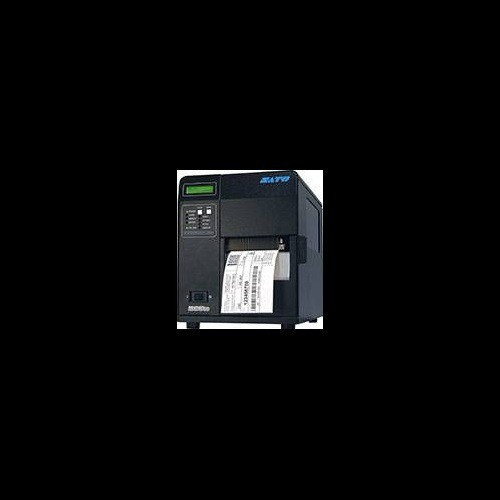
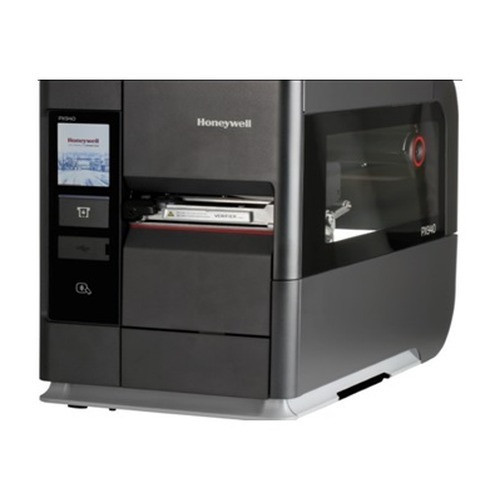
Both the Sato M84Pro (WM8460241) and the Honeywell PX940 (PX940V3H110060202) are industrial-grade 4-inch direct thermal and thermal transfer label printers designed for demanding warehouse, manufacturing, and logistics environments. This comparison examines how they differ across print performance, media and ribbon handling, connectivity and processing power, and the Honeywell's distinguishing integrated barcode verification capability — factors that directly drive purchasing decisions in industrial labeling deployments.
In This Guide
- How do print speed, resolution, and throughput compare between the WM8460241 and PX940?
- Which printer supports larger media rolls and ribbon capacity, and what finishing options are available?
- How do the WM8460241 and PX940 differ in connectivity, processing power, and emulation support?
- Which should you choose: the WM8460241 or the PX940?
- Side-by-Side Specs
- FAQ
How do print speed, resolution, and throughput compare between the WM8460241 and PX940?
Both printers operate at 203 DPI resolution, so label sharpness at that setting is equivalent. Print speed is where the two diverge significantly. The Sato WM8460241 is rated at 10 ips (254 mm/s) at 203 DPI. The Honeywell PX940 is rated at 25–350 mm/s (approximately 1–14 ips) at 203 DPI, meaning its upper speed limit of 14 ips exceeds the Sato's fixed 10 ips ceiling by 40%.
The PX940 also adds an integrated barcode verifier — 1D to ISO/IEC 15416 and 2D to ISO/IEC 15415 — which performs point-of-print quality validation without a separate device. The WM8460241 has no barcode verifier specified in its provided specifications. For compliance-driven industries such as healthcare, aerospace, or retail where label quality must be audited at print time, this is a functional difference, not merely a feature difference.
Maximum print width is virtually identical: 4.1 inches (WM8460241) versus 4.16 inches (PX940). Neither model offers a higher-resolution option in the provided specifications; both are 203 DPI only as specced.
Which printer supports larger media rolls and ribbon capacity, and what finishing options are available?
Media roll diameter is close but not identical. The WM8460241 supports up to 8.6 inches (approximately 218 mm) outer diameter. The PX940 supports up to 213 mm (8.38 inches). In practice this difference — roughly 5 mm — is negligible for roll change frequency.
Ribbon capacity differs more meaningfully. The WM8460241 accepts ribbon up to 1,968 feet (approximately 600 m). The PX940 accepts ribbon up to 450 m (1,476 feet). The Sato's ribbon capacity is therefore approximately 33% greater, which translates directly to fewer ribbon change interruptions in high-volume continuous runs. Both use a 3-inch ribbon core.
Label finishing options are present only on the PX940 per the provided specifications: it includes a rewinder, peeler, and label taken sensor. The WM8460241 specifications do not list any integrated finishing options. Media width range is specified for the WM8460241 as 1 inch to 4.5 inches; a media width range is not stated in the provided PX940 specifications.
How do the WM8460241 and PX940 differ in connectivity, processing power, and emulation support?
Connectivity on the WM8460241 (per datasheet tilde fields) includes USB 2.0, Ethernet, RS-232C, and Parallel. The structured specification fields list Ethernet and USB only; RS-232C and Parallel appear in the datasheet tagline fields and should be verified against the physical datasheet. The PX940 adds 802.11 a/b/g/n/ac Wi-Fi and Bluetooth Low Energy over its Ethernet and USB ports, enabling wireless printing without additional hardware.
Processing capability is documented for the PX940 only: a dual-core ARM Cortex-A9 at 1 GHz with 1 GB DDR3 SDRAM and 256 MB Flash. The WM8460241 specifies 16 MB SDRAM and 2 MB Flash. No processor type or clock speed is provided for the Sato. This memory gap is substantial and reflects the Android OS platform of the PX940 versus Windows on the WM8460241.
The PX940 supports multiple emulations: ZPL II, ZSim2, Direct Protocol, Fingerprint, and Intermec. The WM8460241 does not list supported emulations in its provided specifications. For sites already running Zebra, Intermec, or Sato label formats, emulation breadth can determine whether label templates require rework on deployment.
Which should you choose: the WM8460241 or the PX940?
Our take: The PX940 is the stronger choice when print speed headroom, wireless connectivity, barcode verification at point of print, and broad label emulation support are required. At up to 14 ips versus the WM8460241's 10 ips, the PX940 delivers 40% higher peak throughput. Its integrated 1D/2D barcode verifier (ISO/IEC 15416/15415) eliminates a separate verification station — a capability entirely absent from the WM8460241's provided specifications. The PX940 also adds 802.11ac Wi-Fi and Bluetooth LE, while the WM8460241 relies on wired connections only per its spec fields. The WM8460241 holds one clear advantage: ribbon capacity at 1,968 ft versus 1,476 ft, reducing change frequency by roughly 33% in ribbon-intensive runs. The WM8460241 is the more practical choice for wired, cost-sensitive deployments on Windows-managed print servers where verification and wireless are not required. The PX940 suits regulated or compliance-driven environments — healthcare, aerospace, retail — that need audit-grade label quality without separate hardware.
Side-by-Side Comparison
Spec-for-spec, from manufacturer data.
| Specification | Sato WM8460241 | Honeywell PX940 |
|---|---|---|
| Print Method | Direct Thermal / Thermal Transfer | Direct Thermal / Thermal Transfer |
| Print Resolution | 203 DPI | 203 DPI |
| Print Speed | 10 ips (254 mm/s) | 25–350 mm/s (approx. 1–14 ips) |
| Max Print Width | 4.1 in (104 mm) | 4.16 in (105.7 mm) |
| Display | 3.5 in Color LCD | 3.5 in Color Touch LCD |
| Operating System | Windows | Android |
| Processor | — | Dual-core ARM Cortex-A9, 1 GHz |
| SDRAM / Memory | 16 MB SDRAM | 1 GB DDR3 SDRAM |
| Flash Storage | 2 MB | 256 MB |
| Connectivity | Ethernet, USB (RS-232C, Parallel per datasheet) | Ethernet, USB, Wi-Fi 802.11 a/b/g/n/ac, Bluetooth LE |
| Max Ribbon Length | 1,968 ft (approx. 600 m) | 450 m (1,476 ft) |
| Ribbon Core | 3 in | 3 in |
| Max Media Roll Diameter | 8.6 in (approx. 218 mm) | 213 mm (8.38 in) |
| Barcode Verifier | — | Integrated 1D (ISO/IEC 15416) and 2D (ISO/IEC 15415) |
| Label Finishing | — | Rewinder, peeler, label taken sensor |
| Operating Temperature | 5°C to 40°C (41°F to 104°F) | 5°C to 40°C (41°F to 104°F) |
| Weight | 11.0 kg (39.7 lbs) | 23.5 kg (51.8 lbs) with verifier |
| Dimensions (W x D x H) | 15.0 x 10.6 x 11.6 in | 10.3 x 19.9 x 15.7 in |
| Emulation Support | — | ZPL II, ZSim2, Direct Protocol, Fingerprint, Intermec |
| Warranty | 1 year | — |
Frequently Asked Questions
Which should you choose: the WM8460241 or the PX940?
The PX940 is the stronger choice when print speed headroom, wireless connectivity, barcode verification at point of print, and broad label emulation support are required. At up to 14 ips versus the WM8460241's 10 ips, the PX940 delivers 40% higher peak throughput. Its integrated 1D/2D barcode verifier (ISO/IEC 15416/15415) eliminates a separate verification station — a capability entirely absent from the WM8460241's provided specifications. The PX940 also adds 802.11ac Wi-Fi and Bluetooth LE, while the WM8460241 relies on wired connections only per its spec fields. The WM8460241 holds one clear advantage: ribbon capacity at 1,968 ft versus 1,476 ft, reducing change frequency by roughly 33% in ribbon-intensive runs. The WM8460241 is the more practical choice for wired, cost-sensitive deployments on Windows-managed print servers where verification and wireless are not required. The PX940 suits regulated or compliance-driven environments — healthcare, aerospace, retail — that need audit-grade label quality without separate hardware.
Does either printer support wireless printing out of the box?
Yes, but only the Honeywell PX940. It includes 802.11 a/b/g/n/ac Wi-Fi and Bluetooth Low Energy per its provided specifications. The Sato WM8460241 specifications list Ethernet and USB only; no wireless interface is specified.
Which printer is better suited for compliance labeling that requires barcode quality verification?
The Honeywell PX940 is the appropriate choice. It includes an integrated barcode verifier that validates 1D labels to ISO/IEC 15416 and 2D labels to ISO/IEC 15415 at the point of print. The Sato WM8460241 does not include a barcode verifier in its provided specifications.
Which printer has the longer ribbon capacity, and does it matter for high-volume runs?
The Sato WM8460241 has the longer ribbon capacity: 1,968 ft (approximately 600 m) versus 450 m (1,476 ft) on the Honeywell PX940. For continuous high-volume runs, the Sato's ribbon lasts approximately 33% longer before a change is required, reducing downtime. Both printers use a 3-inch ribbon core.
More Label Printer Comparisons
- Honeywell PX940 vs Sato WWCLP3B01-WAR
- Honeywell PX940 vs Sato WWCLP3801-NAR
- Honeywell PX940 vs Sato WWCLP3801-WAR
- Honeywell PX940 vs Wasp WPL408
- Honeywell PX940 vs Honeywell PX4654-020
- Honeywell PX940 vs Honeywell PX6654-000
Label Printer Buying Guides
Get a Second Opinion on Your Camera Choice
Share your site layout, coverage goals, and budget. Our team will validate the camera selection, flag anything we would change, and recommend products that match the use case.