
Sato WM8460241 vs Brother TJ4520TN: Specification Comparison
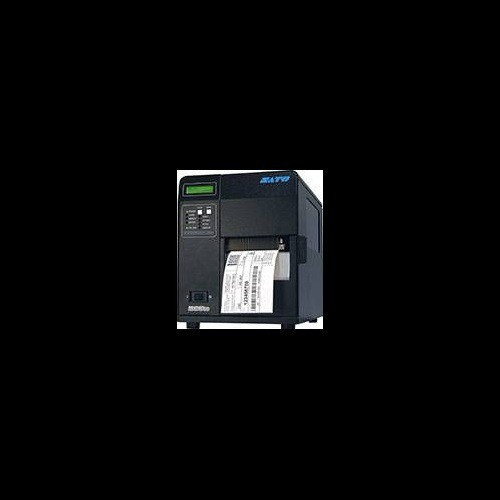
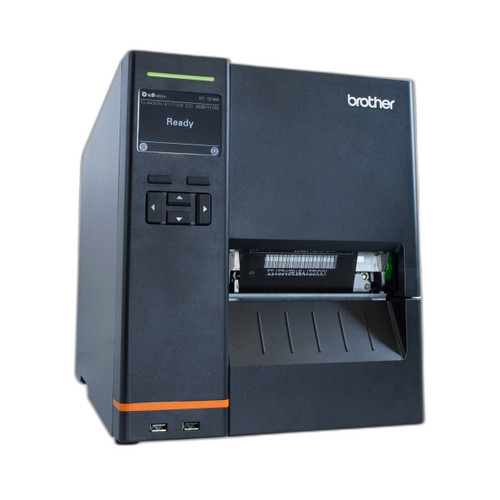
Both the Sato M84Pro WM8460241 and the Brother TJ4520TN are industrial-grade thermal label and tag printers targeting high-volume barcode and labeling applications. Each supports thermal transfer printing, ships with a color LCD touchscreen, and connects via Ethernet and USB — making them direct cross-shop candidates for warehouse, manufacturing, and logistics environments where print quality, throughput, and connectivity flexibility drive purchase decisions.
In This Guide
- Which printer delivers higher resolution and faster throughput for barcode-critical label runs?
- Which unit accommodates a wider range of label stock and ribbon configurations?
- Which printer integrates more broadly with enterprise networks, wireless environments, and host systems?
- Which should you choose: the WM8460241 or the TJ4520TN?
- Side-by-Side Specs
- FAQ
Which printer delivers higher resolution and faster throughput for barcode-critical label runs?
The Brother TJ4520TN prints at 300 dpi versus the Sato WM8460241's 203 dpi — a 48% resolution advantage that matters for small 2D barcodes, fine fonts, and ISO barcode grade compliance at reduced label sizes. At 12 ips, the TJ4520TN also edges out the WM8460241's 10 ips, a 20% throughput gain that compounds over high-volume shifts.
The WM8460241 supports both direct thermal and thermal transfer modes, giving it dual-mode flexibility the TJ4520TN lacks — the Brother is thermal transfer only. For operations that alternate between label stocks without ribbons (short-run, ambient-storage labels) and ribbon-based durable labels, the Sato's dual-mode capability reduces media changeover friction. However, for any deployment where all output must be durable (freezer, outdoor, chemical-exposure), the TJ4520TN's transfer-only design is no limitation.
Which unit accommodates a wider range of label stock and ribbon configurations?
The Brother TJ4520TN specifies a maximum print width of 4.5 inches versus the Sato WM8460241's 4.1 inches — a 0.4-inch difference that can determine whether wide shipping labels or compliance tags fit without reformatting. The Brother also accepts media described as labels and tags, consistent with its 4.5-inch print width.
The Sato WM8460241 provides detailed media geometry: roll diameter up to 8.6 inches, 3-inch core, media width 1 inch to 4.5 inches, and maximum ribbon length of 1,968 feet. Brother does not publish equivalent roll diameter, core size, or ribbon length specifications in the provided data, making direct media-capacity comparison impossible on those dimensions. Buyers with specific roll-size or ribbon-run-length constraints should verify Brother's media specs against their supply chain before committing.
Which printer integrates more broadly with enterprise networks, wireless environments, and host systems?
The Brother TJ4520TN includes Ethernet, Wi-Fi, and Bluetooth as specified connectivity, with USB 2.0 and RS232C also listed — making it wireless-capable out of the box or with optional modules per the interface spec. Wireless print from mobile devices, handheld terminals, or roaming workstations is a documented option.
The Sato WM8460241 lists Ethernet and USB in the structured specs. The datasheet annotation adds RS-232C and Parallel, but Wi-Fi and Bluetooth are absent from all provided data. The Sato includes a 3.5-inch color LCD, 16 MB SDRAM, and 2 MB flash with 2 MB user storage — memory figures Brother does not publish in the provided specs. The Sato also cites Windows OS compatibility explicitly. The Brother TJ4520TN carries a stated 2-year Premier Limited warranty with printhead coverage; the Sato WM8460241 carries a 1-year warranty. Warranty duration and printhead coverage are material cost-of-ownership factors in high-cycle industrial environments.
Which should you choose: the WM8460241 or the TJ4520TN?
Our take: The TJ4520TN is the stronger choice when print resolution, wireless connectivity, wider media, and longer warranty coverage are the primary decision drivers. It delivers 300 dpi versus the WM8460241's 203 dpi, prints 20% faster at 12 ips versus 10 ips, and adds a 4.5-inch print width against the Sato's 4.1 inches — all meaningful advantages for barcode-grade compliance and wide-label formats. Its 2-year warranty with printhead coverage also lowers long-term maintenance risk versus the Sato's 1-year term. The WM8460241 is the stronger choice when dual-mode flexibility (direct thermal plus thermal transfer), documented media geometry (8.6-inch roll diameter, 1,968-foot ribbon capacity), and wired-only infrastructure are the operating constraints — or where the Parallel port interface is a legacy integration requirement. Buyers on wireless-enabled shop floors or requiring ISO-grade 2D barcode output should favor the TJ4520TN; those running mixed label stocks or integrating with older host interfaces may find the WM8460241 the better fit.
Side-by-Side Comparison
Spec-for-spec, from manufacturer data.
| Specification | Sato WM8460241 | Brother TJ4520TN |
|---|---|---|
| Print Method | Direct Thermal / Thermal Transfer | Thermal Transfer only |
| Print Resolution | 203 dpi | 300 dpi |
| Print Speed | 10 ips | 12 ips |
| Max Print Width | 4.1" | 4.5" |
| Display | 3.5" Color LCD | Color HVGA LCD touchscreen |
| Connectivity — Ethernet | Yes | Yes |
| Connectivity — USB | USB 2.0 | USB 2.0 |
| Connectivity — RS-232C | Yes (datasheet) | Yes |
| Connectivity — Parallel | Yes (datasheet) | — |
| Connectivity — Wi-Fi | — | Yes |
| Connectivity — Bluetooth | — | Yes |
| Media Width Range | 1" to 4.5" | — |
| Max Media Roll Diameter | 8.6" | — |
| Max Ribbon Length | 1,968 ft | — |
| Memory (SDRAM / Flash) | 16 MB SDRAM / 2 MB Flash | — |
| Warranty | 1 year | 2 years (incl. printhead coverage) |
Frequently Asked Questions
Which should you choose: the WM8460241 or the TJ4520TN?
The TJ4520TN is the stronger choice when print resolution, wireless connectivity, wider media, and longer warranty coverage are the primary decision drivers. It delivers 300 dpi versus the WM8460241's 203 dpi, prints 20% faster at 12 ips versus 10 ips, and adds a 4.5-inch print width against the Sato's 4.1 inches — all meaningful advantages for barcode-grade compliance and wide-label formats. Its 2-year warranty with printhead coverage also lowers long-term maintenance risk versus the Sato's 1-year term. The WM8460241 is the stronger choice when dual-mode flexibility (direct thermal plus thermal transfer), documented media geometry (8.6-inch roll diameter, 1,968-foot ribbon capacity), and wired-only infrastructure are the operating constraints — or where the Parallel port interface is a legacy integration requirement. Buyers on wireless-enabled shop floors or requiring ISO-grade 2D barcode output should favor the TJ4520TN; those running mixed label stocks or integrating with older host interfaces may find the WM8460241 the better fit.
Is the WM8460241 or TJ4520TN better for printing small 2D barcodes like QR codes or Data Matrix at high volume?
The Brother TJ4520TN is better suited for small 2D barcodes. Its 300 dpi resolution versus the Sato WM8460241's 203 dpi produces finer dot structure, which directly affects scan reliability on compact QR or Data Matrix symbols. At 12 ips it also sustains higher throughput. If ISO barcode grade compliance is a requirement, the higher resolution of the TJ4520TN provides more headroom.
Can either printer work without a wired network connection — for example, from a tablet or mobile label app on the warehouse floor?
The Brother TJ4520TN specifies Wi-Fi and Bluetooth connectivity, enabling wireless print from mobile devices or roaming terminals without a tethered network drop. The Sato WM8460241's provided specifications list only Ethernet and USB; no Wi-Fi or Bluetooth capability is documented in the supplied data. For wireless-first deployments, the TJ4520TN is the specified option.
Which printer is the better long-term investment if minimizing maintenance costs matters — and does either cover the printhead under warranty?
The Brother TJ4520TN carries a stated 2-year Premier Limited warranty that explicitly includes printhead coverage, which is the highest-wear consumable component in a thermal transfer printer. The Sato WM8460241 specifies a 1-year warranty with no printhead coverage detail provided in the supplied specs. For high-cycle operations where printhead replacement is a recurring cost, the TJ4520TN's documented printhead coverage offers a concrete cost-of-ownership advantage over the warranty period.
More Label Printer Comparisons
- Honeywell PX940 vs Sato WWCLP3B01-WAR
- Honeywell PX940 vs Sato WWCLP3801-NAR
- Honeywell PX940 vs Sato WWCLP3801-WAR
- Honeywell PX940 vs Wasp WPL408
- Honeywell PX940 vs Honeywell PX4654-020
- Honeywell PX940 vs Honeywell PX6654-000
Label Printer Buying Guides
Get a Second Opinion on Your Camera Choice
Share your site layout, coverage goals, and budget. Our team will validate the camera selection, flag anything we would change, and recommend products that match the use case.