
Panduit U20N32V vs APC by Schneider Electric SUVTP20KH2B4S: Specification Comparison
Both the Panduit SteadySine U20N32V and the APC Smart-UPS VT SUVTP20KH2B4S are 20 kVA rack-mounted, true online double-conversion UPS units targeting data center, edge, and enterprise environments. A buyer evaluating either would be seeking a high-availability power protection platform at the 20 kVA tier. This comparison examines power architecture and runtime, physical and environmental characteristics, and feature sets derived strictly from the published specifications for each unit.
In This Guide
- How do the power architecture, output capacity, and runtime capabilities compare?
- What are the physical footprint, weight, and environmental operating envelope differences?
- Which unit offers more documented safety, monitoring, and serviceability features?
- Which should you choose: the U20N32V or the SUVTP20KH2B4S?
- Side-by-Side Specs
- FAQ
How do the power architecture, output capacity, and runtime capabilities compare?
Both units share a 20 kVA nameplate rating and a true online double-conversion topology, meaning neither introduces transfer-time risk during utility disruptions. The APC SUVTP20KH2B4S provides explicit watt-rated output data: 16,000 W (0.8 power factor), with a documented typical runtime of 5.5 minutes at full load and 18.3 minutes at half load. Battery recharge time is stated at 4 hours, and hot-swap battery replacement is supported — a critical feature for zero-downtime data center operations.
The Panduit U20N32V specifies its 20 kVA capacity and double-conversion topology but does not provide a watt output figure, runtime curves, recharge time, or hot-swap battery status in the supplied specifications. Buyers requiring pre-sales runtime planning or battery serviceability confirmation for the U20N32V will need to consult the Panduit datasheet directly at the path noted in the product record (/content/product-datasheets/U20N32V.pdf), as those values are absent from the available data.
What are the physical footprint, weight, and environmental operating envelope differences?
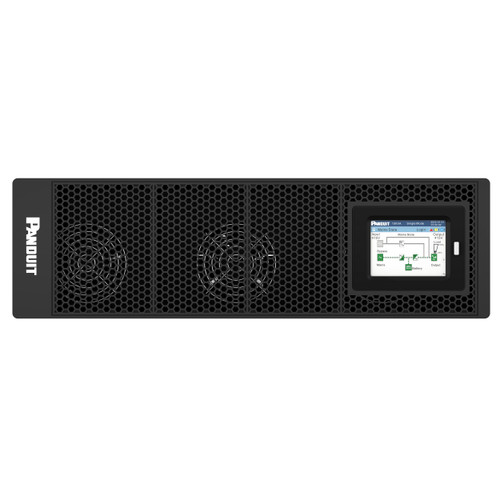
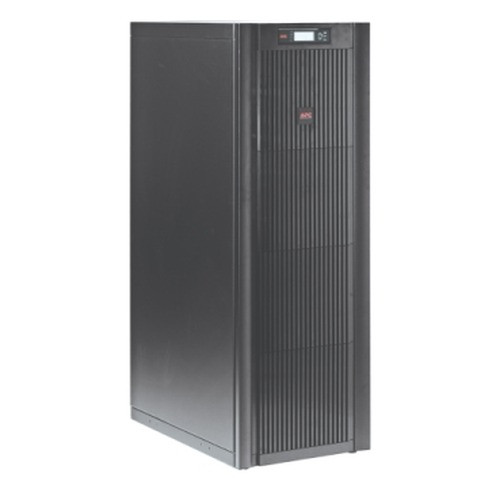
The Panduit U20N32V is specified at 3U rackmount with a height of 12 in (306 mm) and a width of 17.3 in (440 mm). Depth, weight, and rack-unit depth are not provided in the available specifications. The APC SUVTP20KH2B4S lists a weight of 415 kg but does not include rack-unit height or width dimensions in the supplied data, making a direct footprint comparison impossible from spec sheets alone.
Environmental operating ranges are documented only for the APC unit: operating temperature 0–40 °C, storage temperature –50 to 40 °C, operating relative humidity 0–95%, and storage relative humidity 0–95%. The SUVTP20KH2B4S also specifies a noise level of 64 dB and carries CE and ISO certifications. None of these environmental parameters — temperature range, humidity range, acoustic output, or certifications — are present in the Panduit U20N32V's available specifications.
Which unit offers more documented safety, monitoring, and serviceability features?
The APC SUVTP20KH2B4S documents several operator-facing features explicitly: Emergency Power Off (EPO) capability, audible alarms, LED indicators, and hot-swap battery support. EPO is a hard requirement in many data center safety codes, and its confirmed presence on the APC unit is a meaningful spec delta. Maximum output current is stated at 27 A, supporting load planning at the circuit level.
The Panduit U20N32V's available specifications do not confirm or deny EPO, audible alarms, LED indicators, or hot-swap battery capability. Its competitor cross-reference field lists the APC SURT20KRMXLI and Liebert ITA 20 as comparable alternatives, suggesting Panduit positions it in the same competitive tier, but the specific feature presence must be verified via the datasheet. The U20N32V is positioned for Data Center, Edge, and Enterprise MTDC applications under the SteadySine sub-brand, but manageability and safety feature confirmation requires additional documentation.
Which should you choose: the U20N32V or the SUVTP20KH2B4S?
Our take: The SUVTP20KH2B4S is the stronger choice when pre-sales runtime planning, documented safety compliance, and confirmed serviceability features are decision requirements. The APC unit provides a 16,000 W (0.8 pf) derated output figure, explicit runtimes of 5.5 min at full load and 18.3 min at half load, a 4-hour recharge time, confirmed hot-swap battery support, confirmed EPO, and a fully specified environmental envelope (0–40 °C, 0–95% RH). The Panduit U20N32V shares the 20 kVA / double-conversion architecture and a 3U rackmount form factor, but its available specifications are silent on watt output, runtime, battery serviceability, EPO, alarms, and environmental ratings. If the Panduit datasheet resolves those gaps favorably, the U20N32V may be a viable alternative — particularly for buyers already standardized on Panduit infrastructure — but the comparison cannot be completed on available data alone.
Side-by-Side Comparison
Spec-for-spec, from manufacturer data.
| Specification | Panduit U20N32V | APC by Schneider Electric SUVTP20KH2B4S |
|---|---|---|
| Product Type | UPS | UPS |
| kVA Rating | 20 kVA | 20 kVA |
| Watt Output | — | 16,000 W |
| Output Power Factor | — | 0.80 |
| Topology | True Online Double-Conversion | True Online Double-Conversion |
| Form Factor | 3U Rackmount | — |
| Height | 12 in (306 mm) | — |
| Width | 17.3 in (440 mm) | — |
| Weight | — | 415 kg |
| Runtime at Full Load | — | 5.5 min |
| Runtime at Half Load | — | 18.3 min |
| Battery Recharge Time | — | 4 h |
| Hot-Swap Battery | — | Yes |
| Emergency Power Off (EPO) | — | Yes |
| Operating Temperature | — | 0 – 40 °C |
| Operating Humidity | — | 0 – 95% |
| Noise Level | — | 64 dB |
| Certifications | — | CE, ISO |
| Maximum Output Current | — | 27 A |
| Application | Data Center, Edge, Enterprise MTDC | — |
Frequently Asked Questions
Which should you choose: the U20N32V or the SUVTP20KH2B4S?
The SUVTP20KH2B4S is the stronger choice when pre-sales runtime planning, documented safety compliance, and confirmed serviceability features are decision requirements. The APC unit provides a 16,000 W (0.8 pf) derated output figure, explicit runtimes of 5.5 min at full load and 18.3 min at half load, a 4-hour recharge time, confirmed hot-swap battery support, confirmed EPO, and a fully specified environmental envelope (0–40 °C, 0–95% RH). The Panduit U20N32V shares the 20 kVA / double-conversion architecture and a 3U rackmount form factor, but its available specifications are silent on watt output, runtime, battery serviceability, EPO, alarms, and environmental ratings. If the Panduit datasheet resolves those gaps favorably, the U20N32V may be a viable alternative — particularly for buyers already standardized on Panduit infrastructure — but the comparison cannot be completed on available data alone.
Does either unit support hot-swap battery replacement for zero-downtime maintenance?
Hot-swap battery support is explicitly confirmed for the APC SUVTP20KH2B4S in its published specifications. The Panduit U20N32V's available specifications do not address hot-swap capability; buyers should consult the Panduit SteadySine U20N32V datasheet before assuming parity on this feature.
Which UPS gives me a better idea of how long my load will run on battery?
The APC SUVTP20KH2B4S provides documented typical runtime figures: 5.5 minutes at full load (20 kVA / 16 kW) and 18.3 minutes at half load. The Panduit U20N32V does not include runtime data in its available specifications, so pre-sales runtime planning based on published data is only possible for the APC unit.
Is Emergency Power Off (EPO) available on both units for data center safety code compliance?
EPO is confirmed present on the APC SUVTP20KH2B4S. The Panduit U20N32V's available specifications do not mention EPO. Installers with a code requirement for EPO should verify U20N32V EPO support directly with Panduit or via the product datasheet before specifying it in a new installation.
More UPS Comparisons
- Panduit U20N32V vs APC by Schneider Electric SURT20KRMXLT-1TF10K
- Panduit U20N32V vs APC by Schneider Electric E3SUPS20KFBS
- Panduit U20N32V vs Vertiv GXT5-20KMVRT11UXLN
- APC by Schneider Electric SURT20KRMXLT-1TF10K vs Vertiv GXT5-20KMVRT11UXLN
- APC by Schneider Electric SURT20KRMXLT-1TF10K vs APC by Schneider Electric E3SUPS20KFBS
- APC by Schneider Electric SURT20KRMXLT-1TF10K vs APC by Schneider Electric SUVTP20KH2B4S
UPS Buying Guides
Get a Second Opinion on Your Camera Choice
Share your site layout, coverage goals, and budget. Our team will validate the camera selection, flag anything we would change, and recommend products that match the use case.