
Panduit U20N32V vs APC by Schneider Electric E3SUPS20KFBS: Specification Comparison
Both the Panduit SteadySine U20N32V and the APC by Schneider Electric Easy UPS 3S E3SUPS20KFBS are 20 kVA true online double-conversion rackmount UPS units targeting data center, edge, and enterprise deployments. A buyer evaluating either unit is looking at the same power-protection class and the same fundamental topology, making a side-by-side comparison valid. The comparison below is drawn strictly from the provided specifications; where a specification is present for one model but absent for the other, that absence is noted explicitly.
In This Guide
- How do the two units compare on power capacity, electrical specifications, and output quality?
- What are the differences in physical footprint, thermal output, noise, and environmental ratings?
- How do the units differ in battery configuration, management interface, and operational usability?
- Which should you choose: the U20N32V or the E3SUPS20KFBS?
- Side-by-Side Specs
- FAQ
How do the two units compare on power capacity, electrical specifications, and output quality?
Both units share a 20 kVA rated capacity and a true online double-conversion topology, meaning neither unit introduces transfer-time risk during a mains event. The APC E3SUPS20KFBS specifies an output power figure of 20,000 W (1.0 power factor), an input operating voltage range of 208–220 V, an output voltage range of 208–220 V, and an input frequency acceptance window of 40–70 Hz — a wide window that accommodates grid anomalies. Its input current Total Harmonic Distortion (THD) is rated at 4%, indicating a low harmonic footprint on the upstream distribution. The Panduit U20N32V specifications provided do not state a watts output figure, input voltage range, output voltage range, frequency window, or input THD value, so direct electrical comparisons on those dimensions cannot be made from the available data. Buyers requiring confirmation of Panduit's power-factor rating or input THD should consult the manufacturer datasheet referenced at /content/product-datasheets/U20N32V.pdf.
What are the differences in physical footprint, thermal output, noise, and environmental ratings?
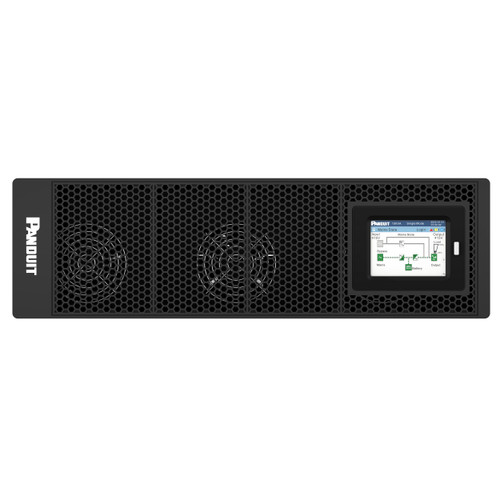
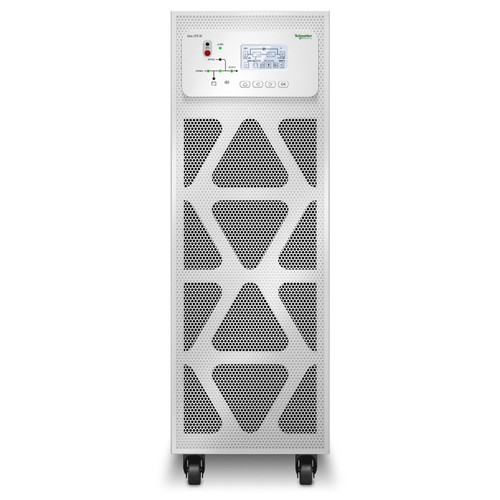
The Panduit U20N32V is specified as a 3U rackmount unit measuring 12 in (306 mm) high and 17.3 in (440 mm) wide. No depth, weight, operating temperature, humidity range, or acoustic level is provided in the available spec set. The APC E3SUPS20KFBS does not have a rack-unit height, physical width, or depth stated in the provided specifications. However, the APC unit does carry two environmental data points absent from the Panduit listing: a heat dissipation rating of 1,400 BTU/h and an acoustic noise level of 68 dB. An IP20 ingress-protection rating is also specified for the APC, indicating protection against solid objects greater than 12 mm but no liquid protection — typical for indoor data center equipment. The APC is described as white; the Panduit color is not stated. For rack-space planning, only the Panduit's 3U / 12 in height is confirmed from the provided data.
How do the units differ in battery configuration, management interface, and operational usability?
The APC E3SUPS20KFBS specifies a 96 V DC battery bus voltage, a touch-type control interface, and an LCD display, giving operators a local graphical interface for status and configuration. Its model designation 'for Internal Batteries' indicates the battery pack is housed within the unit itself. Power protection features listed include overload protection; additional management protocol support (SNMP, network card, communication ports) is not stated in the provided specifications. The Panduit U20N32V provides no battery voltage, display type, control type, or management interface details in the supplied specification set. The Panduit listing references a sub-brand (SteadySine) and targets Data Center, Edge, and Enterprise MTDC applications, but no network management, bypass switch configuration, or communication port data is present to compare. Buyers integrating either unit into a monitored power infrastructure should verify SNMP card availability and software compatibility with the respective manufacturer.
Which should you choose: the U20N32V or the E3SUPS20KFBS?
Our take: The E3SUPS20KFBS is the stronger choice when electrical transparency, thermal planning data, and a documented local management interface are hard procurement requirements, because it is the only unit of the two with confirmed specs in those areas. Concretely: the APC states a 20,000 W (unity power factor) output versus no watt figure from Panduit; a 4% input THD versus no THD figure from Panduit; and a 1,400 BTU/h heat dissipation versus no thermal figure from Panduit — all three gaps make data center capacity planning harder with the Panduit listing as supplied. However, the Panduit U20N32V's 3U / 12 in rackmount form factor is confirmed, whereas the APC's rack height is not stated in the provided data, which matters for cage-space allocation. Neither model's weight, runtime curve, bypass options, or communication ports are confirmed from the supplied specs, so buyers should pull full datasheets before finalizing selection.
Side-by-Side Comparison
Spec-for-spec, from manufacturer data.
| Specification | Panduit U20N32V | APC by Schneider Electric E3SUPS20KFBS |
|---|---|---|
| Product Type | UPS | UPS |
| Topology | True Online Double-Conversion | Double-Conversion (Online) |
| Capacity (kVA) | 20 kVA | 20 kVA |
| Output Power (W) | — | 20,000 W |
| Form Factor | 3U Rackmount | — |
| Height | 12 in (306 mm) | — |
| Width | 17.3 in (440 mm) | — |
| Input Voltage Range | — | 208–220 V |
| Output Voltage Range | — | 208–220 V |
| Input Frequency Range | — | 40–70 Hz |
| Output Frequency | — | 50/60 Hz |
| Input THD | — | 4% |
| Battery Voltage | — | 96 V DC |
| Heat Dissipation | — | 1,400 BTU/h |
| Noise Level | — | 68 dB |
| Display / Control | — | LCD / Touch |
| IP Rating | — | IP20 |
| Target Application | Data Center, Edge, Enterprise MTDC | — |
Frequently Asked Questions
Which should you choose: the U20N32V or the E3SUPS20KFBS?
The E3SUPS20KFBS is the stronger choice when electrical transparency, thermal planning data, and a documented local management interface are hard procurement requirements, because it is the only unit of the two with confirmed specs in those areas. Concretely: the APC states a 20,000 W (unity power factor) output versus no watt figure from Panduit; a 4% input THD versus no THD figure from Panduit; and a 1,400 BTU/h heat dissipation versus no thermal figure from Panduit — all three gaps make data center capacity planning harder with the Panduit listing as supplied. However, the Panduit U20N32V's 3U / 12 in rackmount form factor is confirmed, whereas the APC's rack height is not stated in the provided data, which matters for cage-space allocation. Neither model's weight, runtime curve, bypass options, or communication ports are confirmed from the supplied specs, so buyers should pull full datasheets before finalizing selection.
Which unit gives me better visibility into its electrical impact on upstream distribution?
Based on the provided specifications, the APC E3SUPS20KFBS is the only unit with a stated input THD figure (4%), which is relevant for sizing upstream transformers and meeting facility power-quality requirements. The Panduit U20N32V does not include an input THD value in the supplied spec set; consult the Panduit datasheet at /content/product-datasheets/U20N32V.pdf for that data.
I need to plan cooling for my rack row — which unit tells me how much heat it generates?
Only the APC E3SUPS20KFBS provides a heat dissipation figure in the supplied specifications: 1,400 BTU/h. The Panduit U20N32V does not include a heat dissipation value in the provided data, so cooling load for that unit cannot be confirmed from these specs alone.
Is the U20N32V or E3SUPS20KFBS better for a tight rack layout where U-count matters?
The Panduit U20N32V is the only unit with a confirmed rack height in the provided specifications: 3U (12 in / 306 mm). The APC E3SUPS20KFBS does not state a rack-unit height in the supplied data. If minimizing rack-unit consumption is a priority and the Panduit's electrical specs meet your requirements when verified against its datasheet, it has the advantage of a documented 3U footprint.
More UPS Comparisons
- Panduit U20N32V vs APC by Schneider Electric SURT20KRMXLT-1TF10K
- Panduit U20N32V vs APC by Schneider Electric SUVTP20KH2B4S
- Panduit U20N32V vs Vertiv GXT5-20KMVRT11UXLN
- APC by Schneider Electric SURT20KRMXLT-1TF10K vs Vertiv GXT5-20KMVRT11UXLN
- APC by Schneider Electric SURT20KRMXLT-1TF10K vs APC by Schneider Electric E3SUPS20KFBS
- APC by Schneider Electric SURT20KRMXLT-1TF10K vs APC by Schneider Electric SUVTP20KH2B4S
UPS Buying Guides
Get a Second Opinion on Your Camera Choice
Share your site layout, coverage goals, and budget. Our team will validate the camera selection, flag anything we would change, and recommend products that match the use case.