
Panduit U20N32V vs APC by Schneider Electric SURT20KRMXLT-1TF10K: Specification Comparison
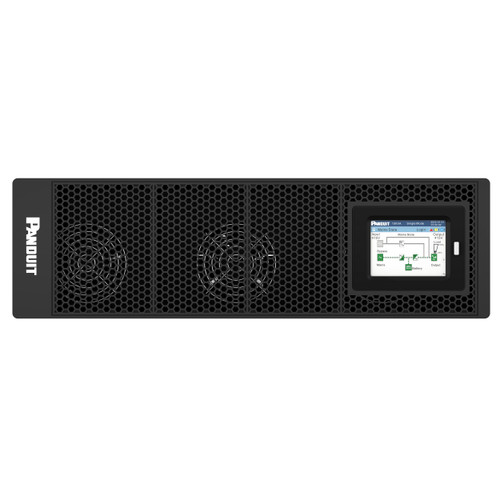
Both the Panduit SteadySine U20N32V and the APC Smart-UPS RT SURT20KRMXLT-1TF10K are 20 kVA rack-mount UPS systems targeting data center and enterprise environments. The U20N32V is a 3U true online double-conversion unit positioned for data center, edge, and MTDC deployments. The APC unit is a 16U rack-mount system bundled with a 10 kVA step-down transformer enabling dual 208 V and 120 V output from a 208 V input. Both occupy the same capacity class, making them legitimate cross-shop candidates for buyers evaluating 20 kVA rack power protection.
In This Guide
- How do the two units compare on rated capacity, output power, and voltage flexibility?
- What backup runtime and battery data are available for each unit?
- How do the units differ in physical footprint, weight, and management capabilities?
- Which should you choose: the U20N32V or the SURT20KRMXLT-1TF10K?
- Side-by-Side Specs
- FAQ
How do the two units compare on rated capacity, output power, and voltage flexibility?
Both units are rated at 20 kVA, but their output power and voltage configurations differ significantly. The APC SURT20KRMXLT-1TF10K specifies a 16 kW real-power rating at its 20 kVA apparent-power rating, yielding an 0.80 power factor. It accepts 208 V AC input and delivers both 120 V AC and 208 V AC output via its bundled 10 kVA step-down transformer, providing 11 outlets. Input current draw is stated at 105 A, and output frequency is 60 Hz.
The Panduit U20N32V specifies 20 kVA capacity and a true online double-conversion topology, but its datasheet-provided specs do not include a watt rating, power factor, input/output voltage levels, outlet count, or input current figure. Buyers requiring precise kW derating, specific input voltage compatibility, or outlet-level detail for the U20N32V must consult the Panduit datasheet at /content/product-datasheets/U20N32V.pdf, as those values are absent from the available spec set.
What backup runtime and battery data are available for each unit?
The APC SURT20KRMXLT-1TF10K provides explicit runtime figures: 4.90 minutes at full load and 15.30 minutes at half load, with a typical battery recharge time of 2.50 hours. Battery chemistry is specified as lead acid. These are the baseline internal-battery figures; APC's Smart-UPS RT platform supports external battery packs for extended runtime, though no such accessory data is included in the provided spec set.
No runtime figures, battery chemistry, or recharge time data are present in the available specifications for the Panduit U20N32V. Panduit's SteadySine platform typically supports external battery modules, but no specific runtime or battery specifications can be cited here. Buyers with defined runtime SLAs must obtain this data from the U20N32V datasheet or Panduit directly before evaluating the unit against the APC's published runtime numbers.
How do the units differ in physical footprint, weight, and management capabilities?
The two units differ substantially in physical size. The Panduit U20N32V occupies 3U of rack space with a height of 12 in (306 mm) and a width of 17.3 in (440 mm); depth and weight are not provided in the available specs. The APC SURT20KRMXLT-1TF10K requires 16U, measures 27.9 in H × 17 in W × 30.4 in D, and weighs 766.61 lb. The 13U difference is significant in dense rack environments, and the APC's 766.61 lb weight demands floor-load and lifting-equipment planning.
On management, the APC unit is specified as SNMP Manageable, enabling integration with standard NMS platforms and APC's EcoStruxure/PowerChute ecosystem. The APC carries a stated 2-year warranty. The Panduit U20N32V lists no management protocol, warranty term, or remote-monitoring capability in the provided spec data. The APC's SNMP support is a concrete, verifiable differentiator for IT teams requiring network-visible power management; the Panduit's equivalent capabilities cannot be confirmed from available data.
Which should you choose: the U20N32V or the SURT20KRMXLT-1TF10K?
Our take: The APC SURT20KRMXLT-1TF10K is the stronger choice when buyers need fully documented runtime, voltage flexibility, and network management from a single vetted spec sheet. The APC provides a stated 16 kW real-power rating versus no watt figure for the Panduit, 4.90/15.30 min runtime at full/half load versus no runtime data for the Panduit, and confirmed SNMP manageability versus no management spec for the Panduit. However, the Panduit U20N32V's 3U footprint versus the APC's 16U rack height is a concrete and decisive advantage in space-constrained high-density racks or edge deployments. Buyers prioritizing rack density and physical compactness—particularly in MTDC or edge sites—should evaluate the U20N32V against its full datasheet. Buyers requiring documented runtime SLAs, dual 120 V/208 V output, SNMP visibility, and a bundled step-down transformer on a single PO should favor the APC SURT20KRMXLT-1TF10K.
Side-by-Side Comparison
Spec-for-spec, from manufacturer data.
| Specification | Panduit U20N32V | APC by Schneider Electric SURT20KRMXLT-1TF10K |
|---|---|---|
| Product Type | UPS | UPS |
| Rated Capacity (VA) | 20 kVA | 20 kVA |
| Rated Power (Watts) | — | 16 kW |
| Power Factor | — | 0.80 |
| Topology | True Online Double-Conversion | — |
| Input Voltage | — | 208 V AC |
| Output Voltage | — | 120 V AC | 208 V AC |
| Input Current | — | 105 A |
| Output Frequency | — | 60 Hz |
| Number of Outlets | — | 11 |
| Runtime at Full Load | — | 4.90 min |
| Runtime at Half Load | — | 15.30 min |
| Battery Recharge Time | — | 2.50 hr |
| Battery Chemistry | — | Lead Acid |
| Form Factor / Rack Height | 3U Rackmount | 16U Rack-mountable |
| Height | 12 in (306 mm) | 27.9 in |
| Width | 17.3 in (440 mm) | 17 in |
| Depth | — | 30.4 in |
| Weight | — | 766.61 lb |
| SNMP Management | — | Yes |
| Warranty | — | 2 Year |
| Country of Origin | — | Philippines |
| Sub-Brand / Series | SteadySine | Smart-UPS RT |
| Application | Data Center, Edge, MTDC | — |
| Competitor Cross-Reference | APC SURT20KRMXLI, Liebert ITA 20 | — |
Frequently Asked Questions
Which should you choose: the U20N32V or the SURT20KRMXLT-1TF10K?
The APC SURT20KRMXLT-1TF10K is the stronger choice when buyers need fully documented runtime, voltage flexibility, and network management from a single vetted spec sheet. The APC provides a stated 16 kW real-power rating versus no watt figure for the Panduit, 4.90/15.30 min runtime at full/half load versus no runtime data for the Panduit, and confirmed SNMP manageability versus no management spec for the Panduit. However, the Panduit U20N32V's 3U footprint versus the APC's 16U rack height is a concrete and decisive advantage in space-constrained high-density racks or edge deployments. Buyers prioritizing rack density and physical compactness—particularly in MTDC or edge sites—should evaluate the U20N32V against its full datasheet. Buyers requiring documented runtime SLAs, dual 120 V/208 V output, SNMP visibility, and a bundled step-down transformer on a single PO should favor the APC SURT20KRMXLT-1TF10K.
Is the Panduit U20N32V or the APC SURT20KRMXLT-1TF10K better for space-constrained rack deployments?
Based on available specs, the Panduit U20N32V is significantly more compact at 3U versus the APC's 16U. If rack space is a primary constraint, the U20N32V has a clear physical footprint advantage, though depth and weight are not published in the available spec set and should be confirmed before purchase.
Which unit provides longer backup runtime at full load?
Only the APC SURT20KRMXLT-1TF10K provides published runtime figures: 4.90 minutes at full load and 15.30 minutes at half load. No runtime data is available in the provided specifications for the Panduit U20N32V. Buyers with specific runtime requirements must consult the Panduit datasheet directly.
Does either unit support SNMP or remote network management?
The APC SURT20KRMXLT-1TF10K is explicitly specified as SNMP Manageable, enabling integration with network management systems and APC's PowerChute/EcoStruxure platform. The Panduit U20N32V has no management protocol listed in its available specifications; buyers should verify SNMP or other remote-management support with Panduit or the published datasheet before assuming equivalent capability.
More UPS Comparisons
- Panduit U20N32V vs APC by Schneider Electric E3SUPS20KFBS
- Panduit U20N32V vs APC by Schneider Electric SUVTP20KH2B4S
- Panduit U20N32V vs Vertiv GXT5-20KMVRT11UXLN
- APC by Schneider Electric SURT20KRMXLT-1TF10K vs Vertiv GXT5-20KMVRT11UXLN
- APC by Schneider Electric SURT20KRMXLT-1TF10K vs APC by Schneider Electric E3SUPS20KFBS
- APC by Schneider Electric SURT20KRMXLT-1TF10K vs APC by Schneider Electric SUVTP20KH2B4S
UPS Buying Guides
Get a Second Opinion on Your Camera Choice
Share your site layout, coverage goals, and budget. Our team will validate the camera selection, flag anything we would change, and recommend products that match the use case.