
APC by Schneider Electric SURT20KRMXLT-1TF10K vs APC by Schneider Electric SUVTP20KH2B4S: Specification Comparison
Both the APC Smart-UPS RT SURT20KRMXLT-1TF10K and the APC Smart-UPS VT SUVTP20KH2B4S are 20 kVA / 16 kW online double-conversion UPS units targeting data center and critical infrastructure deployments. The SURT20KRMXLT-1TF10K is a 208 V single-phase rack-mount unit bundled with a step-down transformer for 120 V output, while the SUVTP20KH2B4S is a 400 V three-phase tower unit designed for European and international three-phase power environments. Despite sharing the same kVA rating, these serve distinct electrical infrastructures and form factors.
In This Guide
- Which unit matches your electrical infrastructure — single-phase 208 V or three-phase 400 V?
- Which unit provides longer runtime and faster battery recovery under load?
- How do physical footprint, environmental tolerances, and management capabilities compare?
- Which should you choose: the SURT20KRMXLT-1TF10K or the SUVTP20KH2B4S?
- Side-by-Side Specs
- FAQ
Which unit matches your electrical infrastructure — single-phase 208 V or three-phase 400 V?
The SURT20KRMXLT-1TF10K accepts 208 V AC single-phase input at up to 105 A and delivers dual output voltages of 120 V AC and 208 V AC, enabled by its bundled 10 kVA step-down transformer. This makes it purpose-built for North American data centers where 120 V and 208 V receptacles must coexist on the same UPS backbone. Its output waveform is specified as sine wave, appropriate for sensitive electronics.
The SUVTP20KH2B4S is engineered for three-phase 400 V input and three-phase 400 V output at a maximum current of 27 A per phase. This architecture is standard in European, Middle Eastern, and large-facility deployments where three-phase distribution panels feed server rows. Neither dual-voltage output nor a step-down transformer is part of its specification. Buyers must match UPS input/output architecture to their facility's PDU and distribution panel before evaluating any other dimension.
Which unit provides longer runtime and faster battery recovery under load?
At full 20 kVA load, the SUVTP20KH2B4S delivers 5.5 minutes of backup time versus 4.9 minutes for the SURT20KRMXLT-1TF10K — a difference of approximately 37 seconds. At half load, the gap widens: the SUVTP20KH2B4S provides 18.3 minutes compared to 15.3 minutes for the SURT20KRMXLT-1TF10K, a 3-minute advantage. These differences reflect battery pack sizing and efficiency; exact battery capacity (Ah) is not specified for either model in the provided data.
Battery recharge time diverges significantly. The SURT20KRMXLT-1TF10K specifies a typical recharge time of 2.5 hours, while the SUVTP20KH2B4S requires 4 hours — 60% longer. For facilities experiencing frequent utility disturbances, the faster recharge of the SURT20KRMXLT-1TF10K restores full protection sooner between events. The SUVTP20KH2B4S partially offsets this with a specified hot-swap battery capability, allowing battery replacement without system downtime — a feature not listed in the SURT20KRMXLT-1TF10K specification.
How do physical footprint, environmental tolerances, and management capabilities compare?
The SURT20KRMXLT-1TF10K is a rack-mount unit occupying 16U at 27.9" H × 17" W × 30.4" D and weighing 766.61 lb (approximately 348 kg). It is SNMP manageable, providing remote monitoring and integration with network management platforms. Color is black. Country of origin is the Philippines. Operating temperature, humidity, and noise level are not provided in the specification.
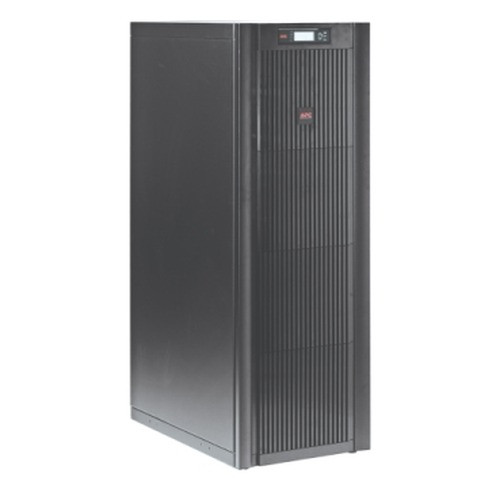
The SUVTP20KH2B4S is a tower form factor, making it floor-standing rather than rack-integrated. It weighs 415 kg. Rack height and rack dimensions are not specified. Environmentally, it is rated for 0–40 °C operating temperature, 0–95% operating relative humidity, and –50–40 °C storage temperature with up to 95% storage humidity. Audible noise is specified at 64 dB. It carries CE and ISO certifications relevant to European market compliance. LED indicators and an audible alarm are noted; SNMP or network management capability is not listed in the provided specifications.
Which should you choose: the SURT20KRMXLT-1TF10K or the SUVTP20KH2B4S?
Our take: The SURT20KRMXLT-1TF10K is the stronger choice when the deployment is a North American rack-based data center requiring both 208 V and 120 V output from a single UPS, fast battery recharge, and SNMP-based remote management. Its 2.5-hour recharge time is 1.5 hours faster than the SUVTP20KH2B4S's 4 hours, and its SNMP manageability is explicitly specified where the SUVTP20KH2B4S's network management capability is not. Conversely, the SUVTP20KH2B4S is the correct selection for three-phase 400 V infrastructures — standard in Europe and large-facility international deployments — where it also delivers longer runtime at both full load (5.5 vs. 4.9 min) and half load (18.3 vs. 15.3 min), hot-swap battery capability, and documented environmental ratings. These two units are not substitutes; the decisive factor is the facility's electrical architecture.
Side-by-Side Comparison
Spec-for-spec, from manufacturer data.
| Specification | APC by Schneider Electric SURT20KRMXLT-1TF10K | APC by Schneider Electric SUVTP20KH2B4S |
|---|---|---|
| SKU | SURT20KRMXLT-1TF10K | SUVTP20KH2B4S |
| Output Capacity (kVA) | 20 kVA | 20 kVA |
| Output Power (W) | 16,000 W | 16,000 W |
| Input Voltage | 208 V AC (single-phase) | 400 V (three-phase) |
| Output Voltage | 120 V AC | 208 V AC | 400 V (three-phase) |
| Input Current | 105 A | 27 A (max, per phase) |
| Waveform | Sine Wave | — |
| Runtime at Full Load | 4.9 min | 5.5 min |
| Runtime at Half Load | 15.3 min | 18.3 min |
| Battery Recharge Time | 2.5 h | 4 h |
| Hot-Swap Battery | — | Yes |
| Form Factor | Rack-mountable (16U) | Tower |
| Weight | 766.61 lb (~348 kg) | 415 kg |
| Noise Level | — | 64 dB |
| Management | SNMP Manageable | — |
| Certifications | — | CE, ISO |
| Operating Temperature | — | 0 – 40 °C |
| Warranty | 2 Year | — |
| Country of Origin | Philippines | — |
Frequently Asked Questions
Which should you choose: the SURT20KRMXLT-1TF10K or the SUVTP20KH2B4S?
The SURT20KRMXLT-1TF10K is the stronger choice when the deployment is a North American rack-based data center requiring both 208 V and 120 V output from a single UPS, fast battery recharge, and SNMP-based remote management. Its 2.5-hour recharge time is 1.5 hours faster than the SUVTP20KH2B4S's 4 hours, and its SNMP manageability is explicitly specified where the SUVTP20KH2B4S's network management capability is not. Conversely, the SUVTP20KH2B4S is the correct selection for three-phase 400 V infrastructures — standard in Europe and large-facility international deployments — where it also delivers longer runtime at both full load (5.5 vs. 4.9 min) and half load (18.3 vs. 15.3 min), hot-swap battery capability, and documented environmental ratings. These two units are not substitutes; the decisive factor is the facility's electrical architecture.
Can I use the SUVTP20KH2B4S in a North American data center?
Based on the provided specifications, the SUVTP20KH2B4S requires three-phase 400 V input and delivers three-phase 400 V output. North American data centers typically operate on 208 V single-phase or three-phase distribution. The SUVTP20KH2B4S's input voltage is not compatible with standard North American utility feeds without additional step-up transformer infrastructure. The SURT20KRMXLT-1TF10K is designed for 208 V single-phase North American environments and includes a built-in 10 kVA step-down transformer for 120 V output.
Which unit is better if my facility loses power frequently and I need the UPS batteries recharged as quickly as possible?
The SURT20KRMXLT-1TF10K specifies a typical battery recharge time of 2.5 hours, compared to 4 hours for the SUVTP20KH2B4S. If rapid recharge between outages is a priority, the SURT20KRMXLT-1TF10K has a documented advantage of 1.5 hours. However, the SUVTP20KH2B4S specifies hot-swap battery capability, allowing battery modules to be replaced under load without shutting down connected equipment — a feature not listed for the SURT20KRMXLT-1TF10K. Buyers should weigh fast recharge against the operational flexibility of hot-swap replacement.
Is the SUVTP20KH2B4S or SURT20KRMXLT-1TF10K better for rack integration in a server room?
The SURT20KRMXLT-1TF10K is explicitly specified as rack-mountable at 16U and is designed to integrate into standard 19-inch equipment racks. The SUVTP20KH2B4S is specified as a tower form factor; rack dimensions and rack unit height are not provided in its specification. For deployments where UPS units must reside within equipment racks alongside servers and networking gear, the SURT20KRMXLT-1TF10K is the appropriate choice based on the available specifications.
More UPS Comparisons
- Panduit U20N32V vs APC by Schneider Electric SURT20KRMXLT-1TF10K
- Panduit U20N32V vs APC by Schneider Electric E3SUPS20KFBS
- Panduit U20N32V vs APC by Schneider Electric SUVTP20KH2B4S
- Panduit U20N32V vs Vertiv GXT5-20KMVRT11UXLN
- APC by Schneider Electric SURT20KRMXLT-1TF10K vs Vertiv GXT5-20KMVRT11UXLN
- APC by Schneider Electric SURT20KRMXLT-1TF10K vs APC by Schneider Electric E3SUPS20KFBS
UPS Buying Guides
Get a Second Opinion on Your Camera Choice
Share your site layout, coverage goals, and budget. Our team will validate the camera selection, flag anything we would change, and recommend products that match the use case.