
Panduit U10N11V vs Panduit U10N12V: Specification Comparison
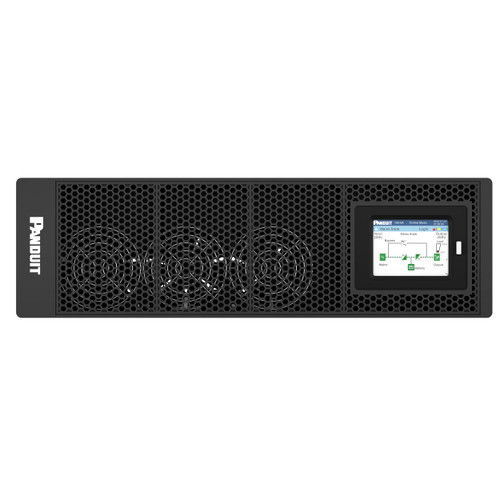
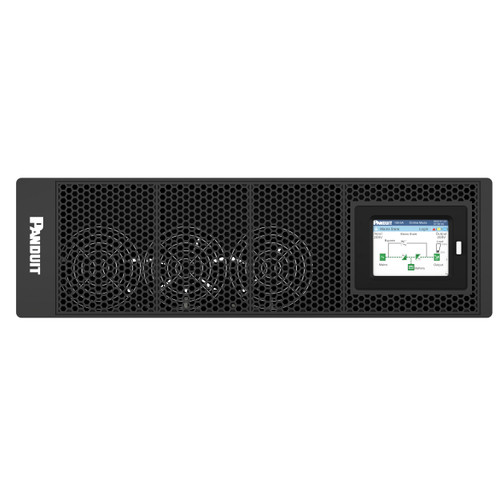
Both the Panduit U10N11V and U10N12V are 10kVA SteadySine™ double-conversion online rack UPS units targeting data center, edge computing, and enterprise MTDC environments. They share the same physical footprint, sub-brand, and core topology, making them a genuine cross-shop pair for IT buyers specifying 10kVA online UPS protection in a standard 19-inch rack. This comparison evaluates the three dimensions most critical to UPS selection: physical integration and form factor, input/output electrical specifications, and management and serviceability capabilities.
In This Guide
- How do the U10N11V and U10N12V differ in physical integration and rack compatibility?
- What are the key differences in input/output electrical specifications between these two units?
- How do the U10N11V and U10N12V compare on management interfaces, monitoring, and serviceability?
- Which should you choose: the U10N11V or the U10N12V?
- Side-by-Side Specs
- FAQ
How do the U10N11V and U10N12V differ in physical integration and rack compatibility?
Both units share identical external dimensions of 17.3 in (440 mm) wide and 10.3 in (262 mm) tall, and both are specified for 19-inch EIA rack mounting compatible with 2-post and 4-post configurations. The U10N11V spec lists its rack height as approximately 6U, while the U10N12V is explicitly specified as a 2U rack-mount form factor. This is a direct conflict within the provided specifications — both units share the same physical height of 10.3 inches, which is geometrically consistent with approximately 6U, not 2U (a true 2U chassis measures roughly 3.5 inches). Buyers should verify the actual rack unit occupancy against Panduit's published datasheets (U10N11V.pdf and U10N12V.pdf) before finalizing rack space allocation, as the U10N12V's '2U' label may reflect a product family designation rather than a verified measured rack height.
The U10N11V spec additionally calls out compatibility with both 2-post and 4-post rack configurations explicitly, while the U10N12V spec does not enumerate post compatibility. The U10N12V does specify front-accessible battery modules and components as a serviceability feature, which is relevant for dense rack deployments where rear access is constrained.
What are the key differences in input/output electrical specifications between these two units?
The U10N12V provides substantially more electrical specification detail than the U10N11V. The U10N12V specifies an input voltage range of 160–280V AC (wide tolerance), an output voltage of 120V AC ±2%, and a runtime of 5–8 minutes typical at full 10kVA load. It also confirms a capacity of 10kVA / 10,000VA explicitly. The U10N11V specification does not provide input voltage range, output voltage tolerance, or runtime figures in the data supplied.
Both units specify a pure sine wave / true online double-conversion output topology and hot-swappable battery modules. The U10N11V specifies hardwire terminal input connections; the U10N12V does not enumerate its input connection type in the provided specs. The U10N12V's 160–280V wide-input tolerance is a meaningful spec for environments with variable utility power quality, but no equivalent figure is available for the U10N11V to enable a direct comparison.
How do the U10N11V and U10N12V compare on management interfaces, monitoring, and serviceability?
The U10N12V specifies a more complete management stack within the provided data: SNMP v1/v2c/v3, HTTP, and an LCD front panel status monitor are all listed. The U10N11V specifies a network card slot (adapter sold separately) and describes itself as SNMP-ready, but does not enumerate specific SNMP versions, HTTP access, or a local display in the provided specs.
On serviceability, the U10N12V explicitly calls out front-accessible battery modules and components, which is a practical advantage in high-density or space-constrained rack rows. The U10N11V specifies hot-swappable battery modules but does not describe access orientation. Neither unit's provided specs enumerate warranty terms, MTBF, or software ecosystem integrations beyond the management protocols noted above.
Which should you choose: the U10N11V or the U10N12V?
Our take: The U10N12V is the stronger choice when complete electrical and management specifications are required at the point of procurement. The U10N12V provides a defined input voltage range of 160–280V AC, a confirmed output of 120V AC ±2%, a runtime estimate of 5–8 minutes at full 10kVA load, SNMP v1/v2c/v3 plus HTTP management, an LCD front panel, and explicitly front-accessible serviceability — none of these figures appear in the U10N11V's provided specifications. The U10N11V is the better-documented choice for hardwired input installations, as its spec explicitly calls out hardwire terminal input connections, which the U10N12V does not address. Both units carry the same physical footprint and SteadySine™ double-conversion topology. Buyers in environments with fluctuating utility power should weight the U10N12V's wide-tolerance input range, while those integrating into hardwired power infrastructure should confirm the U10N12V's input connection type via its published datasheet before committing.
Side-by-Side Comparison
Spec-for-spec, from manufacturer data.
| Specification | Panduit U10N11V | Panduit U10N12V |
|---|---|---|
| Product Type | UPS — Online Double-Conversion | UPS — Online Double-Conversion |
| Sub-Brand | SteadySine™ | SteadySine™ |
| Topology | Double-Conversion Online | True Online Double-Conversion |
| Capacity | — | 10kVA / 10,000VA |
| Form Factor | Rack-mountable | 2U Rack-Mount |
| Stated Rack Height | ~6U (per spec) | 2U (per spec) |
| Chassis Height | 10.3 in (262 mm) | 10.3 in (262 mm) |
| Chassis Width | 17.3 in (440 mm) | 17.3 in (440 mm) |
| Input Connection | Hardwire terminals | — |
| Input Voltage Range | — | 160–280V AC |
| Output Voltage | — | 120V AC ±2% |
| Output Waveform | Pure sine wave | Pure sine wave (implied by topology) |
| Runtime at Full Load | — | 5–8 min typical at 10kVA |
| Battery | Hot-swappable modules | Hot-swappable Sealed Lead-Acid modules |
| Front Serviceability | — | Yes (front-accessible modules) |
| Management | Network card slot (adapter sold separately) | SNMP v1/v2c/v3, HTTP, LCD display |
| Rack Compatibility | 19" EIA, 2-post/4-post | 19" EIA (post count not specified) |
| UPC | 061305682529 | 061305682540 |
Frequently Asked Questions
Which should you choose: the U10N11V or the U10N12V?
The U10N12V is the stronger choice when complete electrical and management specifications are required at the point of procurement. The U10N12V provides a defined input voltage range of 160–280V AC, a confirmed output of 120V AC ±2%, a runtime estimate of 5–8 minutes at full 10kVA load, SNMP v1/v2c/v3 plus HTTP management, an LCD front panel, and explicitly front-accessible serviceability — none of these figures appear in the U10N11V's provided specifications. The U10N11V is the better-documented choice for hardwired input installations, as its spec explicitly calls out hardwire terminal input connections, which the U10N12V does not address. Both units carry the same physical footprint and SteadySine™ double-conversion topology. Buyers in environments with fluctuating utility power should weight the U10N12V's wide-tolerance input range, while those integrating into hardwired power infrastructure should confirm the U10N12V's input connection type via its published datasheet before committing.
Does the U10N12V include a built-in management interface, or do I need to buy an add-on card like the U10N11V?
Based on the provided specifications, the U10N12V lists SNMP v1/v2c/v3 and HTTP management as included features along with an LCD front panel display. The U10N11V specifies only a network card slot with the adapter sold separately, meaning management capability is not included out of the box per the spec data provided. Buyers should confirm this distinction against Panduit's published datasheets, as bundled vs. optional card configurations can affect total cost and deployment timelines.
Can either unit tolerate wide utility voltage swings without switching to battery?
The U10N12V explicitly specifies an input voltage range of 160–280V AC, indicating a wide-tolerance front end suited to sites with variable utility power. The U10N11V's provided specifications do not include an input voltage range, so no equivalent comparison can be made from the available data. Consult the U10N11V datasheet at /content/product-datasheets/U10N11V.pdf for this figure before deploying in voltage-variable environments.
Is the U10N11V or U10N12V easier to service in a densely packed rack?
The U10N12V specification explicitly states front-accessible battery modules and components, which is a direct serviceability advantage in environments where rear rack access is limited or impossible. The U10N11V specification confirms hot-swappable battery modules but does not specify access orientation. If front-only serviceability is a hard requirement for your rack layout, the U10N12V's spec directly addresses it while the U10N11V's does not.
More UPS Comparisons
- APC by Schneider Electric SRTL10KRM4UT-5KTF2 vs Panduit U10N32V
- APC by Schneider Electric SRTL10KRM4UT-5KTF2 vs Panduit U10N11V
- APC by Schneider Electric SRTL10KRM4UT-5KTF2 vs Panduit U10N12V
- APC by Schneider Electric SRTL10KRM4UT-5KTF2 vs Vertiv GXT5-10KHVRT5UXLN
- APC by Schneider Electric SRTL10KRM4UT-5KTF2 vs APC by Schneider Electric E3SUPS10KFBS
- APC by Schneider Electric SRTL10KRM4UT-5KTF2 vs APC by Schneider Electric SRT10KRMXLT-10KTF
UPS Buying Guides
Get a Second Opinion on Your Camera Choice
Share your site layout, coverage goals, and budget. Our team will validate the camera selection, flag anything we would change, and recommend products that match the use case.