
Panduit U06N11V vs CyberPower OL6KRTHD: Specification Comparison
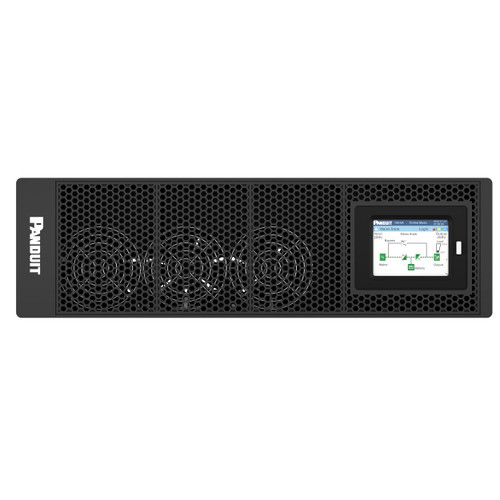
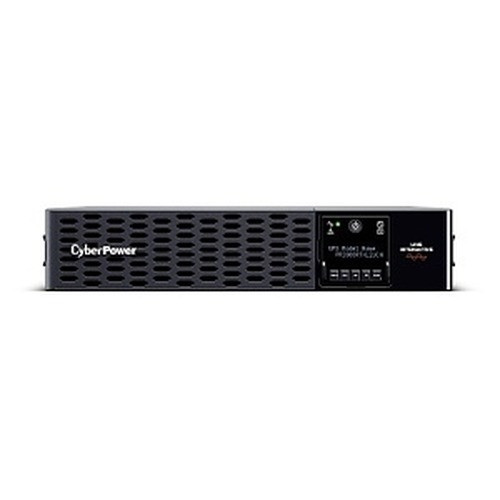
This comparison evaluates two 6 kVA rack-mount uninterruptible power supplies intended for data center, edge, and enterprise deployments: the Panduit SZ UPS 6KVA (U06N11V), marketed under the SteadySine sub-brand for data center, edge, and multi-tenant DC environments, and the CyberPower OL6KRTHD, a 6 kVA/6 kW double-conversion online UPS with unity power factor. Both units occupy the same power class and serve similar installation contexts, but differ significantly in the depth of published specifications available for evaluation.
In This Guide
- How do power architecture, topology, and output quality compare between these two 6 kVA UPS units?
- How do physical form factor, installation footprint, and input/output voltage range compare?
- What monitoring, management, and warranty and support options does each unit offer?
- Which should you choose: the U06N11V or the OL6KRTHD?
- Side-by-Side Specs
- FAQ
How do power architecture, topology, and output quality compare between these two 6 kVA UPS units?
The CyberPower OL6KRTHD uses a double-conversion (online) topology, meaning incoming AC power is continuously rectified to DC and then re-inverted to clean AC output. This architecture provides zero transfer time during a utility failure and complete isolation of connected loads from input power anomalies. Its output achieves unity power factor (PF 1.0), output voltage THD of 5% or less, a 3:1 crest factor, and a true sine wave output, making it well suited for powering servers, storage arrays, and other equipment with active power factor correction (APFC) power supplies.
The Panduit U06N11V is marketed under the SteadySine sub-brand, which implies sine wave output, and is positioned for data center, edge, and enterprise MTDC applications. However, the published specification data for this unit does not disclose its UPS topology (online double-conversion, line-interactive, or standby), output power in watts, power factor, output voltage THD, crest factor, or transfer time. Buyers evaluating power architecture and output quality must obtain the full datasheet at /content/product-datasheets/U06N11V.pdf before making a direct comparison on these parameters.
On the basis of available published specs, the CyberPower OL6KRTHD provides a verifiably complete picture of its power quality credentials, while the Panduit U06N11V's equivalent metrics are not present in the supplied specification data.
How do physical form factor, installation footprint, and input/output voltage range compare?
The Panduit U06N11V has published physical dimensions of 10.3 inches (262 mm) in height and 17.3 inches (440 mm) in width. A 10.3-inch height corresponds to approximately 6U in a standard 19-inch rack, which is notably larger than many 6 kVA competitors. Rack depth and weight are not provided in the available spec data. Input and output voltage ranges, input frequency tolerance, and output frequency are also absent from the published specifications for this unit.
The CyberPower OL6KRTHD specifies a 2U rack-mount form factor, offering a significantly smaller rack footprint. Its input voltage operating range spans 120 V to 280 V, with a wide input frequency acceptance of 40 to 70 Hz, making it tolerant of unstable or international utility power. Output voltage range is 120 V to 240 V at 50/60 Hz output frequency. Physical dimensions in millimeters or inches are not provided in the available CyberPower spec data.
Installers with constrained rack space will find the CyberPower's 2U declaration directly actionable, while the Panduit's approximately 6U height requires confirming available rack units before procurement. Neither unit provides a complete set of physical and electrical range specs from the data supplied.
What monitoring, management, and warranty and support options does each unit offer?
The CyberPower OL6KRTHD specification confirms a 3-year warranty per the SKU description and includes EMI/RFI noise filtering and surge protection as standard features. The spec data does not enumerate specific management interfaces (network card slots, SNMP, USB, RS-232, or cloud management), software compatibility, or remote monitoring capabilities beyond what is implied by a modern online UPS product line.
The Panduit U06N11V is categorized under power-distribution-environmental-connectivity-hardware and is positioned for enterprise MTDC and edge deployments, contexts that typically demand robust monitoring infrastructure. However, the available specification data does not disclose management interfaces, network management card (NMC) support, SNMP or Modbus compatibility, battery management features, or warranty duration. Buyers should consult the datasheet at /content/product-datasheets/U06N11V.pdf and Panduit's support documentation for these details.
Both products leave monitoring and management details underspecified in the data provided. For enterprise or MTDC deployments where remote monitoring, DCIM integration, and defined SLA-backed warranty support are mandatory procurement criteria, buyers must request full documentation from each manufacturer before a final decision can be made.
Which should you choose: the U06N11V or the OL6KRTHD?
Our take: The CyberPower OL6KRTHD is the stronger choice when verified, published power-quality specifications and a compact rack footprint are primary procurement requirements. Three concrete spec deltas support this: first, the OL6KRTHD confirms double-conversion online topology with zero transfer time, while the Panduit U06N11V's topology is undisclosed in available data; second, the OL6KRTHD delivers unity power factor (PF 1.0) and output THD of 5% or less, specs entirely absent for the U06N11V; third, the OL6KRTHD occupies 2U of rack space versus the U06N11V's approximately 6U footprint (262 mm / 10.3 in height). The Panduit U06N11V may close these gaps once its full datasheet is reviewed, particularly for buyers whose procurement standards favor Panduit's MTDC ecosystem and infrastructure integration. Until equivalent specs are published or provided, the CyberPower offers a more auditable basis for specifying against APFC server loads in space-constrained data center and edge rack deployments.
Side-by-Side Comparison
Spec-for-spec, from manufacturer data.
| Specification | Panduit U06N11V | CyberPower OL6KRTHD |
|---|---|---|
| UPS Topology | Not disclosed in available specs | Double-conversion (Online) |
| Output Capacity (kVA) | 6 kVA | 6 kVA |
| Output Power (Watts) | — | 6000 W |
| Output Power Factor | — | 1.0 |
| Input Power Factor | — | 0.99 |
| Output Waveform | Implied sine (SteadySine brand) | True sine wave |
| Output Voltage THD | — | 5% or less |
| Crest Factor | — | 3:1 |
| Input Voltage Range | — | 120 V – 280 V |
| Output Voltage Range | — | 120 V – 240 V |
| Input Frequency Acceptance | — | 40–70 Hz |
| Output Frequency | — | 50/60 Hz |
| EMI/RFI Filtering | — | Yes |
| Surge Protection | — | Yes |
| Noise Level | — | 65 dB |
| Form Factor / Rack Height | ~6U (262 mm / 10.3 in) | 2U rack-mount |
| Warranty | — | 3 years |
Frequently Asked Questions
Which should you choose: the U06N11V or the OL6KRTHD?
The CyberPower OL6KRTHD is the stronger choice when verified, published power-quality specifications and a compact rack footprint are primary procurement requirements. Three concrete spec deltas support this: first, the OL6KRTHD confirms double-conversion online topology with zero transfer time, while the Panduit U06N11V's topology is undisclosed in available data; second, the OL6KRTHD delivers unity power factor (PF 1.0) and output THD of 5% or less, specs entirely absent for the U06N11V; third, the OL6KRTHD occupies 2U of rack space versus the U06N11V's approximately 6U footprint (262 mm / 10.3 in height). The Panduit U06N11V may close these gaps once its full datasheet is reviewed, particularly for buyers whose procurement standards favor Panduit's MTDC ecosystem and infrastructure integration. Until equivalent specs are published or provided, the CyberPower offers a more auditable basis for specifying against APFC server loads in space-constrained data center and edge rack deployments.
Which unit is better for powering servers with active power factor correction (APFC) power supplies?
Based on available specifications, the CyberPower OL6KRTHD is the verifiable choice for APFC server loads. It confirms double-conversion topology, unity output power factor (PF 1.0), sine wave output, and output THD of 5% or less — all parameters that APFC supplies require for stable, efficient operation. The Panduit U06N11V's SteadySine branding implies sine wave output, but topology, power factor, and THD are not disclosed in the provided spec data, so a direct comparison on this criterion cannot be made from available information alone.
How much rack space does each unit require?
The Panduit U06N11V has a published height of 10.3 inches (262 mm), which corresponds to approximately 6U in a standard 19-inch rack. The CyberPower OL6KRTHD is specified as a 2U rack-mount unit. If rack space is constrained, the CyberPower's 2U footprint is a significant advantage. Buyers should verify rack depth and weight for both units, as neither spec set provides complete physical dimension data.
What warranty does each UPS carry?
The CyberPower OL6KRTHD carries a 3-year warranty per the SKU description. Warranty duration for the Panduit U06N11V is not present in the available specification data. Buyers should confirm Panduit's warranty terms directly with the manufacturer or by reviewing the product datasheet at /content/product-datasheets/U06N11V.pdf before procurement.
More UPS Comparisons
- APC by Schneider Electric SYH6K6RMT vs CyberPower OL6KRTHW
- APC by Schneider Electric SYH6K6RMT vs CyberPower OL6KRTHD
- APC by Schneider Electric SYH6K6RMT vs Vertiv GXT5-6000MVRT4UXLN
- APC by Schneider Electric SYH6K6RMT vs Vertiv GXT5-6KL630RT5UXLN
- APC by Schneider Electric SYH6K6RMT vs APC by Schneider Electric SYH6K6RMI
- APC by Schneider Electric SYH6K6RMT vs APC by Schneider Electric SYH6K6RMT-TF3
UPS Buying Guides
Get a Second Opinion on Your Camera Choice
Share your site layout, coverage goals, and budget. Our team will validate the camera selection, flag anything we would change, and recommend products that match the use case.