
Panduit U01S12V vs Panduit U01S11V: Specification Comparison
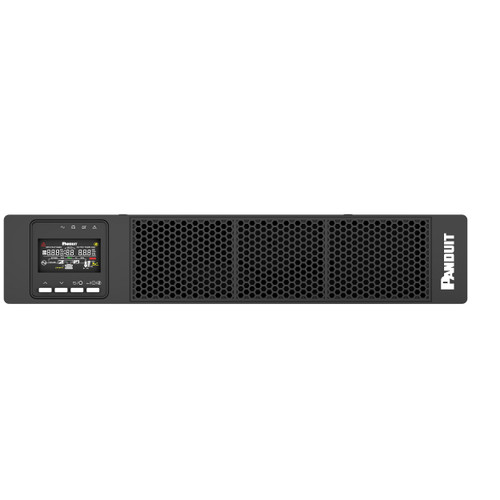
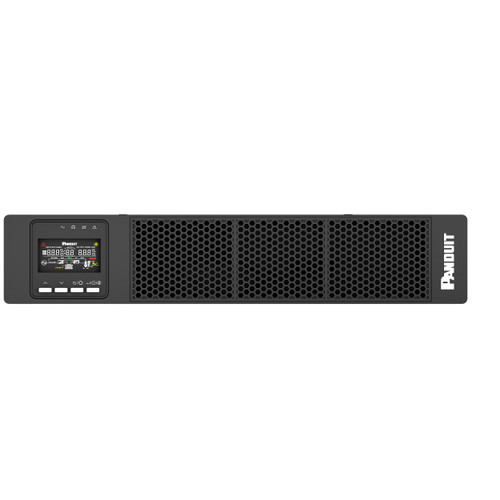
Both the Panduit U01S12V and U01S11V are 1000 VA, 2U rackmount UPS units from the SteadySine sub-brand, targeting data center, edge, and enterprise MTDC environments. They share identical physical dimensions and the same nameplate VA rating, making them genuine cross-shop candidates. The critical differentiator is power topology: the U01S12V uses online double-conversion while the U01S11V is line-interactive. This comparison examines topology and output quality, input flexibility, and management capabilities to help installers and IT buyers select the right unit for their load criticality and infrastructure requirements.
In This Guide
- Which UPS topology and output waveform better protects sensitive loads?
- How do rated capacity and input voltage flexibility compare between the two models?
- Which model offers more complete remote management and integration capabilities?
- Which should you choose: the U01S12V or the U01S11V?
- Side-by-Side Specs
- FAQ
Which UPS topology and output waveform better protects sensitive loads?
The U01S12V employs online double-conversion topology, meaning all connected equipment runs continuously off inverter-conditioned power. The AC input is rectified to DC and immediately re-inverted to a clean AC output, so the load is fully isolated from input anomalies including sags, surges, frequency variations, and harmonics at all times. The transfer time to battery during a utility failure is zero milliseconds by design. The U01S12V specifications list an output voltage of 120V AC; waveform type is not explicitly stated in the provided specs.
The U01S11V uses line-interactive topology with a pure sine wave output. In normal operation, the UPS conditions power through an autotransformer (AVR) and passes it to the load; the inverter only engages on battery. The specifications explicitly confirm pure sine wave output, which is compatible with active PFC power supplies. Transfer time to battery is non-zero but is not quantified in the provided specifications. Line-interactive topology introduces a brief transfer gap on deep sags or outages, which double-conversion eliminates entirely.
For loads with zero tolerance for any transfer gap—blade servers, storage arrays, high-frequency trading infrastructure—double-conversion (U01S12V) is the architecturally correct choice. For standard IT equipment where a brief transfer is acceptable and pure-sine compatibility is the primary waveform concern, the U01S11V's line-interactive pure sine wave design is appropriate.
How do rated capacity and input voltage flexibility compare between the two models?
Both units carry a 1000 VA nameplate capacity. However, the U01S12V specifies an output capacity of 1200 W alongside the 1000 VA rating, yielding an implied power factor of 1.2—this figure as stated in the provided specs is atypical and may reflect a spec-sheet entry anomaly; buyers should verify against the official Panduit datasheet at /content/product-datasheets/U01S12V.pdf before sizing loads. The U01S11V lists only 1000 VA with no explicit watt rating in the provided specifications.
Input voltage range is a meaningful differentiator. The U01S12V specifies a wide 90–280V AC input range, which makes it suitable for international deployments, unstable utility environments, and facilities with significant voltage fluctuation. The U01S11V provides no input voltage range in the supplied specifications; buyers requiring confirmed input tolerance for that model must consult the U01S11V datasheet directly.
Output voltage for the U01S12V is stated as 120V AC, confirming North American output. The U01S11V output voltage is not specified in the provided data. Both units are packaged individually (quantity 1) with identical physical footprints: 17.3 in (440 mm) wide and 3.4 in (86.5 mm) tall, fitting a standard 19-inch EIA-310 rack at 2U.
Which model offers more complete remote management and integration capabilities?
The U01S12V explicitly lists SNMP and HTTP/HTTPS as management interfaces. SNMP enables integration with NMS platforms, DCIM tools, and monitoring stacks that support MIB-based polling and trap reception. HTTP/HTTPS provides a browser-accessible management interface for configuration and status without requiring additional client software. These two protocols together represent a standard enterprise-grade remote management capability for a rackmount UPS.
The U01S11V provides no management interface specifications in the supplied data. Whether it supports SNMP, HTTP, a serial/USB port, or a proprietary management card slot cannot be determined from the information provided. Buyers who require confirmed remote management on the U01S11V must reference the manufacturer datasheet at /content/product-datasheets/U01S11V.pdf.
Battery serviceability is confirmed as hot-swappable on the U01S12V, allowing battery replacement without powering down connected equipment—a material operational advantage in always-on environments. The U01S11V does not specify hot-swap battery capability in the provided specifications. The U01S12V also carries explicit competitor cross-references to APC SRT1000RMXLI and Tripp Lite SUINT1000LCD2U; the U01S11V cross-references APC SRT1000RMXLA and SU1000RTXL2UA, indicating different tier positioning within the competitive landscape.
Which should you choose: the U01S12V or the U01S11V?
Our take: The U01S12V is the stronger choice when zero-transfer-time load isolation, wide input voltage tolerance, and confirmed remote management are required. Three concrete spec deltas support this: (1) topology—the U01S12V's online double-conversion provides continuous inverter-fed output with 0 ms transfer time versus the U01S11V's line-interactive design, which introduces a non-zero transfer on utility failure; (2) input range—the U01S12V specifies 90–280V AC input versus no stated input range for the U01S11V; (3) management—the U01S12V documents SNMP and HTTP/HTTPS interfaces while the U01S11V lists none in the provided specs. Hot-swappable batteries further reduce maintenance downtime on the U01S12V. The U01S11V's confirmed pure sine wave output makes it a viable option for standard active-PFC IT loads in environments where topology-level isolation is not mandated and management integration requirements are unconfirmed. Verify watt ratings and U01S11V input/management specs against manufacturer datasheets before final selection.
Side-by-Side Comparison
Spec-for-spec, from manufacturer data.
| Specification | Panduit U01S12V | Panduit U01S11V |
|---|---|---|
| SKU | U01S12V | U01S11V |
| Sub-Brand | SteadySine | SteadySine |
| Topology | Online Double-Conversion | Line-Interactive |
| Output Waveform | — | Pure Sine Wave |
| Capacity (VA) | 1000 VA | 1000 VA |
| Capacity (Watts) | 1200 W | — |
| Input Voltage Range | 90–280V AC | — |
| Output Voltage | 120V AC | — |
| Form Factor | 2U Rackmount | 2U Rackmount |
| Height | 3.4 in (86.5 mm) | 3.4 in (86.5 mm) |
| Width | 17.3 in (440 mm) | 17.3 in (440 mm) |
| Rack Compatibility | 19-in EIA-310 | — |
| Battery Type | Hot-Swappable | — |
| Management Interface | SNMP, HTTP/HTTPS | — |
| Application | Data Center, Edge, Enterprise MTDC | Data Center, Edge, Enterprise MTDC |
| Package Quantity | 1 | 1 |
Frequently Asked Questions
Which should you choose: the U01S12V or the U01S11V?
The U01S12V is the stronger choice when zero-transfer-time load isolation, wide input voltage tolerance, and confirmed remote management are required. Three concrete spec deltas support this: (1) topology—the U01S12V's online double-conversion provides continuous inverter-fed output with 0 ms transfer time versus the U01S11V's line-interactive design, which introduces a non-zero transfer on utility failure; (2) input range—the U01S12V specifies 90–280V AC input versus no stated input range for the U01S11V; (3) management—the U01S12V documents SNMP and HTTP/HTTPS interfaces while the U01S11V lists none in the provided specs. Hot-swappable batteries further reduce maintenance downtime on the U01S12V. The U01S11V's confirmed pure sine wave output makes it a viable option for standard active-PFC IT loads in environments where topology-level isolation is not mandated and management integration requirements are unconfirmed. Verify watt ratings and U01S11V input/management specs against manufacturer datasheets before final selection.
Does the U01S12V or U01S11V have zero transfer time to battery during a power outage?
Only the U01S12V, by virtue of its online double-conversion topology, provides zero transfer time—the load never switches sources because it runs off the inverter continuously. The U01S11V is line-interactive, meaning the inverter engages only when utility power fails, resulting in a brief but non-zero transfer gap. Transfer time for the U01S11V is not quantified in the provided specifications.
Can either unit be used in international or unstable-voltage environments?
The U01S12V specifies a wide 90–280V AC input range, making it explicitly suitable for variable utility environments and international installations where voltage can fluctuate significantly. The U01S11V's input voltage range is not stated in the provided specifications, so its suitability for non-standard input conditions cannot be confirmed from the available data alone.
Which model supports SNMP monitoring for integration with a network management system?
The U01S12V explicitly lists SNMP and HTTP/HTTPS as management interfaces, confirming NMS integration capability. The U01S11V has no management interface listed in the provided specifications. Buyers requiring SNMP on the U01S11V should consult the Panduit datasheet at /content/product-datasheets/U01S11V.pdf before purchasing.
More UPS Comparisons
- CyberPower PR1000RTXL2UC vs APC by Schneider Electric SURT1000RMXLI
- CyberPower PR1000RTXL2UC vs APC by Schneider Electric SMT1000CUS
- CyberPower PR1000RTXL2UC vs Vertiv GXT5-1000LVRT2UXL
- CyberPower PR1000RTXL2UC vs APC by Schneider Electric SMT1000J
- CyberPower PR1000RTXL2UC vs CyberPower CP1000PFCLCD
- CyberPower PR1000RTXL2UC vs CyberPower PR1000LCD
UPS Buying Guides
Get a Second Opinion on Your Camera Choice
Share your site layout, coverage goals, and budget. Our team will validate the camera selection, flag anything we would change, and recommend products that match the use case.