
Panduit U01S12L vs Panduit U01N13V: Specification Comparison
Both the Panduit U01S12L and U01N13V are 1 kVA rack-mount UPS units operating under the SteadySine™ platform, targeting data center edge, enterprise MTDC, and surveillance rack deployments. The U01S12L carries a full published specification set—topology, battery chemistry, waveform, THD, transfer time, and compliance standards—while the U01N13V's publicly available spec data is significantly thinner. This comparison examines what the specs actually support, noting every gap where the U01N13V data is absent.
In This Guide
- Which UPS topology and battery technology delivers the right runtime and reliability for your deployment?
- How does output power quality and the operating environment spec compare between these two units?
- What management interfaces and regulatory compliance certifications does each unit carry?
- Which should you choose: the U01S12L or the U01N13V?
- Side-by-Side Specs
- FAQ
Which UPS topology and battery technology delivers the right runtime and reliability for your deployment?
The U01S12L specifies Double Conversion Online topology, meaning it continuously powers the load from its inverter and provides zero transfer time to battery—a critical trait for sensitive network and compute equipment where even a 2–4 ms transfer gap on a line-interactive unit can cause resets. The U01N13V's topology is not stated in the available specs; buyers cannot confirm whether it is online double conversion, line-interactive, or standby without consulting its datasheet directly.
Battery chemistry is a meaningful differentiator here. The U01S12L uses Lithium-Ion cells with a specified typical service life of 10 years—roughly two to three replacement cycles ahead of conventional VRLA batteries over a 10-year rack lifecycle. The U01N13V's battery type and service life are not specified in the provided data, so no equivalent comparison is possible on this dimension.
How does output power quality and the operating environment spec compare between these two units?
The U01S12L specifies a Pure Sine Wave output waveform with Total Harmonic Distortion below 3% (typical). For active PFC power supplies common in servers and network gear, pure sine output is required; distorted waveforms from simulated sine units can cause load equipment to fault or overheat. No waveform type or THD figure is published for the U01N13V.
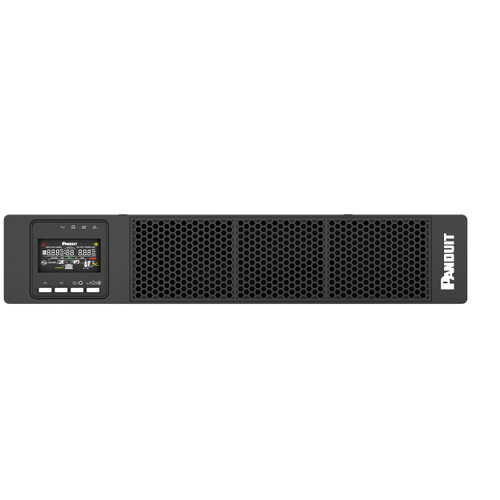
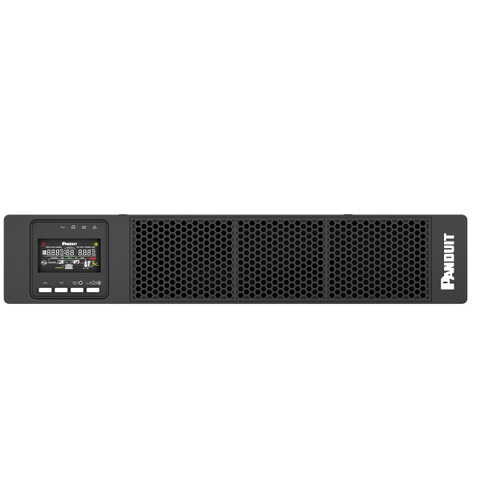
Operating temperature for the U01S12L is specified at 0–40°C (32–104°F), covering standard raised-floor and edge-closet environments. The U01N13V carries no published operating temperature range in the available spec data. Both units share identical physical form factor dimensions—17.3" W × 3.4" H (440 mm × 86.5 mm)—confirming 2U rack compatibility on both models.
What management interfaces and regulatory compliance certifications does each unit carry?
The U01S12L specifies USB as a standard management interface plus optional SNMP via a network card, enabling integration with data center infrastructure management (DCIM) platforms and enabling remote monitoring in a Panduit SmartZone environment. The U01N13V has no management interface information in its provided spec data.
On regulatory compliance, the U01S12L lists IEC 62040-1, IEC 62040-2, CE, and UN 38.3. IEC 62040-2 defines EMC requirements for UPS equipment; UN 38.3 is the lithium battery transport certification, consistent with its Li-Ion chemistry. The U01N13V has no compliance certifications stated in the provided data. Buyers operating in jurisdictions requiring CE or IEC conformance declarations should verify independently whether the U01N13V carries equivalent certifications.
Which should you choose: the U01S12L or the U01N13V?
Our take: The U01S12L is the stronger-specified choice when verifiable topology, battery longevity, and power quality are decision criteria—though the comparison is materially limited by the U01N13V's thin published spec set. Concretely: the U01S12L documents Double Conversion Online topology (zero transfer time) vs. no topology stated for the U01N13V; a 10-year Li-Ion battery life vs. no battery type or life figure for the U01N13V; and <3% THD Pure Sine Wave output vs. no waveform data for the U01N13V. Both units share the same 1 kVA / 2U physical envelope and SteadySine™ platform branding. Buyers whose procurement process requires confirmed online double conversion, lithium chemistry, or IEC/CE compliance documentation should select the U01S12L based on available evidence. The U01N13V cannot be ruled out as equivalent, but buyers must pull its full datasheet before making a side-by-side decision.
Side-by-Side Comparison
Spec-for-spec, from manufacturer data.
| Specification | Panduit U01S12L | Panduit U01N13V |
|---|---|---|
| Product Type | UPS | UPS |
| Sub-Brand / Platform | SteadySine™ | SteadySine™ |
| Capacity | 1 kVA / 900 W | — |
| Topology | Double Conversion Online | — |
| Transfer Time | Zero (continuous online) | — |
| Input Voltage | 230V AC, Single Phase | — |
| Output Voltage | 230V AC, 50/60 Hz | — |
| Output Waveform | Pure Sine Wave | — |
| Total Harmonic Distortion | <3% (typical) | — |
| Battery Type | Lithium-Ion | — |
| Battery Service Life | 10 years (typical) | — |
| Form Factor | 2U Rack-Mount | 2U Rack-Mount |
| Dimensions (W × H) | 17.3" × 3.4" (440 × 86.5 mm) | 17.3" × 3.4" (440 × 86.5 mm) |
| Operating Temperature | 0–40°C (32–104°F) | — |
| Management Interface | USB, SNMP (optional network card) | — |
| Standards Compliance | IEC 62040-1, IEC 62040-2, CE, UN 38.3 | — |
| Application | Data Center Edge, Enterprise MTDC, Surveillance Racks | Data Center, Edge, Enterprise MTDC |
| UPC | 061305682494 | 061305683397 |
Frequently Asked Questions
Which should you choose: the U01S12L or the U01N13V?
The U01S12L is the stronger-specified choice when verifiable topology, battery longevity, and power quality are decision criteria—though the comparison is materially limited by the U01N13V's thin published spec set. Concretely: the U01S12L documents Double Conversion Online topology (zero transfer time) vs. no topology stated for the U01N13V; a 10-year Li-Ion battery life vs. no battery type or life figure for the U01N13V; and <3% THD Pure Sine Wave output vs. no waveform data for the U01N13V. Both units share the same 1 kVA / 2U physical envelope and SteadySine™ platform branding. Buyers whose procurement process requires confirmed online double conversion, lithium chemistry, or IEC/CE compliance documentation should select the U01S12L based on available evidence. The U01N13V cannot be ruled out as equivalent, but buyers must pull its full datasheet before making a side-by-side decision.
Does the U01S12L or U01N13V offer better battery life?
Based on available specs, only the U01S12L has a published battery specification: Lithium-Ion with a typical 10-year service life. The U01N13V has no battery type or service life stated in its provided data, so a direct comparison cannot be made from specs alone.
Can either unit integrate with SNMP-based data center monitoring tools?
The U01S12L explicitly supports USB and optional SNMP via a network card, making it compatible with DCIM and SNMP-based monitoring platforms. The U01N13V has no management interface information in its published specs; buyers should consult the U01N13V datasheet directly to confirm SNMP support before deploying in a managed environment.
Are both units approved for the same regulatory markets?
The U01S12L carries documented compliance with IEC 62040-1, IEC 62040-2, CE, and UN 38.3 (lithium battery transport). No compliance certifications are listed in the available U01N13V spec data. Buyers in CE-required markets or those shipping Li-Ion equipment internationally should verify the U01N13V's certifications through Panduit directly.
More UPS Comparisons
- Ubiquiti UPS-TOWER-US vs Panduit U01N12L
- Ubiquiti UPS-TOWER-US vs Panduit U01S12L
- Ubiquiti UPS-TOWER-US vs Middle Atlantic OL1000R-2
- Ubiquiti UPS-TOWER-US vs Middle Atlantic OL1000R-8
- Panduit U01N12L vs Middle Atlantic OL1000R-2
- Panduit U01N12L vs Middle Atlantic OL1000R-8
UPS Buying Guides
Get a Second Opinion on Your Camera Choice
Share your site layout, coverage goals, and budget. Our team will validate the camera selection, flag anything we would change, and recommend products that match the use case.