
HID 920NHRNEK0000C vs HID 920NHRTEK0001T: Specification Comparison
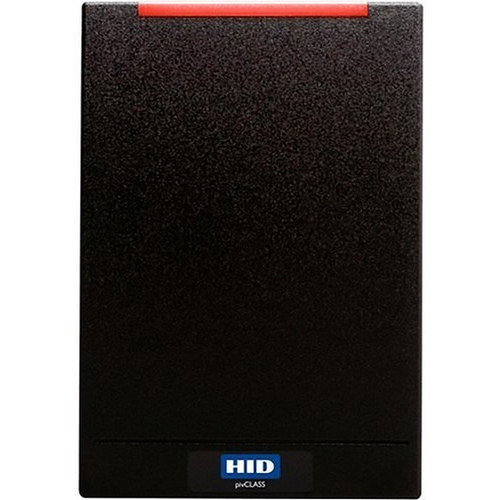
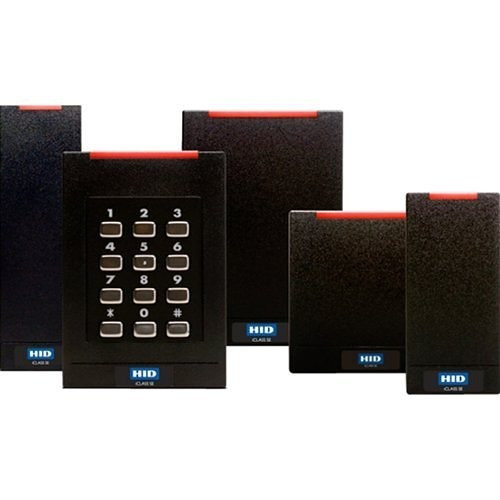
Both the HID 920NHRNEK0000C and 920NHRTEK0001T are HID R40 iCLASS SE contactless smart card readers in the same physical family, targeting enterprise and government access control deployments. The key differentiation lies in communication protocol, encryption compliance, and target deployment environment: the 920NHRNEK0000C is a pigtail-connected OSDP reader suited for commercial and third-party PACS, while the 920NHRTEK0001T is a PIVCLASS-compliant FIPS-encrypted reader designed explicitly for federal government requirements.
In This Guide
- Which communication protocol does each reader support, and what does that mean for controller compatibility?
- What credential technologies and encryption standards does each model support?
- How do the physical indicators, form factor, and intended deployment environment compare?
- Which should you choose: the 920NHRNEK0000C or the 920NHRTEK0001T?
- Side-by-Side Specs
- FAQ
Which communication protocol does each reader support, and what does that mean for controller compatibility?
The 920NHRNEK0000C uses a pigtail wiring connection as its physical interface and communicates via OSDP (Open Supervised Device Protocol). OSDP is a bidirectional, supervised protocol increasingly required by federal and enterprise security standards, and it enables encrypted, tamper-evident communication between the reader and the access control panel. The pigtail format simplifies both retrofit and new-construction installations by eliminating connector incompatibilities.
The 920NHRTEK0001T communicates via RS-485 Full-Duplex (485FDX) with a Wiegand output option. RS-485 full-duplex provides robust, noise-resistant signaling over longer cable runs typical in large facilities, while the Wiegand output maintains backward compatibility with legacy PACS infrastructure. The specs also note an open-collector output with optional tamper detection, adding a supervised layer for high-security environments.
Buyers integrating into a modern OSDP-capable controller or third-party platform will find the 920NHRNEK0000C the direct fit. Buyers with RS-485-based controllers or Wiegand-legacy infrastructure—common in federal facilities—will require the 920NHRTEK0001T's 485FDX/Wiegand output.
What credential technologies and encryption standards does each model support?
The 920NHRNEK0000C reads iCLASS SE, PIV II, DESFire, MIFARE, HID Prox, SEOS, NFC (13.56 MHz), and 125 kHz proximity cards in a single unit. This multi-technology credential breadth makes it viable for mixed-credential environments during migration from legacy 125 kHz prox to high-frequency smart card platforms. No encryption compliance tier is specified in the provided specs for this model.
The 920NHRTEK0001T reads the same broad credential set—iCLASS SE, DESFire, MIFARE, HID Prox, SEOS, NFC (13.56 MHz), and 125 kHz—and adds FIPS 75-bit encryption and PIVCLASS compliance. FIPS 75-bit is a federal encryption standard that satisfies U.S. government mandates for PIV and PIVCLASS card authentication. The specs explicitly position this model for federal government access control requirements.
Both readers cover an equivalent range of card technologies. The decisive difference is encryption certification: the 920NHRTEK0001T carries a documented FIPS 75-bit rating; the 920NHRNEK0000C's specs do not state an equivalent encryption compliance level. Deployments subject to HSPD-12, FICAM, or federal PACS standards must select the 920NHRTEK0001T.
How do the physical indicators, form factor, and intended deployment environment compare?
The 920NHRNEK0000C is described as a wall-mount and door-frame installable reader in black finish with a silver trim baseplate (white also available per specs). Its pigtail connection and OSDP communication align it with HID access control systems and third-party platforms broadly, making it appropriate for commercial office, healthcare, education, and enterprise environments.
The 920NHRTEK0001T specifies explicit visual and audible indicators: a red LED, a flashing green LED, and an audible buzzer. These are defined in its specs, whereas the 920NHRNEK0000C's specs do not enumerate LED or buzzer indicator details at this level. The 920NHRTEK0001T is classified as 'secure' and R40-H PIVCLASS in its specs, indicating a hardened, compliance-oriented form factor. Its housing form factor note suggests a more enclosed physical profile consistent with high-security federal installations.
For commercial, enterprise, and third-party platform rollouts, the 920NHRNEK0000C's pigtail/OSDP profile is the practical choice. For federal facilities, government buildings, or any site requiring PIVCLASS-compliant readers with documented indicator feedback and FIPS encryption, the 920NHRTEK0001T is the specified solution.
Which should you choose: the 920NHRNEK0000C or the 920NHRTEK0001T?
Our take: The 920NHRTEK0001T is the stronger choice when the deployment must satisfy federal government security mandates—its FIPS 75-bit encryption and PIVCLASS compliance are explicitly specified, while the 920NHRNEK0000C's specs list no equivalent encryption certification. The 920NHRTEK0001T also specifies RS-485 full-duplex plus Wiegand output, covering both modern and legacy controller infrastructure, whereas the 920NHRNEK0000C relies solely on OSDP over a pigtail connection. Conversely, the 920NHRNEK0000C is the stronger choice for commercial and enterprise projects on OSDP-capable controllers or third-party PACS platforms—its pigtail/OSDP combination simplifies modern supervised wiring without requiring RS-485 runs. Both readers carry a 2-year warranty and read an identical credential range (iCLASS SE, DESFire, MIFARE, SEOS, NFC, and 125 kHz). Platform qualifier: specify 920NHRTEK0001T for any HSPD-12/FICAM-governed site; specify 920NHRNEK0000C for commercial OSDP deployments.
Side-by-Side Comparison
Spec-for-spec, from manufacturer data.
| Specification | HID 920NHRNEK0000C | HID 920NHRTEK0001T |
|---|---|---|
| Product Type | Contactless Smart Card Reader | Smart Card Reader Terminal |
| Model Designation | R40 iCLASS SE Contactless Reader | R40 iCLASS SE FIPS Reader (R40-H PIVCLASS) |
| Communication Protocol | OSDP | RS-485 Full-Duplex (485FDX); Wiegand Output |
| Physical Connection | Pigtail | 485FDX (RS-485 Full-Duplex) |
| Encryption Compliance | — | FIPS 75-bit |
| Federal/PIVCLASS Compliance | — | PIVCLASS-compliant |
| Credential Types | iCLASS SE, PIV II, DESFire, MIFARE, HID, SEOS, NFC/13.56 MHz, 125 kHz Prox | iCLASS SE, DESFire, MIFARE, HID, SEOS, NFC/13.56 MHz, 125 kHz Prox |
| Output Format | — | Open collector; optional tamper detection |
| LED / Buzzer Indicators | — | Red LED, flashing green LED, audible buzzer |
| Color / Finish | Black or white with silver trim baseplate | Black or white with silver trim baseplate |
| Installation | Wall-mount and door frame | — |
| Compatible With | Enterprise (HID and third-party platforms) | Secure / federal government environments |
| Keypad Option | Not specified in specs | Not specified in specs |
| Warranty | 2-year | 2-year |
| Datasheet | /content/product-datasheets/920NHRNEK0000C.pdf | /content/product-datasheets/920NHRTEK0001T.pdf |
Frequently Asked Questions
Which should you choose: the 920NHRNEK0000C or the 920NHRTEK0001T?
The 920NHRTEK0001T is the stronger choice when the deployment must satisfy federal government security mandates—its FIPS 75-bit encryption and PIVCLASS compliance are explicitly specified, while the 920NHRNEK0000C's specs list no equivalent encryption certification. The 920NHRTEK0001T also specifies RS-485 full-duplex plus Wiegand output, covering both modern and legacy controller infrastructure, whereas the 920NHRNEK0000C relies solely on OSDP over a pigtail connection. Conversely, the 920NHRNEK0000C is the stronger choice for commercial and enterprise projects on OSDP-capable controllers or third-party PACS platforms—its pigtail/OSDP combination simplifies modern supervised wiring without requiring RS-485 runs. Both readers carry a 2-year warranty and read an identical credential range (iCLASS SE, DESFire, MIFARE, SEOS, NFC, and 125 kHz). Platform qualifier: specify 920NHRTEK0001T for any HSPD-12/FICAM-governed site; specify 920NHRNEK0000C for commercial OSDP deployments.
Which reader should I specify for a U.S. federal government building that requires PIV card compliance?
The 920NHRTEK0001T. Its specs explicitly state FIPS 75-bit encryption and PIVCLASS compliance, which are required for federal PACS deployments under mandates such as HSPD-12 and FICAM. The 920NHRNEK0000C's specs do not document FIPS certification or PIVCLASS designation.
Can either reader work with a legacy Wiegand-based access control panel?
Only the 920NHRTEK0001T specifies Wiegand output in its communication options (alongside RS-485 full-duplex). The 920NHRNEK0000C is specified with OSDP over a pigtail connection only; its specs do not list Wiegand output.
Do both models read the same card types, including older 125 kHz proximity cards?
Yes. Both models' specs list the same credential range: iCLASS SE, DESFire, MIFARE, HID Prox, SEOS, NFC/13.56 MHz, and 125 kHz proximity. Neither requires a hardware swap when operating in a mixed-credential or transitional environment.
More Access Control Reader Comparisons
- HID 20NWS-01-000000 vs HID 920NHRTEK0001T
- HID 20NWS-01-000000 vs HID 20NKS-01-002CBR
- HID 920NHRTEK0001T vs HID 20NKS-01-002CBR
- HID 40NKS-01-002CBR vs HID 20NWS-01-000000
- HID 40NKS-01-002CBR vs HID 920NHRTEK0001T
- HID 900NWPNEK00483 vs HID 20NWS-01-000000
Access Control Reader Buying Guides
Get a Second Opinion on Your Camera Choice
Share your site layout, coverage goals, and budget. Our team will validate the camera selection, flag anything we would change, and recommend products that match the use case.