
Best Access Control Reader for Multi-Tenant Buildings
Picking access readers for multi-tenant and commercial buildings — flexible credentials (smart card + mobile/BLE), multi-technology migration support, and weather-rated entries.

Jerry Tildsen
Access Control & Intercoms Specialist · Working integrator
Bottom line
Multi-tenant and commercial entry points demand readers that can handle mixed credential populations simultaneously — legacy prox cards, smart cards, and mobile keys — without forcing a hard cutover that disrupts tenants. Weather-rated hardware (IP55 minimum, IP65–66 preferred for exposed exteriors) and Wiegand or OSDP compatibility with your incumbent access panel should drive shortlist decisions before brand loyalty does. Match credential class to your migration timeline: if you're mid-transition, a multi-technology reader protects the investment; if tenants are already on mobile credentials or you're deploying a modern platform, BLE/NFC wall terminals reduce cabling complexity.
What This Setup Needs
Access control reader selection for multi-tenant buildings is rarely a single-product decision — you're balancing credential ecosystem, panel compatibility, physical environment, and tenant mix across a building that may span multiple access control generations. Get these factors right before you spec a part number.
- Credential Technology Support: Determine what cards are already in tenants' hands. 125 kHz prox (HID Prox, EM), 13.56 MHz smart card (MIFARE Classic, DESFire EV2/EV3, iCLASS SE), and mobile BLE/NFC are often all present in the same building. A multi-technology reader avoids forcing simultaneous credential swaps across all tenants; a single-tech smart card reader is appropriate only when the migration to that standard is already complete.
- IP Rating vs. Install Location: Covered vestibule readers can often accept IP55; fully exposed exterior doors — loading docks, parking structures, rooftop access — should be rated IP65 or higher. Verify the gasket spec, not just the housing material, since many readers claim weatherproofing that depends on correct conduit sealing.
- Panel and Protocol Compatibility: Most commercial panels (Lenel, Software House, Kantech, Genetec) accept Wiegand as a lowest-common-denominator, but OSDP v2 is increasingly preferred for encrypted, supervised, bi-directional communication. Confirm your panel's reader port protocol before ordering — OSDP and Wiegand are not interchangeable without firmware or adapter intervention.
- Form Factor and Gang Box Fit: Single-gang mullion readers suit narrow door frames and ADA-clearance constraints. Wall-mountable terminals with integrated displays are appropriate for lobbies and staffed entry points but require more surface area and power planning. Spacers matter when retrofitting older gang boxes — a depth mismatch causes stress on wiring and compromises the IP seal.
- Connectivity and Power Architecture: Traditional Wiegand readers draw power from the panel's reader port (12 VDC typical). IP-based or GbE-connected reader terminals run on PoE and require network infrastructure at the door — plan for PoE switch port capacity and cable runs separate from your panel loop wiring. This is a meaningful install-cost variable in retrofits.
- Mobile Credential and App Ecosystem: BLE/NFC readers tie you to a specific mobile credential platform. Evaluate whether the vendor's mobile app and cloud backend are acceptable for your tenants — particularly in multi-tenant scenarios where you do not control tenant devices or MDM policies. Open-standard mobile credential support (SEOS, NFC Forum Type 4) is preferable to proprietary-only implementations.
- Keypad Integration for Two-Factor Entry: High-security suites, server rooms, and pharmacies within a multi-tenant building often require PIN + card. A reader with an integrated keypad eliminates a second device on the frame and simplifies panel wiring; verify the keypad variant supports your panel's dual-authentication mode before specifying.
Our Picks
Selected from our catalog by spec-fit. All channel-direct and factory-new — not ranked by price.

HID 20NWS-01-000000
Smart Card
The HID 20NWS-01-000000 is a wired smart card reader in cable-pigtail form, IP65-rated and well-suited for exterior door replacements or new installs where the panel infrastructure is already in place and the tenant population has fully migrated to 13.56 MHz smart card credentials — the IP65 rating makes it a reasonable choice for exposed or semi-exposed entry points.
View product →
Ubiquiti UA-G3-PRO-W
Mobile/BLE
The Ubiquiti UA-G3-PRO-W is a white wall-mountable BLE/NFC access terminal with a dedicated GbE RJ45 port, making it a strong fit for modern tenant environments where mobile-first credential issuance is the goal and PoE network infrastructure is already at the door — the IP55 rating suits covered interior or protected vestibule installs rather than fully exposed exteriors.
View product →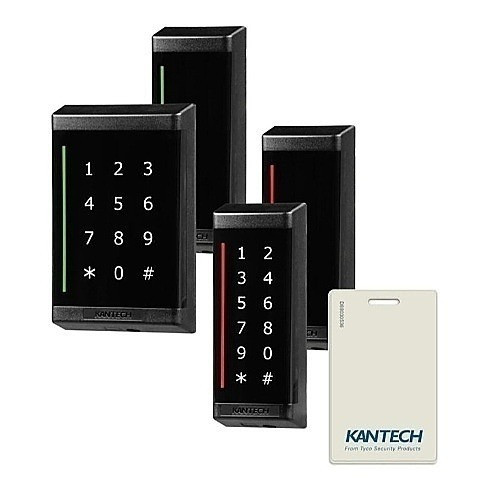
Kantech P345-SPACER
Multi-Tech
The Kantech P345-SPACER is a multi-technology reader-class accessory rated to IP65, well-suited for retrofit installs in multi-tenant buildings where existing gang box depths don't align with modern reader profiles — using the correct spacer maintains the IP seal integrity that would otherwise be compromised by a poorly seated reader housing.
View product →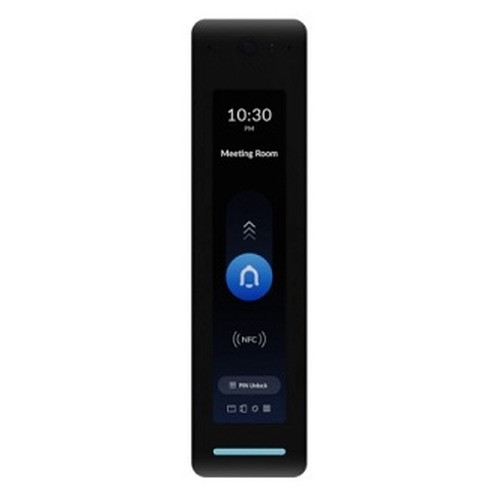
Ubiquiti UA-G3-PRO-B
Mobile/BLE
The Ubiquiti UA-G3-PRO-B is the black-finish variant of the GbE-connected BLE/NFC wall terminal, functionally identical to the -W model and well-suited for commercial lobbies or access points where the architectural finish schedule calls for dark hardware — same IP55 rating applies, so plan accordingly for install location exposure.
View product →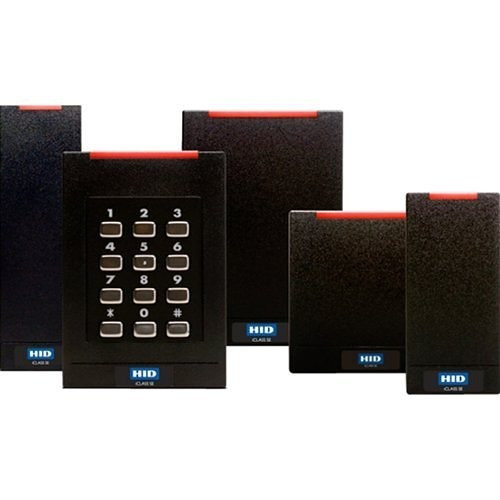
HID 920NHRTEK0001T
Smart Card
The HID 920NHRTEK0001T is an IP65-rated smart card reader in housing form factor, a strong fit when you need a ruggedized smart card read point for exterior or harsh-environment applications and your access panel is already provisioned for HID smart card credential formats — the housing form factor suits surface-mount or conduit-entry installs common in commercial and industrial entries.
View product →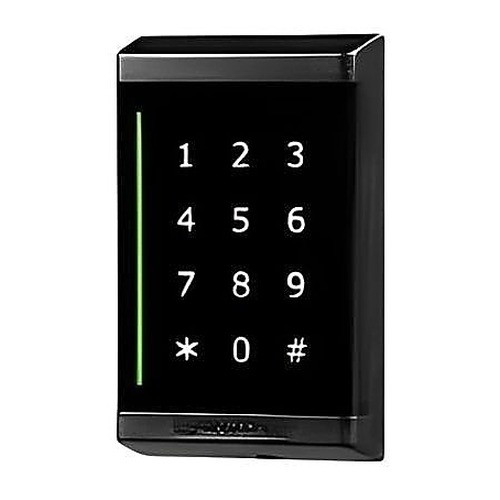
Kantech KT-SG-MT-KP2
Multi-Tech
The Kantech KT-SG-MT-KP2 is a single-gang multi-technology reader with integrated keypad rated to IP66, making it one of the more weather-resilient options in this group and a strong fit for multi-tenant buildings mid-migration — it reads across credential generations without requiring tenant-wide card swaps, and the keypad supports two-factor authentication for high-security suites or server rooms on the same panel loop.
View product →Frequently Asked Questions
Can I use a mobile BLE reader and a smart card reader on the same access panel?
Yes, most commercial panels support mixed reader types across door ports — each reader connects independently via Wiegand or OSDP, so a BLE terminal on the lobby and a smart card reader on a back-of-house door coexist without conflict. The constraint is on the credential management side: your access software needs to support both credential classes simultaneously and map them to the correct cardholder records. Confirm this with your panel manufacturer before mixing reader types on the same panel.
What's the real difference between IP55 and IP65 for exterior door readers?
IP55 means the device is protected against low-pressure water jets from any direction — adequate for a covered entry or a vestibule with overhang. IP65 adds full dust-tight protection and handles heavier water exposure, making it more appropriate for exposed exterior faces, loading dock doors, or rooftop applications. In a multi-tenant building with varied entry types, you may legitimately need both ratings across your install — don't default to IP65 everywhere, but don't install IP55 units on fully exposed south- or west-facing walls.
Do I need to replace all tenant smart cards when upgrading to a multi-technology reader?
No — that's the core value proposition of a multi-technology reader. A multi-tech reader can read your existing 125 kHz prox cards alongside new 13.56 MHz smart cards or mobile credentials simultaneously, so you can issue new credentials to new tenants and migrate existing tenants incrementally without a building-wide cutover. This is particularly important in multi-tenant buildings where you don't control tenant onboarding schedules.
Is OSDP better than Wiegand for a commercial multi-tenant install?
OSDP v2 offers encrypted, mutually authenticated, supervised communication between the reader and panel — Wiegand sends credential data in the clear with no tamper feedback, which is a meaningful security gap on high-value entries. For most multi-tenant commercial buildings, OSDP is the preferred standard on new installs where the panel supports it. The practical caveat is that older panels may not support OSDP, and mixing OSDP and Wiegand readers on the same panel is common but requires per-port configuration — verify support with your panel vendor.
Can the Ubiquiti GbE reader terminals work without Ubiquiti's own access control platform?
The UA-G3-PRO models are designed to operate within Ubiquiti's UniFi Access ecosystem, which manages credential issuance, scheduling, and event logging through their controller. Using these terminals with a third-party access panel or software typically requires the UniFi Access platform as the intermediary — they are not generic Wiegand or OSDP readers that plug into any panel. Evaluate whether UniFi Access is acceptable as your management platform before specifying these in a mixed-vendor environment.
What should I verify before ordering a reader spacer like the P345-SPACER?
Confirm the exact gang box depth and reader body dimensions at your install locations — spacers are designed to bridge a specific dimensional gap and are not universally interchangeable. Also verify that the spacer material and gasket are rated to match or exceed the reader's IP rating; installing an IP65 reader with a non-rated spacer breaks the environmental seal at the mounting interface. In retrofit scenarios, it's worth pulling a sample gang box cover plate before ordering spacers in quantity.
Related Resources
- Access Control Reader comparisons — head-to-head spec matchups
- Access Control Reader Buying Guide
- Best Mobile Credential Access Control Readers
- All product comparisons
Speccing this for a project?
Send us your requirements and our senior specialists will confirm specs, compatibility, availability and pricing — free, usually within one business day. Channel-direct, factory-new, serving commercial integrators since 2014.
Get a Free QuoteComparing for a project?
Send us the models you are weighing and our team will confirm specs, compatibility, availability, and pricing — free, usually within one business day.