
Best Mobile Credential Access Control Readers
Access readers for mobile credentials — Bluetooth/NFC phone-as-credential support, secure smart-card backup, and OSDP for end-to-end encryption.

Jerry Tildsen
Access Control & Intercoms Specialist · Working integrator
Bottom line
Mobile credential access control has matured enough that phone-as-key is no longer a convenience feature — it's a security and operational upgrade, but only when the reader, controller, and credential platform are properly matched. The right reader must handle your primary credential modality (BLE/NFC smartphone, MIFARE, DESFire, or legacy 125 kHz), survive your installation environment (IP65+ for exterior), and support OSDP v2 if you need encrypted, supervised wiring to the controller. Evaluate form factor and color against your aesthetic requirements, then confirm your access control platform's SDK or API compatibility before you commit.
What This Setup Needs
Mobile credential readers look similar on a spec sheet but diverge sharply in protocol support, ecosystem lock-in, and wiring architecture. These are the factors that determine whether a deployment stays supportable five years out — or becomes a forklift upgrade.
- Credential modality breadth: A reader that handles only BLE or only MIFARE locks you into one ecosystem. Multi-technology readers that support mobile (BLE/NFC), DESFire EV1/EV2/EV3, MIFARE Classic, and optionally legacy Prox give you migration flexibility — you can phase out 125 kHz cards without swapping hardware.
- Mobile credential platform compatibility: Not all BLE readers work with all mobile credential platforms. Confirm whether the reader is certified or validated with your specific platform (e.g., HID Mobile Access, Allegion Engage, Apple Wallet, Google Wallet) — the radio stack and SDK must match. Native app vs. hands-free tap-and-go range also varies by reader implementation.
- OSDP v2 support: Wiegand is unencrypted and un-supervised — a known vulnerability. OSDP v2 provides AES-128 encrypted, bidirectionally supervised communication between reader and controller. If your controller supports it, prefer OSDP-capable readers; it future-proofs the wiring run and satisfies increasingly common security compliance requirements.
- IP rating and environmental fit: IP55 is adequate for semi-sheltered exterior (covered entry alcoves, indoor lobbies with occasional splash). IP65 and IP66 are full dust-tight and rated for direct weather exposure, hose-down, and outdoor mounting without a shroud — essential for perimeter gates, loading docks, and parking structures.
- Form factor and mounting: Single-gang readers drop into a standard electrical box and are ideal for retrofit. Wall-mount terminals with integrated displays or touchscreens occupy more real estate but offer on-device user feedback. Spacers are required when a reader must clear conduit knockouts or recessed boxes — confirm box depth before ordering.
- Ecosystem and controller dependency: Some readers are tightly coupled to a proprietary controller ecosystem (which simplifies commissioning but limits controller choice). Others are broadly compatible across panels via standard Wiegand or OSDP outputs. Match the reader's output protocol to your panel's input capabilities before procurement.
- Power source: Most readers are PoE or PoE+-powered via the controller or a midspan. Verify power budget: readers with displays, Bluetooth radios, and tamper outputs draw more than passive proximity readers. Confirm your panel or PoE switch can supply adequate wattage per port, especially in high-door-count deployments.
Our Picks
Selected from our catalog by spec-fit. All channel-direct and factory-new — not ranked by price.

Ubiquiti UA-G3-PRO-W
Mobile/BLE
The UA-G3-PRO-W is a wall-mountable BLE/mobile-credential terminal in white, well-suited for modern interior lobbies and managed access deployments within the Ubiquiti UniFi Access ecosystem where Gigabit PoE backhaul and IP55 splash resistance meet aesthetic and connectivity requirements.
View product →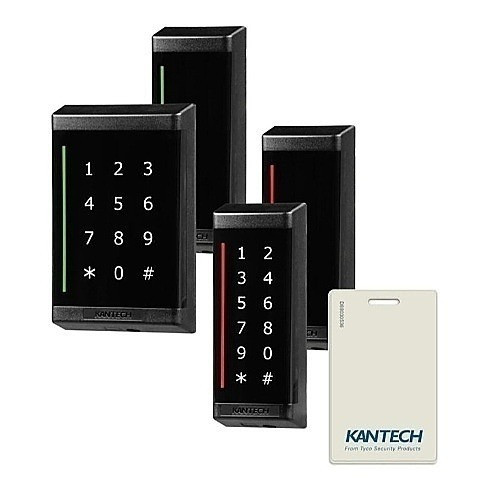
Kantech P345-SPACER
Multi-Tech
The Kantech P345-SPACER is a mounting spacer accessory rated IP65, designed to properly set off the P345-series multi-technology reader from the wall surface when conduit, backbox depth, or surface irregularities would otherwise compromise the reader's seating or weatherseal — essential for clean, code-compliant exterior installations using compatible Kantech P345 hardware.
View product →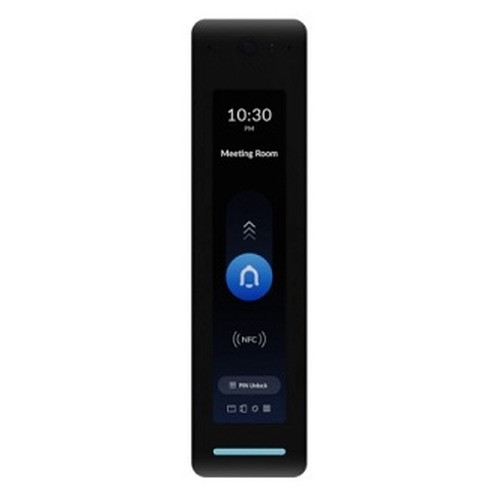
Ubiquiti UA-G3-PRO-B
Mobile/BLE
Functionally identical to the UA-G3-PRO-W with the same GbE port, IP55 rating, and BLE/mobile-credential capability, the UA-G3-PRO-B in black is a strong fit for installations where darker architectural finishes or low-visibility hardware blending is specified — same UniFi Access ecosystem dependency applies.
View product →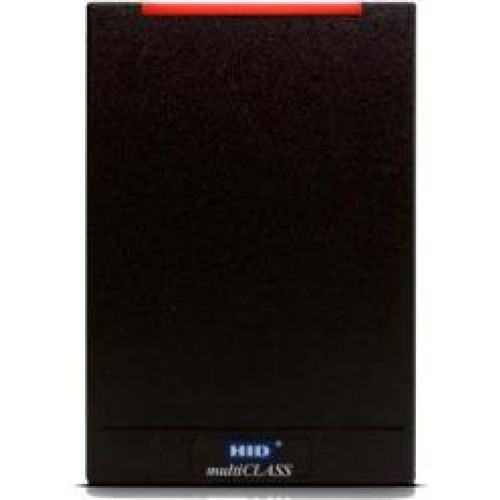
HID 920PHRNEK00203
Multi-Tech
The HID 920PHRNEK00203 is a multi-technology reader housing variant rated IP65, well-suited for exterior and semi-exposed applications requiring broad credential compatibility across mobile, smart-card, and legacy modalities in a weather-resistant form factor consistent with HID's EDGE and Signo reader families.
View product →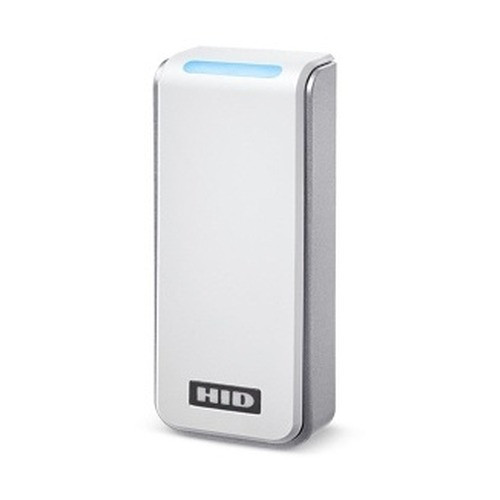
HID HID-920-PTNN
Multi-Tech
The HID HID-920-PTNN is a wired, AC/DC-powered multi-technology reader configuration, a strong fit for installations where PoE is unavailable or where local power is already conditioned at the door — its wired connectivity suits retrofit scenarios and controller environments with dedicated reader power outputs rather than PoE panels.
View product →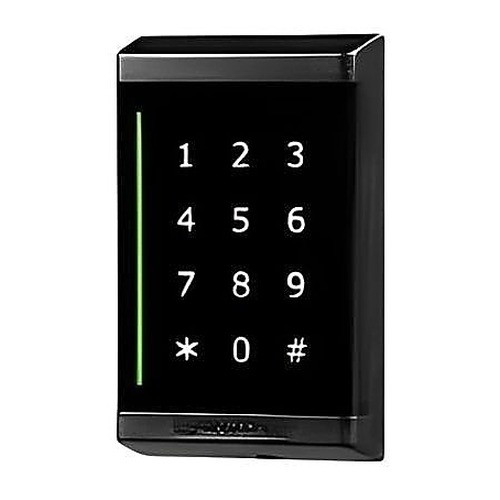
Kantech KT-SG-MT-KP2
Multi-Tech
The Kantech KT-SG-MT-KP2 is a single-gang multi-technology reader with integrated keypad rated IP66, making it well-suited for exterior perimeter doors, parking structures, and industrial or high-humidity environments where two-factor authentication (card-plus-PIN) is required and full weather resistance is non-negotiable in a compact, standard-box retrofit footprint.
View product →Frequently Asked Questions
Can I use my iPhone or Android phone as a credential with these readers?
It depends on the specific reader model and the mobile credential platform your access control system is licensed for. BLE-class readers like the Ubiquiti UA-G3 PRO series are designed for smartphone-as-key operation within their native ecosystem. HID multi-technology readers support HID Mobile Access when configured with the appropriate credential type. Always confirm that your access control software has an active mobile credential license and that the reader firmware is compatible with your phone's OS version before deployment.
What is OSDP and do I need it?
OSDP (Open Supervised Device Protocol) v2 is an industry-standard communication protocol between access readers and controllers that provides AES-128 encryption and bidirectional supervision — meaning the controller knows immediately if the reader cable is cut or tampered with. Wiegand, the legacy alternative, transmits credentials in plaintext and has no tamper detection. If your deployment is in a regulated environment, handles sensitive areas, or must comply with frameworks like FICAM or IEC 60839, OSDP v2 is strongly preferred. Verify your controller panel supports OSDP before specifying readers for it.
What IP rating do I need for an outdoor door reader?
For fully exposed exterior locations — building perimeters, parking gates, loading docks — you need at minimum IP65, which is dust-tight and protected against low-pressure water jets from any direction. IP66 (the Kantech KT-SG-MT-KP2) adds resistance to heavier water jets and is better suited for wash-down environments or regions with heavy driving rain. IP55, found on the Ubiquiti UA-G3 PRO series, is appropriate for semi-sheltered locations such as covered entryways or interior vestibules but is not recommended for direct weather exposure without additional protection.
What is the difference between a multi-technology reader and a BLE-only reader?
A BLE-only reader (like the UA-G3 PRO series) is purpose-built for smartphone credentials within a specific platform ecosystem — it typically will not read MIFARE, DESFire, or legacy 125 kHz Prox cards. A multi-technology reader (HID 920-series, Kantech KT-SG-MT-KP2) supports several credential types simultaneously: mobile BLE/NFC, smart cards (DESFire EV2/EV3, MIFARE), and often legacy Prox. Multi-tech readers cost more but give you a migration path — you can run both card and phone credentials through the same hardware during a transition, then retire cards without changing the reader.
Do I need a spacer like the P345-SPACER, or is it optional?
Spacers are required in specific installation scenarios, not universally. If your electrical backbox protrudes from the wall surface, has a deep conduit entry that pushes the reader face out of flush alignment, or if the reader gasket cannot seat properly against an uneven surface, a manufacturer-matched spacer is necessary to maintain the IP weather rating and avoid rocking or cracked mounting. Order spacers when doing a site walk if you find non-standard backboxes, masonry surfaces, or conduit-in-wall configurations — retrofitting them after the reader is wired is significantly more labor.
Can these readers work with any access control panel, or are they locked to specific controllers?
Compatibility varies by reader family. Ubiquiti UA-G3 PRO readers are designed as native components of the UniFi Access system and are not generally used with third-party panels. HID multi-technology readers output standard Wiegand or OSDP v2, making them broadly compatible with most commercial access control panels (Lenel, Software House, Genetec, Kantech, and others) — confirm the output format your panel expects. Kantech readers are optimized for Kantech/Tyco EntraPass controllers but may also output Wiegand for use with other systems. Always verify controller compatibility in writing with your access control software vendor before finalizing the reader selection.
Related Resources
- Access Control Reader comparisons — head-to-head spec matchups
- Access Control Reader Buying Guide
- Best Access Control Reader for Multi-Tenant Buildings
- All product comparisons
Speccing this for a project?
Send us your requirements and our senior specialists will confirm specs, compatibility, availability and pricing — free, usually within one business day. Channel-direct, factory-new, serving commercial integrators since 2014.
Get a Free QuoteComparing for a project?
Send us the models you are weighing and our team will confirm specs, compatibility, availability, and pricing — free, usually within one business day.