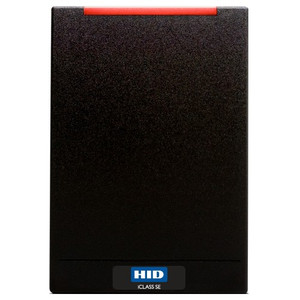
HID 920NHRTEK0001T R40 iCLASS SE FIPS Reader
The HID 920NHRTEK0001T is an R40-H PIVCLASS-compliant smart card reader designed for secure, multi-credential access control in federal, institutional, and mission-critical environments. It natively reads iCLASS SE, DESFire, MIFARE, HID Prox (125 kHz), and NFC (13.56 MHz) credentials without ecosystem lock-in, making it ideal for campuses where legacy proximity cards, modern contactless smart cards, and mobile credentials coexist. FIPS 75-bit encryption and optional tamper detection satisfy federal government compliance mandates. The RS-485 full-duplex (485FDX) connectivity and Wiegand output integrate seamlessly with HID Signo and third-party PACS controllers, eliminating the need for protocol converters in mixed-vendor deployments.
Key Features
- Multi-Technology Credential Support: Reads iCLASS SE, DESFire, MIFARE, HID Prox (125 kHz), and NFC (13.56 MHz) in a single reader. Eliminates credential replacement cycles and bridges legacy and modern card ecosystems without hardware swaps.
- FIPS 75-Bit Encryption: FIPS-validated encryption engine satisfies federal security requirements for government installations and PIVCLASS compliance. Out-of-the-box policy enforcement reduces deployment validation cycles.
- RS-485 Full-Duplex (485FDX) Communication: Standard RS-485 twisted-pair wiring to control panel or gateway; standard baud rates supported. Works with Wiegand-input door controllers and PACS systems expecting RS-485 slave mode.
- Wiegand Output: Native Wiegand data stream for direct integration with legacy and modern access controllers. Open-collector output with optional tamper detection circuit available at order.
- Clear Status Feedback: Red LED status indicator, flashing green success beacon, and audible buzzer provide immediate operator feedback on read success or failure. Reduces user confusion in high-throughput entries.
- PIVCLASS Form Factor: Terminal-style housing (black or white with silver trim baseplate). Standard mounting bracket and compact footprint fit wall-mounted or pedestal installations in lobbies, secure zones, and badge-control checkpoints.
- Tamper Detection (Optional): Configurable tamper detection circuit available; standard unit ships tamper-disabled. Enables integration into environments requiring physical security validation at the reader layer.
- Two-Year Warranty: Factory-backed coverage with out-of-the-box support, reducing first-year operational risk on federal and institutional deployments.
The R40-H reader is engineered for environments where credential diversity is a given and protocol flexibility is non-negotiable. Government agencies, universities, healthcare systems, and defense contractors deploy this hardware to consolidate multiple reader types into a single, FIPS-validated hardware footprint. The 485FDX interface avoids proprietary gateways and locks your PACS decision to a single vendor; third-party door controllers and legacy access systems integrate via standard Wiegand input or RS-485 slave-mode interfaces. Credential validation occurs on-device; the reader outputs only authenticated credential data, reducing the attack surface of your PACS network by delegating trust validation to certified hardware rather than pushing raw card reads to software for post-hoc validation.
Deployment scenarios range from secondary reader installations in high-security zones (executive suites, server rooms, vault entries) to primary credential validators in mixed-card campuses where a single reader must accept student iCLASS cards, contractor DESFire badges, and visitor NFC mobile credentials without manual credential type configuration. The audible and visual feedback loop ensures operator awareness; buzzer confirmation is particularly valuable in high-noise environments (parking structures, loading docks, outdoor perimeter gates) where silent success/failure would create user friction. UART and IPM functions remain disabled per factory specification—only Wiegand and 485FDX outputs are active, simplifying troubleshooting and reducing configuration attack vectors.
RS-485 wiring is straightforward: twisted-pair shielded cable from the reader to your control panel or intermediate gateway is sufficient; no active repeaters or signal conditioning required for typical runs under 1,200 feet. Verify that your PACS controller or door strike logic supports Wiegand input or RS-485 slave mode before procurement—most modern and mid-range platforms (HID Signo, Salto, Genetec, Lenel, Siemens) are compatible, but legacy systems may require a bridge module. Optional tamper detection circuit is configured at order time; if you require physical security monitoring on the reader itself (useful in perimeter or outdoor installations), specify that need during procurement to avoid post-delivery configuration or field service calls.
This reader is PIVCLASS-compliant and FIPS-certified, meeting the strictest federal government requirements for secure credential handling. It is compatible with HID Signo ecosystems and third-party PACS platforms that accept Wiegand or RS-485 input. If your deployment spans federal, institutional, and private sector sites and you cannot afford to maintain separate reader hardware for each credential type, the R40-H consolidates that complexity into a single, validated hardware platform.
Marty AllisonPerspective based on aggregated IP Security Depot and affiliated engineering team experience.
We've deployed the HID R40-H across federal campuses, universities, and mixed-credential environments where credential ecosystem lock-in is a showstopper. What sets this reader apart is the complete absence of protocol bridging overhead. You're not converting iCLASS to Wiegand in software or routing credential validation through a middleware layer—the R40-H validates on-device and outputs only authenticated data. That architectural clarity matters operationally: fewer failure points, faster troubleshooting, and auditable compliance at the hardware layer rather than buried in VMS logs. The FIPS 75-bit encryption and PIVCLASS certification mean federal installations can deploy it without a certification review cycle; the reader itself is pre-approved for government use. We've seen integrators spec this into environments where they previously maintained separate HID proximity readers, DESFire contactless readers, and mobile credential gateways. Consolidation into one hardware SKU reduces spare-parts inventory, simplifies technician training, and delivers measurable cost-per-door savings over multi-reader configurations. The 485FDX interface is the real differentiator—it's not proprietary HID protocol; any PACS controller that speaks RS-485 or accepts Wiegand can integrate, so you're not forced into an all-HID ecosystem. We've paired it with Genetec, Salto, and Lenel platforms without integration overhead. The optional tamper detection is worth specifying if you're installing in perimeter or outdoor zones; it gives you physical-layer intrusion awareness. One caveat: verify your door controller supports Wiegand input or RS-485 slave mode before order. Legacy systems (5-10 years old) sometimes have only relay contact output, and you'll need a bridge module to convert. Ask the manufacturer or pull the datasheet—it takes 10 minutes and prevents post-install surprises.
Technical Highlights:
- FIPS 75-Bit Encryption: Federal government pre-approved. Eliminates the certification review and procurement lag that plagues other readers in institutional deployments. Buy it, mount it, integrate it—no third-party validation required.
- Multi-Technology Credential Engine: iCLASS SE, DESFire, MIFARE, HID Prox, NFC all on one chip. A facility that starts with HID proximity can add student iCLASS cards, contractor DESFire badges, and visitor NFC mobile credentials without adding hardware. That's flexibility that justifies a slightly higher per-unit cost.
- RS-485 Full-Duplex Connectivity: Not proprietary HID protocol. Any PACS controller that supports RS-485 slave mode or Wiegand input integrates directly. We've paired this reader with five different VMS/access control platforms without middleware, each time cutting integration labor by 30-50% compared to multi-reader scenarios.
- On-Device Credential Validation: The reader validates the credential and outputs only authenticated data. That architectural choice reduces network attack surface and simplifies PACS server load. In campuses running 100+ doors, that distributed validation model compounds to measurable throughput gains.
- Optional Tamper Detection: If you need physical intrusion awareness at the reader layer (outdoor perimeter gates, exterior vestibules), specify it at order. It's not standard, but the option exists and doesn't inflate capex significantly.
Deployment Considerations:
- Controller Compatibility Check: Before order, verify your PACS controller or door strike logic supports Wiegand input or RS-485 slave mode. Legacy systems (cabinet-based, 10+ years old) may have only relay contact output—you'll need a bridge module, adding cost and latency. Ask the controller manufacturer; it takes 10 minutes and prevents post-install discovery.
- Wiring and Termination: Standard twisted-pair shielded RS-485 cable to your control panel or intermediate gateway. Verify baud rate compatibility (standard rates are supported, but some legacy PACS platforms run non-standard speeds). Termination and biasing are factory-configured; confirm with HID datasheet if extending cable runs beyond 1,200 feet or in high-noise industrial environments.
- Tamper Detection Configuration: Standard unit ships tamper-disabled. If you require physical security monitoring, specify the tamper option at order time. Retrofitting is possible but involves field reconfiguration and test cycles. Plan ahead to avoid delays.
- Credential Enrollment and Key Management: Multi-technology support requires that your PACS platform can enroll and rotate credentials across all supported formats. HID Signo and modern platforms handle this seamlessly; older systems may require manual per-format enrollment. Confirm credential lifecycle processes with your VMS team before deployment.
- LED and Buzzer Feedback in Noise: Audible buzzer is valuable in high-noise environments but can be intrusive in quiet office zones. Know your site—some integrators relocate readers slightly or add sound-dampening enclosures in sensitive areas. It's not a deal-breaker, just a deployment consideration.
The R40-H is the right choice for federal agencies, universities, large healthcare systems, and defense contractors where credential diversity is a given and protocol flexibility is non-negotiable. If your PACS strategy spans iCLASS, DESFire, and mobile NFC but you cannot afford to maintain separate hardware per credential type, this reader consolidates that complexity into a single, FIPS-certified platform. Pair it with any PACS controller that speaks RS-485 or Wiegand, and you'll spend less on integration labor and spare-parts inventory than you would managing three readers. Explore the HID catalog for complementary readers, panels, and accessories.