
HID 20NWS-01-000000 vs HID 920NHRTEK0001T: Specification Comparison
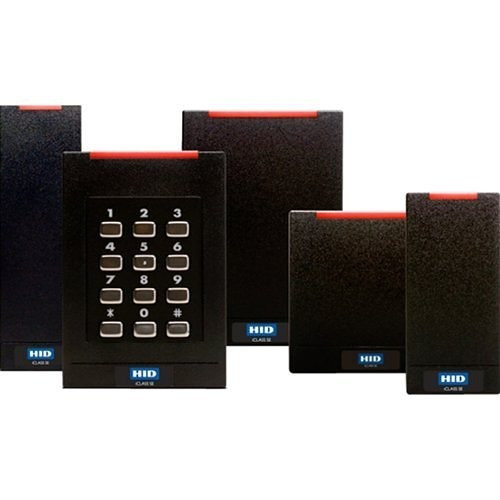
Both the HID 20NWS-01-000000 Signo 20 and the HID 920NHRTEK0001T R40 iCLASS SE FIPS Reader are wall-mounted, contactless smart card access control readers from HID Global, designed for credential-based door or gate control. The Signo 20 targets modern multi-credential and mobile-credential deployments, while the R40 iCLASS SE FIPS Reader targets federal and high-security environments requiring PIVCLASS compliance. Both support 13.56 MHz contactless and legacy credential formats, making them genuine cross-shop candidates for buyers evaluating reader upgrades or new installations.

In This Guide
- Which reader supports the credential types and communication protocols required for your installation?
- What security certifications and encryption standards does each reader meet?
- How do the readers differ in physical environment ratings, power options, and installation form factor?
- Which should you choose: the 20NWS-01-000000 or the 920NHRTEK0001T?
- Side-by-Side Specs
- FAQ
Which reader supports the credential types and communication protocols required for your installation?
The 20NWS-01-000000 reads DESFire, iCLASS, MIFARE, SEOS, and NFC at 13.56 MHz, and explicitly includes native Apple ECP for iPhone and Apple Watch mobile credentials. Its communication outputs are OSDP and Wiegand 32-bit MSB, providing a modern encrypted channel (OSDP) alongside the legacy Wiegand path.
The 920NHRTEK0001T reads iCLASS SE, DESFire, MIFARE, HID Prox (125 kHz), and NFC/13.56 MHz, and is specifically PIVCLASS-compliant for PIV/CAC smart cards used in federal environments. Its communication is RS-485 full-duplex (485FDX) with Wiegand output; OSDP is listed in some embedded spec fields but is not confirmed in the product-type-level specs — buyers should verify with HID documentation. Mobile credential support is not stated for the R40.
For installations requiring Apple or Android mobile credentials and OSDP-native panel integration, the Signo 20 has explicit spec backing. For PIV/CAC card programs and federal PACS controllers using RS-485, the R40 is the specified choice.
What security certifications and encryption standards does each reader meet?
The 20NWS-01-000000 specifies a certified secure element hardware encryption architecture. An explicit government-grade encryption standard (such as FIPS) is not stated in the provided specs.
The 920NHRTEK0001T carries FIPS 75-bit encryption and PIVCLASS compliance, which are mandatory requirements for many U.S. federal agency access control deployments. This is a hard procurement requirement at many agencies and military installations.
For commercial, enterprise, or campus deployments, the secure element on the Signo 20 may be sufficient. For federal, DoD, or any program with a written FIPS or HSPD-12 requirement, the R40's explicitly stated FIPS 75-bit and PIVCLASS certification is the only compliant choice of these two.
How do the readers differ in physical environment ratings, power options, and installation form factor?
The 20NWS-01-000000 specifies an IK09 impact resistance rating, an operating temperature range of -20°C to +60°C, and PoE+ (802.3at) power — meaning it can be powered directly over an Ethernet cable without a separate power supply, simplifying wiring. Wall and rack mount types are listed, and dimensions are given as 90 mm × 132 mm × 36 mm (interpreting the spec's inch notation as a data-entry artifact; buyers should confirm against the datasheet).
The 920NHRTEK0001T does not state an IK impact rating, operating temperature range, or PoE capability in the provided specs. It specifies an open-collector output with optional tamper detection, a red LED, flashing green LED, and audible buzzer for indicator feedback. Power method is not specified in the provided data.
The Signo 20 provides concrete environmental and power specs that simplify site planning. For the R40, installers will need to consult the HID datasheet at /content/product-datasheets/920NHRTEK0001T.pdf to confirm power requirements and environmental ratings before specifying.
Which should you choose: the 20NWS-01-000000 or the 920NHRTEK0001T?
Our take: The 20NWS-01-000000 is the stronger choice when the deployment is commercial, enterprise, or campus-based and requires mobile credential support, OSDP panel integration, and defined environmental resilience. It explicitly supports Apple ECP mobile credentials, outputs OSDP alongside Wiegand 32-bit MSB, carries an IK09 impact rating, operates from -20°C to +60°C, and accepts PoE+ power — three concrete advantages over the R40 where those specs are absent or unconfirmed. Conversely, the 920NHRTEK0001T is the mandatory selection for federal, DoD, or HSPD-12 programs: its FIPS 75-bit encryption and PIVCLASS compliance are hard requirements that the Signo 20 does not claim. Both carry a 2-year warranty. Platform qualifier: the Signo 20 integrates naturally with modern OSDP-capable controllers; the R40 is designed for RS-485 PACS infrastructure common in federal facilities. Choose by compliance mandate first, then infrastructure protocol.
Side-by-Side Comparison
Spec-for-spec, from manufacturer data.
| Specification | HID 20NWS-01-000000 | HID 920NHRTEK0001T |
|---|---|---|
| Product Line | Signo 20 | R40 iCLASS SE FIPS |
| SKU | 20NWS-01-000000 | 920NHRTEK0001T |
| Primary Communication | OSDP; Wiegand 32-bit MSB | RS-485 Full-Duplex (485FDX); Wiegand Output |
| Credential Frequencies | 13.56 MHz contactless; NFC | 13.56 MHz contactless; 125 kHz Prox; NFC |
| Credential Formats | DESFire, iCLASS, MIFARE, SEOS, NFC | iCLASS SE, DESFire, MIFARE, HID Prox, SEOS, NFC |
| Mobile Credentials | Yes (Apple ECP — iPhone & Apple Watch) | — |
| FIPS Encryption | — | FIPS 75-bit |
| PIVCLASS Compliance | — | Yes |
| Onboard Encryption | Certified secure element hardware | FIPS 75-bit encryption |
| Power Method | PoE+ (802.3at) | — |
| Impact Rating | IK09 | — |
| Operating Temperature | -20°C to +60°C | — |
| Indicators | — | Red LED; flashing green LED; audible buzzer |
| Tamper Detection | — | Optional (open-collector output) |
| Keypad | Not stated in provided specs | Not stated in provided specs |
| Warranty | 2-year | 2-year |
Frequently Asked Questions
Which should you choose: the 20NWS-01-000000 or the 920NHRTEK0001T?
The 20NWS-01-000000 is the stronger choice when the deployment is commercial, enterprise, or campus-based and requires mobile credential support, OSDP panel integration, and defined environmental resilience. It explicitly supports Apple ECP mobile credentials, outputs OSDP alongside Wiegand 32-bit MSB, carries an IK09 impact rating, operates from -20°C to +60°C, and accepts PoE+ power — three concrete advantages over the R40 where those specs are absent or unconfirmed. Conversely, the 920NHRTEK0001T is the mandatory selection for federal, DoD, or HSPD-12 programs: its FIPS 75-bit encryption and PIVCLASS compliance are hard requirements that the Signo 20 does not claim. Both carry a 2-year warranty. Platform qualifier: the Signo 20 integrates naturally with modern OSDP-capable controllers; the R40 is designed for RS-485 PACS infrastructure common in federal facilities. Choose by compliance mandate first, then infrastructure protocol.
Can either reader work with Apple Wallet or Android mobile credentials?
Only the 20NWS-01-000000 Signo 20 explicitly states native Apple ECP support for iPhone and Apple Watch mobile credentials. The 920NHRTEK0001T R40 does not list mobile credential support in the provided specifications.
Which reader is required for a federal government or DoD installation?
The 920NHRTEK0001T R40 iCLASS SE FIPS Reader is specified for federal use: it carries FIPS 75-bit encryption and PIVCLASS compliance, both common hard requirements for U.S. federal PACS programs. The 20NWS-01-000000 does not claim FIPS or PIVCLASS certification in the provided specs.
Do both readers work with existing Wiegand-based access control panels?
Yes. The 20NWS-01-000000 outputs Wiegand 32-bit MSB (in addition to OSDP), and the 920NHRTEK0001T provides Wiegand output alongside RS-485 full-duplex. Both can therefore interface with legacy Wiegand panels, though wiring and termination requirements differ between the two communication architectures.
More Access Control Reader Comparisons
- HID 20NWS-01-000000 vs HID 20NKS-01-002CBR
- HID 920NHRTEK0001T vs HID 20NKS-01-002CBR
- HID 40NKS-01-002CBR vs HID 20NWS-01-000000
- HID 40NKS-01-002CBR vs HID 920NHRTEK0001T
- HID 900NWPNEK00483 vs HID 20NWS-01-000000
- HID 900NWPNEK00483 vs HID 920NHRTEK0001T
Access Control Reader Buying Guides
Get a Second Opinion on Your Camera Choice
Share your site layout, coverage goals, and budget. Our team will validate the camera selection, flag anything we would change, and recommend products that match the use case.