
Best Keypad Readers for Access Control
PIN keypad readers — standalone vs networked, weather rating, and card-plus-PIN dual credential for higher-security doors.

Jerry Tildsen
Access Control & Intercoms Specialist · Working integrator
Bottom line
PIN keypad readers span a wide range — from weatherized standalone units to fully networked LCD keypads with integrated prox — and the right choice hinges on your threat model, infrastructure, and door environment. For outdoor or high-security doors, prioritize IP67-rated dual-credential units with Wiegand or OSDP integration into your existing access control platform. For IP-networked installs or UniFi ecosystems, PoE-connected readers simplify cabling and centralize management.
What This Setup Needs
Keypad readers are not interchangeable components. The gap between a $60 standalone keypad and a networked LCD prox reader is enormous in terms of credential security, audit capability, and integration depth. Before speccing any reader, work through these decision factors:
- Standalone vs. networked controller-based: Standalone keypads store PINs locally and offer no audit trail or remote credential management. Controller-based readers (Wiegand, RS-485, or IP-native) report every event to a head-end, enable time-zone rules, and let you revoke credentials instantly — essential for multi-door commercial installs.
- Single-factor PIN vs. dual-credential card+PIN: A PIN-only door is vulnerable to shoulder-surfing and code sharing. For server rooms, pharmacies, or any door with regulatory or insurance requirements, dual-credential (card AND PIN) is the correct spec. Look for readers explicitly supporting card+PIN mode on your chosen access platform.
- Wiegand vs. OSDP vs. proprietary bus: Wiegand is the legacy standard — one-way, no tamper detection, broadly compatible. OSDP v2 is bidirectional, encrypted, and tamper-evident; it's the right spec for new installations and high-security doors. Some readers (particularly panel-native keypads) use a proprietary RS-485 bus that only works with the matched panel — verify controller compatibility before purchasing.
- IP/weather rating: Indoor vestibule readers need minimal protection; exterior doors in exposed locations need at minimum IP55 (dust-tight, water jets), and ideally IP67 (submersion-rated) for loading docks, parking garages, or regions with driving rain. Vandal resistance (IK rating) is a separate spec — ask for it on high-traffic or exposed installations.
- Power source — PoE vs. wired low-voltage vs. AC/DC: PoE readers pull power and data over a single Cat5e/6 run, dramatically simplifying rough-in. Traditional Wiegand readers need a separate 12V/24V power run from the controller or power supply. AC/DC-capable readers offer flexibility in retrofit scenarios where conduit with line voltage already exists.
- Form factor — mullion vs. single-gang vs. surface mount: Mullion readers are designed for the narrow vertical face beside a door frame and are the standard for most commercial doors. Single-gang fits a standard US electrical box. LCD keypads are typically larger and require a dedicated surface or recessed box. Measure your door frame before ordering.
- Platform lock-in: Some readers are purpose-built for a specific access control ecosystem (e.g., a panel-native keypad or a UniFi-native reader). These often deliver richer features within that ecosystem but are non-transferable if you change platforms. Wiegand-output readers are the most portable across controllers.
Our Picks
Selected from our catalog by spec-fit. All channel-direct and factory-new — not ranked by price.
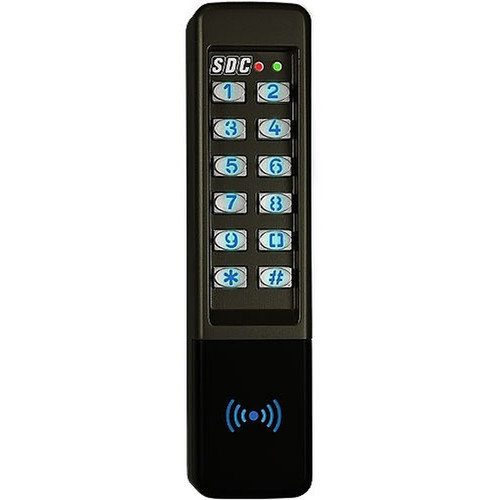
SDC 923P
Keypad
The SDC 923P is a wired standalone keypad well-suited for low-credential-count interior doors where a simple PIN code is the required credential and no head-end access control system is in place — a practical fit for storage rooms, utility closets, or tenant-suite applications where audit trail depth is not a priority.
View product →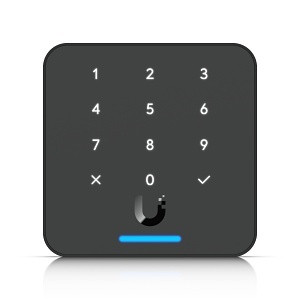
Ubiquiti UA-G3-FLEX-B
Keypad
The Ubiquiti UA-G3-FLEX-B is a strong fit for facilities running UniFi Access as their platform — its single 10/100 RJ45 port means the entire reader runs on a single PoE Cat6 drop, and the IP55 rating makes it serviceable in covered exterior locations such as building entries or parking structure pedestrian doors where weather exposure is moderate.
View product →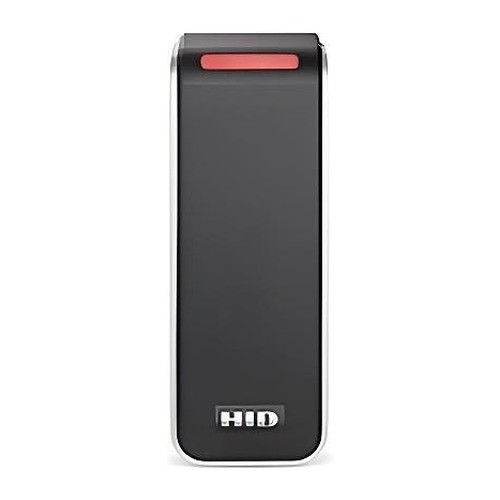
Kantech KT-SIG-20KTKS-01
Keypad
The Kantech HID Signo 20K Mullion Reader with Keypad (KT-SIG-20KTKS-01) is well-suited for EntraPass-driven access control systems where card+PIN dual-credential authentication is required on a standard mullion-mount door — HID Signo's multi-technology credential support and Kantech's native integration make this a logical spec for higher-security interior doors in enterprise or healthcare environments.
View product →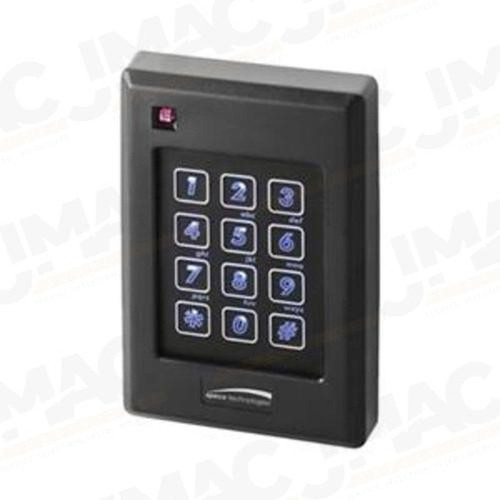
Speco Technologies AP620HA
Keypad
The Speco AP620HA is a strong fit when you need a weatherized dual-technology reader capable of surviving harsh outdoor environments — its IP67 rating makes it appropriate for fully exposed exterior applications such as gate posts, loading dock entries, or coastal/industrial facilities, and its AC/DC power input with Wiegand proximity output gives installers flexibility in retrofit conduit runs where low-voltage dedicated circuits are not already in place.
View product →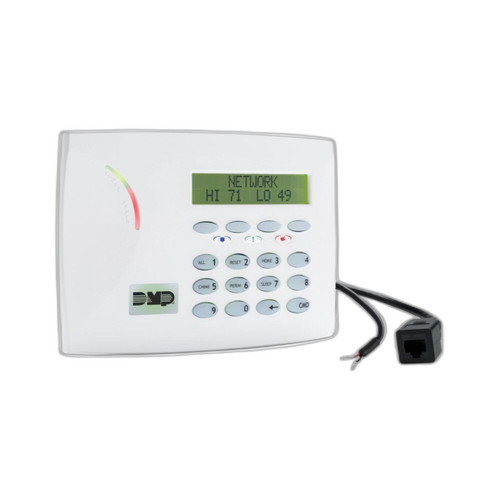
DMP 7463-W
Keypad
The DMP 7463-W Network Thinline LCD Keypad with Prox Reader is well-suited for DMP panel-based installations where the door or area requires both a visual user interface (LCD feedback, status messaging) and proximity card authentication on the same device — the network-native architecture fits distributed multi-panel commercial or educational campuses where remote programming and event logging are required.
View product →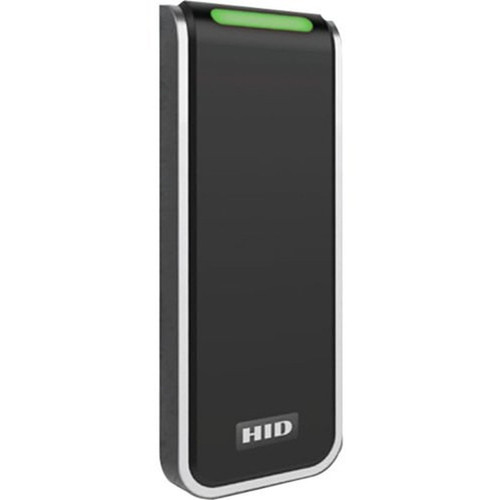
Kantech KT-SIG-20KTKS-02
Keypad
The Kantech KT-SIG-20KTKS-02 is a companion mullion-form-factor reader designed for EntraPass deployments where card-only credential is the spec for that door — it occupies the same narrow mullion footprint as the -01 variant and is a practical fit when PIN entry is not required but platform consistency across a multi-reader Kantech installation is valued.
View product →Frequently Asked Questions
What is the difference between a standalone keypad reader and a networked access control reader?
A standalone keypad stores PIN codes in its own memory, grants or denies access locally, and produces no event log accessible from a central system. A networked or controller-connected reader sends every credential presentation to a head-end platform, enabling real-time monitoring, remote credential changes, time-schedule enforcement, and audit reports. For any installation with more than a few doors or users, or where compliance or liability reporting matters, a controller-connected reader is the correct choice.
Do I need card plus PIN, or is PIN-only sufficient for a commercial door?
PIN-only access is vulnerable to code sharing, shoulder-surfing, and social engineering, and many insurance policies and compliance frameworks (SOC 2, HIPAA, certain UL 2050 requirements) explicitly require multi-factor authentication for sensitive spaces. Card+PIN dual-credential requires a reader that supports both technologies simultaneously and a controller configured to enforce both factors — verify that the reader and controller together support 'card AND PIN' mode, not just 'card OR PIN.'
What does IP55 vs IP67 mean for an outdoor reader, and which do I need?
The IEC IP rating has two digits: the first is dust ingress (6 = fully dust-tight), the second is water ingress (5 = protected against water jets from any direction, 7 = protected against temporary submersion up to 1 meter for 30 minutes). IP55 is adequate for covered overhangs or semi-protected vestibule entries. IP67 is the correct spec for fully exposed outdoor mounting, loading dock columns, gate-post mounting, or any location subject to direct rain, pressure washing, or flooding risk.
Can I use a Wiegand keypad reader with any access control panel?
Wiegand output is a broadly supported interface and the majority of access control panels — including those from Kantech, Lenel, Software House, Bosch, and others — accept Wiegand input. However, Wiegand is a one-way protocol with no encryption, no tamper signaling, and limited data capacity. Before purchasing, confirm that your panel supports the Wiegand bit format the reader outputs (26-bit is most common, but 34- and 37-bit formats exist), and verify that the card technology the reader reads (125 kHz proximity, 13.56 MHz smart card, mobile) is compatible with your credential stock.
What cabling is required for a networked PoE keypad reader vs. a traditional Wiegand reader?
A PoE reader requires a single Cat5e or Cat6 run from a PoE-capable switch or injector to the reader — power and data share the same cable, which simplifies rough-in significantly. A traditional Wiegand reader requires a multi-conductor shielded cable (typically 22 AWG, 6-conductor minimum) from the access control panel or door controller, plus a separate 12VDC or 24VDC power run if the panel does not supply reader power inline. In retrofit or conduit-constrained environments, confirm which cable type is already in the wall before specifying the reader.
Are panel-native keypads like the DMP 7463-W compatible with other access control brands?
No — panel-native keypads use a proprietary communication bus designed exclusively for the matched panel family. The DMP 7463-W is engineered for DMP panels and will not function as a reader or keypad on an Lenel, Kantech, or other third-party system. This is a meaningful trade-off: within the intended ecosystem these devices offer richer feature sets and tighter integration, but they create platform dependency. If there is any possibility of a future panel change, a standard Wiegand or OSDP reader preserves more flexibility.
Related Resources
- Access Control Reader comparisons — head-to-head spec matchups
- Access Control Reader Buying Guide
- Best Access Control Reader for Multi-Tenant Buildings
- Best Mobile Credential Access Control Readers
- All product comparisons
Speccing this for a project?
Send us your requirements and our senior specialists will confirm specs, compatibility, availability and pricing — free, usually within one business day. Channel-direct, factory-new, serving commercial integrators since 2014.
Get a Free QuoteComparing for a project?
Send us the models you are weighing and our team will confirm specs, compatibility, availability, and pricing — free, usually within one business day.