
HID 40NKS-01-002CBR vs HID 920NHRTEK0001T: Specification Comparison
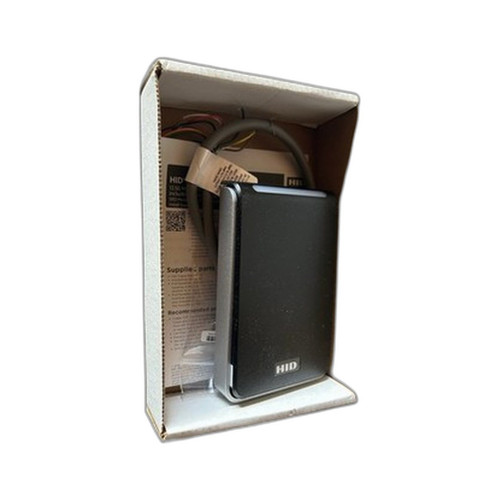
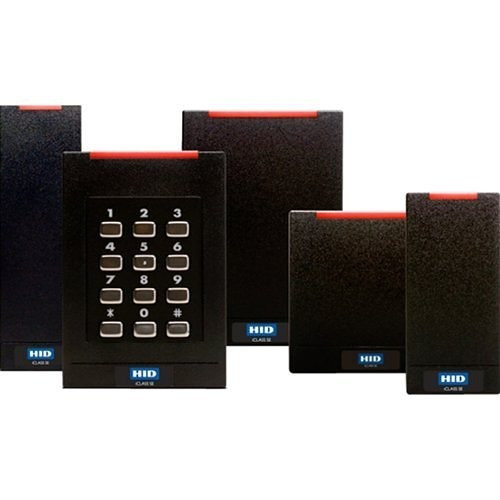
Both the HID 40NKS-01-002CBR (SIGNO 40 SEOS) and the HID 920NHRTEK0001T (R40 iCLASS SE FIPS) are wired, contactless access control readers from HID Global designed for physical access control systems. They share overlapping credential support—iCLASS, DESFire, MIFARE, HID Prox, and NFC—and target enterprise and institutional deployments. The core differentiators are communication protocol, encryption standard, and compliance posture: the SIGNO 40 leads with OSDP v2, while the R40 targets federal PIVCLASS/FIPS mandates via RS-485 and Wiegand output.
In This Guide
- Which reader supports the right credential types and communication protocol for your access control infrastructure?
- Which reader meets your security certification and encryption requirements?
- How do the reader's physical indicators, finish, and installation profile differ?
- Which should you choose: the 40NKS-01-002CBR or the 920NHRTEK0001T?
- Side-by-Side Specs
- FAQ
Which reader supports the right credential types and communication protocol for your access control infrastructure?
The 40NKS-01-002CBR communicates exclusively via OSDP v2, a bidirectionally encrypted protocol that secures all credential data and commands between the reader and the access control panel. It reads magnetic stripe, 125 kHz proximity, NFC, DESFire, iCLASS, MIFARE, and SEOS credentials—making it a broad multi-technology unit. Cryptographic keys are stored on a certified secure element.
The 920NHRTEK0001T communicates via RS-485 full-duplex (485FDX) with Wiegand output—a legacy-compatible combination widely supported by installed HID and third-party PACS controllers. Its credential set covers iCLASS SE, DESFire, MIFARE, HID Prox, NFC, and 125 kHz Prox; magnetic stripe is not listed in the provided specs. Wiegand output enables drop-in replacement on panels that do not support OSDP.
For greenfield or OSDP-capable panel deployments, the 40NKS-01-002CBR's OSDP v2 channel encryption is the stronger choice. For legacy Wiegand infrastructure or RS-485 bus-wired multi-reader runs, the 920NHRTEK0001T integrates without panel-side protocol changes.
Which reader meets your security certification and encryption requirements?
The 40NKS-01-002CBR does not specify a government certification such as FIPS or PIVCLASS in the provided specs. Its encryption model relies on OSDP v2 channel security and cryptographic keys on a certified secure element. LED and flash indicators are factory-disabled, supporting low-visibility perimeter use cases.
The 920NHRTEK0001T carries explicit FIPS 75-bit encryption and PIVCLASS compliance, satisfying federal government security mandates for PIV/CAC card-based access control. This makes it a codified choice for U.S. federal facilities, DoD installations, and any deployment governed by HSPD-12 or equivalent policy.
Buyers operating under federal compliance frameworks have no ambiguity: the 920NHRTEK0001T's stated FIPS 75-bit and PIVCLASS certifications are required specs. Commercial, enterprise, and municipal deployments not bound by federal mandates may prioritize OSDP v2's modern encrypted channel on the 40NKS-01-002CBR instead.
How do the reader's physical indicators, finish, and installation profile differ?
The 40NKS-01-002CBR ships with LED and flash indicators factory-disabled by default. The specs describe a black and silver finish with surface-mount installation. This configuration supports covert or aesthetic perimeter deployments where visible indicator activity is undesirable.
The 920NHRTEK0001T provides a red LED, a flashing green LED, and an audible buzzer as standard indicators, plus open-collector output with optional tamper detection. Color is listed as black or white with silver trim baseplate. The tamper detection output is a distinguishing hardware feature not listed for the 40NKS-01-002CBR in the provided specs.
Installations requiring clear access-granted/denied feedback at the reader—common in lobbies, high-throughput turnstile lanes, or ADA-compliant deployments—benefit from the 920NHRTEK0001T's out-of-box buzzer and dual-LED indicators. The 40NKS-01-002CBR's suppressed indicators suit security-sensitive perimeter doors where reader presence should not be obvious.
Which should you choose: the 40NKS-01-002CBR or the 920NHRTEK0001T?
Our take: The 920NHRTEK0001T is the stronger choice when federal PIVCLASS compliance and FIPS 75-bit encryption are mandatory requirements. Its RS-485 full-duplex plus Wiegand output integrates with existing legacy PACS infrastructure without panel-side changes, and its built-in buzzer, dual-LED indicators, and optional tamper detection output add operational and physical security features absent from the 40NKS-01-002CBR's provided specs. Conversely, the 40NKS-01-002CBR is the stronger choice for modern OSDP v2 deployments: it encrypts the full reader-to-panel channel via OSDP v2 (not available on the 920NHRTEK0001T per specs), adds magnetic stripe as an explicit credential type, and stores keys on a certified secure element—useful for multi-technology credential migrations. Both carry a 2-year warranty. Platform qualifier: federal or HSPD-12-governed facilities should specify the 920NHRTEK0001T; commercial enterprises standardizing on OSDP v2 panels should specify the 40NKS-01-002CBR.
Side-by-Side Comparison
Spec-for-spec, from manufacturer data.
| Specification | HID 40NKS-01-002CBR | HID 920NHRTEK0001T |
|---|---|---|
| Product Line | SIGNO 40 SEOS | R40 iCLASS SE FIPS |
| SKU | 40NKS-01-002CBR | 920NHRTEK0001T |
| Communication Protocol | OSDP v2 | RS-485 Full-Duplex (485FDX) |
| Legacy Output | — | Wiegand Output |
| Encryption | Cryptographic keys on certified secure element | FIPS 75-bit |
| Federal Compliance | — | PIVCLASS-compliant |
| Magnetic Stripe Support | Yes | — |
| 125 kHz Proximity Support | Yes | Yes |
| NFC Support | Yes | Yes |
| iCLASS / iCLASS SE Support | iCLASS | iCLASS SE |
| DESFire Support | Yes | Yes |
| MIFARE Support | Yes | Yes |
| SEOS Support | Yes | Yes |
| LED Indicators | Factory-disabled (default) | Red LED + Flashing Green LED |
| Audible Buzzer | — | Yes |
| Tamper Detection Output | — | Optional (open collector) |
| Finish | Black and silver | Black or white with silver trim baseplate |
| Warranty | 2-year | 2-year |
Frequently Asked Questions
Which should you choose: the 40NKS-01-002CBR or the 920NHRTEK0001T?
The 920NHRTEK0001T is the stronger choice when federal PIVCLASS compliance and FIPS 75-bit encryption are mandatory requirements. Its RS-485 full-duplex plus Wiegand output integrates with existing legacy PACS infrastructure without panel-side changes, and its built-in buzzer, dual-LED indicators, and optional tamper detection output add operational and physical security features absent from the 40NKS-01-002CBR's provided specs. Conversely, the 40NKS-01-002CBR is the stronger choice for modern OSDP v2 deployments: it encrypts the full reader-to-panel channel via OSDP v2 (not available on the 920NHRTEK0001T per specs), adds magnetic stripe as an explicit credential type, and stores keys on a certified secure element—useful for multi-technology credential migrations. Both carry a 2-year warranty. Platform qualifier: federal or HSPD-12-governed facilities should specify the 920NHRTEK0001T; commercial enterprises standardizing on OSDP v2 panels should specify the 40NKS-01-002CBR.
Can I use either reader on a panel that only supports Wiegand?
Only the 920NHRTEK0001T provides Wiegand output per the supplied specs. The 40NKS-01-002CBR is listed solely with OSDP v2 communication; no Wiegand output is specified for it. If your panel lacks OSDP support, the 920NHRTEK0001T is the compatible choice.
Which reader is required for a U.S. federal PIV/CAC deployment?
The 920NHRTEK0001T specifies FIPS 75-bit encryption and PIVCLASS compliance, which are the stated federal credentials. The 40NKS-01-002CBR does not list FIPS certification or PIVCLASS compliance in the provided specs. Federal deployments governed by HSPD-12 or equivalent mandates should specify the 920NHRTEK0001T.
Does either reader support magnetic stripe cards?
The 40NKS-01-002CBR explicitly lists magnetic stripe as a supported credential type. The 920NHRTEK0001T's provided specs describe 'low-frequency and high-frequency contactless' card technology and list iCLASS SE, DESFire, MIFARE, HID Prox, and NFC—magnetic stripe is not listed. Deployments that must read legacy magnetic stripe cards alongside contactless credentials should specify the 40NKS-01-002CBR.
More Access Control Reader Comparisons
- HID 20NWS-01-000000 vs HID 920NHRTEK0001T
- HID 20NWS-01-000000 vs HID 20NKS-01-002CBR
- HID 920NHRTEK0001T vs HID 20NKS-01-002CBR
- HID 40NKS-01-002CBR vs HID 20NWS-01-000000
- HID 900NWPNEK00483 vs HID 20NWS-01-000000
- HID 900NWPNEK00483 vs HID 920NHRTEK0001T
Access Control Reader Buying Guides
Get a Second Opinion on Your Camera Choice
Share your site layout, coverage goals, and budget. Our team will validate the camera selection, flag anything we would change, and recommend products that match the use case.