
Epson C31CK50021 vs Epson C31CJ99A9981: Specification Comparison
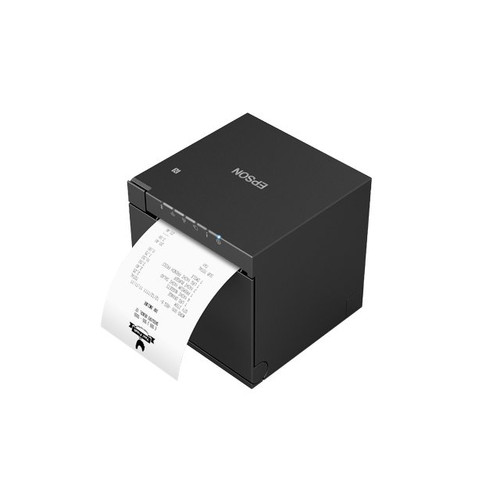
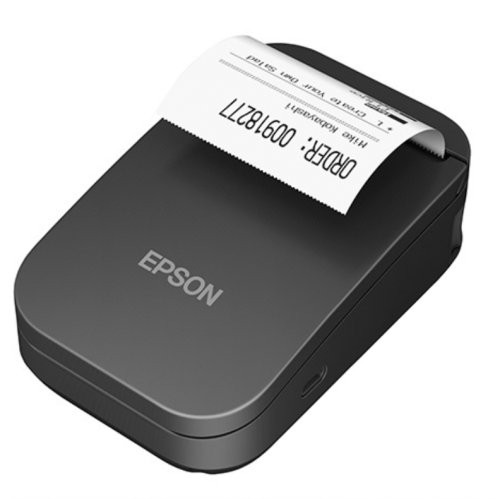
Both the Epson C31CK50021 (TM-m30III) and the Epson C31CJ99A9981 (P20II) are direct-thermal receipt printers from Epson's point-of-sale lineup, making them legitimate cross-shop candidates for buyers equipping retail counters, hospitality stations, or mobile POS environments. The key trade-offs center on print width (3-inch vs. 2-inch), throughput, connectivity breadth, and form factor — each of which directly affects deployment fit, receipt format compatibility, and integration flexibility.
In This Guide
- Which printer delivers faster throughput and what print specifications does each offer?
- How do the connectivity and interface options compare between the two models?
- Which model better fits counter-top, mobile, or space-constrained deployments?
- Which should you choose: the C31CK50021 or the C31CJ99A9981?
- Side-by-Side Specs
- FAQ
Which printer delivers faster throughput and what print specifications does each offer?
The C31CK50021 (TM-m30III) is rated at 708.7 inches per minute (ips) at 203 dpi resolution on 3-inch (80 mm) thermal paper. The spec sheet explicitly labels this as the maximum monochrome speed. The C31CJ99A9981 (P20II) is rated at 500 mm/s on 2-inch paper; no dpi resolution figure is provided in the supplied specifications. Converting for comparison: 708.7 ips equals approximately 18,000 mm/min (~300 mm/s), while 500 mm/s equals 30,000 mm/min — note, however, that speed ratings are not always measured on the same basis across models, and no independent test data is provided here.
The TM-m30III prints a wider receipt (3 inches / 80 mm standard) versus the P20II's 2-inch print width. Buyers requiring standard 80 mm retail or hospitality receipt formats will find only the C31CK50021 natively compatible. Resolution is documented at 203 dpi for the C31CK50021; the C31CJ99A9981 spec set does not state a dpi figure. Both are monochrome direct-thermal devices with no ribbon or toner.
How do the connectivity and interface options compare between the two models?
The C31CK50021 (TM-m30III) offers USB, USB-C, Ethernet, Wi-Fi, and Bluetooth 5.0 dual-mode as documented connectivity options. An optional wireless USB adapter (OT-WL06, part C32C891321) is also listed. This breadth covers wired-only, wireless-only, and mixed POS environments without requiring an add-on hub.
The C31CJ99A9981 (P20II) spec set lists Wi-Fi, USB, Ethernet, Serial, and Parallel interfaces. Serial and Parallel ports extend compatibility to legacy POS controllers and older host systems — an advantage in retrofit or mixed-age infrastructure. However, Bluetooth is not listed for the P20II. The TM-m30III's Bluetooth 5.0 dual-mode is an advantage for tablet- or smartphone-driven POS stacks. Buyers on legacy systems with serial/parallel requirements will find only the P20II lists those interfaces.
Which model better fits counter-top, mobile, or space-constrained deployments?
The C31CK50021 (TM-m30III) weighs 2.87 lb (1,300 g) and supports wall, column, and rack mounting. Color options are Epson White (ENB9) and Epson Black (EBCK). No external dimensions are provided in the supplied specs. The power supply is the PS-190 adapter (accessory). Package contents are not itemized beyond the accessory reference.
The C31CJ99A9981 (P20II) has documented dimensions of 3.1 × 4.7 × 1.8 inches, indicating a very compact footprint suited to cradle-based or mobile POS configurations — the form factor field explicitly states 'cradle,' and the 'Compatible With' field lists 'mobile.' The P20II also includes an auto-cutter per the supplied spec. A cutter is not documented in the C31CK50021 spec set provided. Buyers needing a self-contained cradle unit for mobile or kiosk use will find the P20II's documented form factor more directly described for that purpose.
Which should you choose: the C31CK50021 or the C31CJ99A9981?
Our take: The C31CK50021 is the stronger choice when deploying standard 80 mm receipt formats with multi-protocol connectivity in fixed retail or hospitality counters. It provides a documented 3-inch (80 mm) print width versus the P20II's 2-inch width — a hard incompatibility if existing receipt stock or customer-facing format is 80 mm. It also adds Bluetooth 5.0 dual-mode, which the P20II does not list, and offers wall/column/rack mounting for permanent installs. The P20II's 500 mm/s speed rating numerically exceeds the TM-m30III's published figure, though measurement basis is not confirmed as identical. The P20II lists serial and parallel interfaces absent from the TM-m30III, making it the only documented option for legacy controller compatibility. Its cradle form factor and mobile designation suit kiosk or field-service deployments. Choose the C31CK50021 for full-width receipts, Bluetooth POS, and multi-mount fixed installs; choose the C31CJ99A9981 for 2-inch mobile or legacy serial/parallel environments.
Side-by-Side Comparison
Spec-for-spec, from manufacturer data.
| Specification | Epson C31CK50021 | Epson C31CJ99A9981 |
|---|---|---|
| Model | TM-m30III (C31CK50021) | P20II (C31CJ99A9981) |
| Product Type | Receipt Printer | Receipt Printer |
| Print Method | Direct Thermal | Thermal Line Printing |
| Print Width | 3 inches (80 mm) | 2 inches |
| Paper Width | 3 inches | 2 inches |
| Print Speed | 708.7 ips (maximum monochrome) | 500 mm/s |
| Print Resolution | 203 dpi | — |
| USB | Yes (USB + USB-C) | Yes |
| Ethernet | Yes | Yes |
| Wi-Fi | Yes | Yes |
| Bluetooth | Yes (5.0 dual-mode) | — |
| Serial / Parallel | — | Yes (both) |
| Auto-Cutter | — | Yes |
| Form Factor | Compact counter / wall / column / rack | Cradle (mobile-compatible) |
| Weight | 2.87 lb (1,300 g) | — |
| Dimensions | — | 3.1" x 4.7" x 1.8" |
| Color Options | Epson White; Epson Black | — |
| Warranty | 1-year | 1-year |
Frequently Asked Questions
Which should you choose: the C31CK50021 or the C31CJ99A9981?
The C31CK50021 is the stronger choice when deploying standard 80 mm receipt formats with multi-protocol connectivity in fixed retail or hospitality counters. It provides a documented 3-inch (80 mm) print width versus the P20II's 2-inch width — a hard incompatibility if existing receipt stock or customer-facing format is 80 mm. It also adds Bluetooth 5.0 dual-mode, which the P20II does not list, and offers wall/column/rack mounting for permanent installs. The P20II's 500 mm/s speed rating numerically exceeds the TM-m30III's published figure, though measurement basis is not confirmed as identical. The P20II lists serial and parallel interfaces absent from the TM-m30III, making it the only documented option for legacy controller compatibility. Its cradle form factor and mobile designation suit kiosk or field-service deployments. Choose the C31CK50021 for full-width receipts, Bluetooth POS, and multi-mount fixed installs; choose the C31CJ99A9981 for 2-inch mobile or legacy serial/parallel environments.
Is the C31CK50021 or C31CJ99A9981 better for a tablet-based POS that relies on Bluetooth?
The C31CK50021 (TM-m30III) is the documented choice — it lists Bluetooth 5.0 dual-mode connectivity. The C31CJ99A9981 (P20II) spec set does not include Bluetooth as an interface option.
Which printer supports legacy serial or parallel POS controllers?
Only the C31CJ99A9981 (P20II) lists serial and parallel interfaces in the supplied specifications. The C31CK50021 (TM-m30III) does not document either interface, so it is not confirmed compatible with serial or parallel host systems.
Can both printers handle standard 80 mm receipt paper used in most retail environments?
No. The C31CK50021 (TM-m30III) is explicitly rated for 3-inch (80 mm) paper width, matching the retail standard. The C31CJ99A9981 (P20II) has a 2-inch print width and paper width, which is narrower than the 80 mm standard. Buyers requiring 80 mm receipts must select the C31CK50021.
More Label Printer Comparisons
- Epson C31CK00A9991 vs Brother RJ4230B
- Epson C31CK00A9991 vs Star Micronics TSP1043D
- Epson C31CK00A9991 vs Epson C31CJ99A9981
- Epson C31CK00A9991 vs Epson C31CJ57012
- Epson C31CJ99A9981 vs Brother RJ4230B
- Epson C31CJ99A9981 vs Star Micronics TSP1043D
Label Printer Buying Guides
Get a Second Opinion on Your Camera Choice
Share your site layout, coverage goals, and budget. Our team will validate the camera selection, flag anything we would change, and recommend products that match the use case.