
Epson C31CJ57012 vs Brother RJ4230B: Specification Comparison
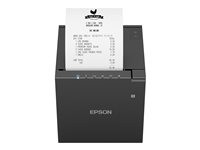
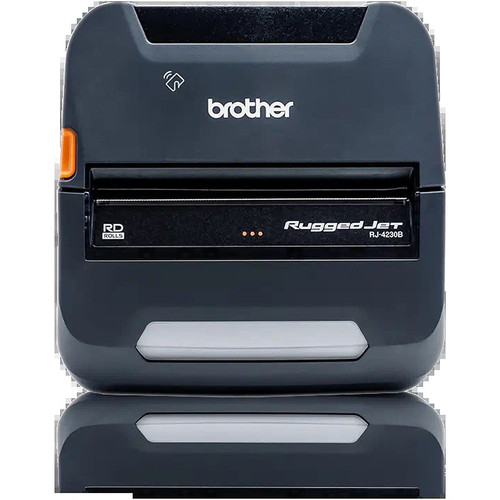
Both the Epson C31CJ57012 and Brother RJ4230B are direct thermal receipt printers that require no ribbon consumables, placing them in the same broad print technology class. However, they serve fundamentally different deployment contexts: the Epson is a fixed countertop/under-counter unit targeting high-volume point-of-sale environments, while the Brother is a ruggedized mobile printer designed for field use. Buyers choosing between them are typically deciding whether their workflow is stationary and throughput-intensive or mobile and multi-media-type flexible.
In This Guide
- Which printer delivers higher throughput for high-volume transaction environments?
- How does each printer connect, and which deployment topologies does each support?
- Which form factor and media flexibility best matches the intended use case?
- Which should you choose: the C31CJ57012 or the RJ4230B?
- Side-by-Side Specs
- FAQ
Which printer delivers higher throughput for high-volume transaction environments?
The Epson C31CJ57012 prints at 500 mm/s (20 inches per second), a figure derived directly from its spec sheet. The Brother RJ4230B prints at 5 inches per second (approximately 127 mm/s). That is a 4:1 speed advantage for the Epson in raw linear throughput.
For a fixed POS lane processing dozens of receipts per hour — retail checkout, quick-service restaurants, ticketing — the Epson's speed difference is operationally meaningful. The Brother's 5 ips is a standard mobile-class rate, appropriate for field workers printing one receipt or label at a time but not suited for sustained high-volume queues.
Resolution differs as well: the Epson resolves at 180 dpi monochrome; the Brother at 203 dpi. The Brother's higher dpi is relevant for label and barcode legibility but the Epson's 180 dpi is standard and sufficient for alphanumeric receipt content.
How does each printer connect, and which deployment topologies does each support?
The Epson C31CJ57012 offers Serial, Ethernet, and USB connectivity. Ethernet enables it to sit on a wired network segment and be addressed by multiple POS terminals or a print server — standard for fixed retail infrastructure. Serial support extends compatibility to legacy POS controllers. USB covers direct host connection.
The Brother RJ4230B provides USB and Bluetooth 4.2 with Apple MFi certification. Bluetooth 4.2 with MFi enables native pairing to iOS, Android, and Windows mobile devices without additional drivers or adapters — essential for field sales, delivery, or warehouse workflows. There is no Ethernet port specified for the RJ4230B; it is not designed for wired network integration.
The Epson spec sheet references a Wireless LAN Interface option (OT-WL06 accessory) and mentions NFC, BLE, and Ethernet rate in its extended spec block, though several of these appear as document section references rather than confirmed active features on this SKU. Buyers should verify wireless and NFC availability against the datasheet before specifying.
Which form factor and media flexibility best matches the intended use case?
The Epson C31CJ57012 is a compact countertop or under-counter unit. Its media type is limited to thermal receipt rolls per the provided specifications. It is a single-purpose receipt printer optimized for fixed installation.
The Brother RJ4230B is a mobile ruggedized printer with a 4-inch print width. Its specified media types include receipts, labels, and tags. It also supports ZPL and CPCL programming languages and carries 256 MB RAM for storing templates, fonts, and graphics offline — enabling it to operate without a live host connection in the field.
The RJ4230B's LCD display is specified; the Epson has no display specified. The Brother's warranty is listed as 'Manufacturer Warranty' without a stated duration; the Epson carries an explicit 1-year warranty. Buyers requiring a confirmed warranty term should verify the Brother's duration with the manufacturer.
Which should you choose: the C31CJ57012 or the RJ4230B?
Our take: The C31CJ57012 is the stronger choice when the deployment is a fixed, wired POS environment demanding maximum receipt throughput. Its 500 mm/s print speed is four times the Brother's 5 ips (127 mm/s), its Ethernet port enables network-addressable integration without accessories, and its Serial interface extends compatibility to legacy POS controllers the Brother cannot reach. Conversely, the RJ4230B is the correct choice for mobile field workflows: it is a ruggedized portable unit with Bluetooth 4.2 / Apple MFi for wireless iOS and Android pairing, prints receipts, labels, and tags up to 4 inches wide at 203 dpi (vs. the Epson's receipt-only 180 dpi), and stores ZPL/CPCL templates in 256 MB RAM for offline operation. These two printers are not substitutes — the Epson serves the fixed countertop lane; the Brother serves the field worker.
Side-by-Side Comparison
Spec-for-spec, from manufacturer data.
| Specification | Epson C31CJ57012 | Brother RJ4230B |
|---|---|---|
| Product Type | Receipt Printer (Fixed) | Receipt Printer (Mobile) |
| Form Factor | Compact countertop / under-counter | Mobile / ruggedized |
| Print Method | Direct Thermal (no ribbon) | Direct Thermal (no ribbon) |
| Print Speed | 500 mm/s (20 in/s) | 5 in/s (~127 mm/s) |
| Print Resolution | 180 dpi | 203 dpi |
| Print Width | — | 4 inches |
| Media Types | Thermal receipt rolls | Receipts, Labels, Tags |
| Connectivity | Serial, Ethernet, USB | USB, Bluetooth 4.2, Apple MFi |
| Wireless / Bluetooth | Optional (OT-WL06 accessory referenced) | Bluetooth 4.2 with Apple MFi |
| Network Interface | Ethernet | — |
| RAM | — | 256 MB |
| Display | — | LCD |
| Programming Languages | — | ZPL, CPCL |
| Warranty | 1 year | Manufacturer Warranty (duration not specified) |
| Primary Use Case | Fixed high-volume POS | Mobile field receipts, labels, tags |
Frequently Asked Questions
Which should you choose: the C31CJ57012 or the RJ4230B?
The C31CJ57012 is the stronger choice when the deployment is a fixed, wired POS environment demanding maximum receipt throughput. Its 500 mm/s print speed is four times the Brother's 5 ips (127 mm/s), its Ethernet port enables network-addressable integration without accessories, and its Serial interface extends compatibility to legacy POS controllers the Brother cannot reach. Conversely, the RJ4230B is the correct choice for mobile field workflows: it is a ruggedized portable unit with Bluetooth 4.2 / Apple MFi for wireless iOS and Android pairing, prints receipts, labels, and tags up to 4 inches wide at 203 dpi (vs. the Epson's receipt-only 180 dpi), and stores ZPL/CPCL templates in 256 MB RAM for offline operation. These two printers are not substitutes — the Epson serves the fixed countertop lane; the Brother serves the field worker.
Is the C31CJ57012 or RJ4230B better for a busy retail checkout lane?
The C31CJ57012 is better for that scenario. Its 500 mm/s (20 in/s) print speed is four times the Brother RJ4230B's 5 ips, and its Ethernet port allows it to be addressed directly on a wired POS network. The RJ4230B is a mobile printer not designed for sustained fixed-lane throughput.
Can either printer connect wirelessly to an iPhone or iPad without a dock or adapter?
The Brother RJ4230B can. It carries Bluetooth 4.2 with Apple MFi certification, enabling native wireless pairing to iOS devices. The Epson C31CJ57012's confirmed connectivity per its spec sheet is Serial, Ethernet, and USB; a wireless LAN interface (OT-WL06) is referenced as an optional accessory, but native Bluetooth to iOS is not specified for this SKU.
Which printer can handle both receipts and shipping labels?
The Brother RJ4230B supports receipts, labels, and tags up to 4 inches wide, and its ZPL and CPCL language support makes it compatible with standard label workflows. The Epson C31CJ57012's specified media type is thermal receipt rolls only; label printing is not listed in its provided specifications.
More Label Printer Comparisons
- Epson C31CK00A9991 vs Brother RJ4230B
- Epson C31CK00A9991 vs Star Micronics TSP1043D
- Epson C31CK00A9991 vs Epson C31CJ99A9981
- Epson C31CK00A9991 vs Epson C31CJ57012
- Epson C31CJ99A9981 vs Brother RJ4230B
- Epson C31CJ99A9981 vs Star Micronics TSP1043D
Label Printer Buying Guides
Get a Second Opinion on Your Camera Choice
Share your site layout, coverage goals, and budget. Our team will validate the camera selection, flag anything we would change, and recommend products that match the use case.