
CyberPower SL700U vs APC by Schneider Electric SMT700X167: Specification Comparison
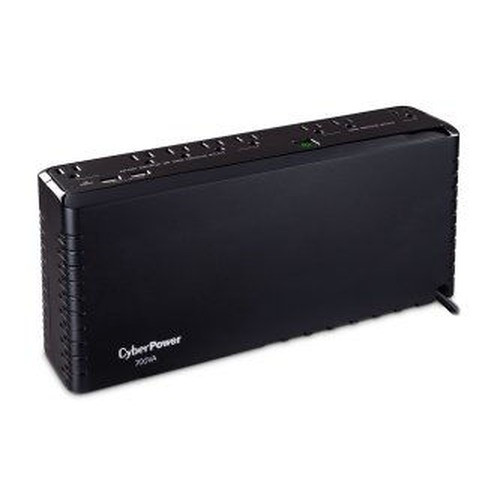
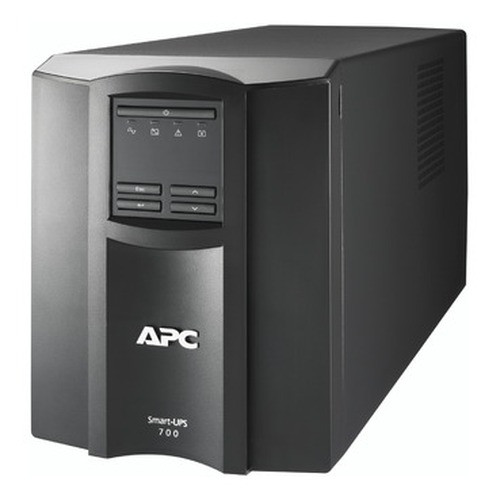
Both the CyberPower SL700U and the APC Smart-UPS SMT700X167 are 700 VA tower/compact uninterruptible power supplies targeting small office, workstation, and network-closet installations running on 120 V North American circuits. The comparison covers protection topology and output capability, voltage tolerance and conditioning quality, and connectivity features—the three axes that most directly govern which unit fits a given deployment. Neither product is evaluated on price or subjective quality claims; all statements derive from the provided specifications.
In This Guide
- Which UPS delivers more usable output power and what protection topology does each use?
- How wide an input voltage range does each UPS tolerate, and how well does each condition output voltage?
- What physical outlets, ports, and monitoring interfaces does each unit provide?
- Which should you choose: the SL700U or the SMT700X167?
- Side-by-Side Specs
- FAQ
Which UPS delivers more usable output power and what protection topology does each use?
The SMT700X167 uses Line-Interactive topology while the SL700U uses Standby (Offline) topology. In a Standby unit the inverter activates only on power failure; in a Line-Interactive unit the inverter is always in the power path, providing continuous regulation. This topological difference directly affects runtime and output quality during brownouts.
On rated output power the gap is material: the SMT700X167 is rated at 450 W against the SL700U's 370 W—a difference of 80 W (approximately 22%). At the same 0.7 kVA apparent power ceiling, the SMT700X167 supports a higher power factor (450/700 = 0.64) versus the SL700U (370/700 = 0.53). Buyers powering loads approaching 400 W will find the SL700U outside its rated wattage while the SMT700X167 remains within spec.
Both units specify a true sine-wave output waveform, which is required for active PFC power supplies common in modern servers, workstations, and network equipment. This is a meaningful shared characteristic; neither unit outputs a simulated or stepped approximation.
How wide an input voltage range does each UPS tolerate, and how well does each condition output voltage?
The SMT700X167 accepts input voltage from 100 V to 290 V—a 190 V window. The SL700U accepts input from 96 V to 140 V—a 44 V window. The SMT700X167's input range is dramatically broader, meaning it can continue supplying conditioned power through severe browndowns (as low as 100 V) and over-voltage events (up to 290 V) without switching to battery.
The SL700U specifies an output voltage regulation of ±5% (±6 V on a 120 V nominal), which is a defined spec. The SMT700X167's output voltage regulation is not stated in the provided specifications; buyers requiring a specific regulation figure for sensitive equipment should obtain that data from APC directly.
Both units include Automatic Voltage Regulation (AVR) and EMI/RFI noise filtering is confirmed on the SL700U. The SMT700X167's EMI/RFI filtering status is not stated in the provided specifications. The SL700U also specifies a maximum input current of 15 A; the SMT700X167 does not list that figure.
What physical outlets, ports, and monitoring interfaces does each unit provide?
The SMT700X167 explicitly lists 8 NEMA 5-15R AC outlets and a USB port, and specifies its power plug as NEMA 5-15P. The SL700U's outlet count, outlet type, and power plug type are not stated in the provided specifications. Installers routing multiple devices through the UPS should note this gap when evaluating the SL700U.
The SMT700X167's USB port enables software-based UPS monitoring and graceful system shutdown via compatible UPS management utilities. The SL700U does not list any USB or communication interface in the provided specifications.
Both units include audible alarms. The SMT700X167 specifies a noise level of 45 dB; the SL700U does not provide a noise-level figure. For deployments in acoustically sensitive environments—open-plan offices, studios, or residential installations—the absence of a dB rating on the SL700U limits pre-installation evaluation.
Which should you choose: the SL700U or the SMT700X167?
Our take: The SMT700X167 is the stronger choice when load power approaches or exceeds 370 W, when the installation environment is subject to wide voltage swings, or when software-driven UPS management is required. Three concrete spec deltas illustrate this: the SMT700X167 delivers 450 W versus 370 W—an 80 W (22%) advantage at identical VA ratings; its input voltage window spans 100–290 V versus the SL700U's 96–140 V, a 190 V versus 44 V tolerance that substantially reduces battery draw during voltage events; and it provides 8 documented NEMA 5-15R outlets plus a USB management port, while the SL700U's outlet count and communication interfaces are not specified. The SL700U's single documented advantage is a higher surge energy rating (890 J versus 540 J), making it comparatively stronger where surge absorption is the primary concern rather than runtime or conditioning. The SL700U better fits low-load, surge-prone environments; the SMT700X167 suits higher-load IT closet or workstation deployments requiring management integration.
Side-by-Side Comparison
Spec-for-spec, from manufacturer data.
| Specification | CyberPower SL700U | APC by Schneider Electric SMT700X167 |
|---|---|---|
| UPS Topology | Standby (Offline) | Line-Interactive |
| Output Power Capacity | 0.7 kVA | 0.7 kVA |
| Rated Output Power (Watts) | 370 W | 450 W |
| Output Waveform | Sine | Sine |
| Input Voltage Min | 96 V | 100 V |
| Input Voltage Max | 140 V | 290 V |
| Input Frequency | 50/60 Hz | 50/60 Hz |
| Output Voltage | 120 V | 120 V |
| Output Voltage Regulation | ±5% | — |
| Automatic Voltage Regulation (AVR) | Yes | Yes |
| Surge Energy Rating | 890 J | 540 J |
| Transfer/Response Time | 8 ms | 6 ms |
| EMI/RFI Noise Filtering | Yes | — |
| AC Outlets | — | 8 × NEMA 5-15R |
| USB Port | — | Yes |
| Audible Alarm | Yes | Yes |
| Noise Level | — | 45 dB |
| Power Plug | — | NEMA 5-15P |
| Maximum Input Current | 15 A | — |
Frequently Asked Questions
Which should you choose: the SL700U or the SMT700X167?
The SMT700X167 is the stronger choice when load power approaches or exceeds 370 W, when the installation environment is subject to wide voltage swings, or when software-driven UPS management is required. Three concrete spec deltas illustrate this: the SMT700X167 delivers 450 W versus 370 W—an 80 W (22%) advantage at identical VA ratings; its input voltage window spans 100–290 V versus the SL700U's 96–140 V, a 190 V versus 44 V tolerance that substantially reduces battery draw during voltage events; and it provides 8 documented NEMA 5-15R outlets plus a USB management port, while the SL700U's outlet count and communication interfaces are not specified. The SL700U's single documented advantage is a higher surge energy rating (890 J versus 540 J), making it comparatively stronger where surge absorption is the primary concern rather than runtime or conditioning. The SL700U better fits low-load, surge-prone environments; the SMT700X167 suits higher-load IT closet or workstation deployments requiring management integration.
Is the SL700U or SMT700X167 better for protecting a workstation with an active PFC power supply?
Both units specify a true sine-wave output, which is what active PFC supplies require. However, the SMT700X167's Line-Interactive topology provides continuous voltage conditioning before a full outage occurs, whereas the SL700U's Standby topology only switches to its inverter on power failure. For active PFC workstations in environments with frequent brownouts or voltage sags, the SMT700X167's topology and its wider 100–290 V input range offer more continuous protection.
Which unit can support more devices plugged in simultaneously?
The SMT700X167 specifies 8 NEMA 5-15R outlets. The SL700U's outlet count and outlet type are not stated in the provided specifications, so a direct comparison cannot be made. Buyers needing to power multiple devices from a single UPS should verify the SL700U's outlet configuration directly with CyberPower before purchasing.
Does either UPS offer remote or software-based monitoring?
The SMT700X167 lists a USB port, which typically enables connection to UPS management software for monitoring, alerts, and graceful system shutdown. The SL700U does not list a USB port or any other communication interface in the provided specifications. If software monitoring or automated shutdown is required, the SMT700X167 is the only unit in this comparison with a documented interface for that purpose.
More UPS Comparisons
- APC by Schneider Electric BR700G vs CyberPower OR700LCDRM1U
- APC by Schneider Electric BR700G vs CyberPower SL700U
- APC by Schneider Electric BR700G vs APC by Schneider Electric BE700G3
- APC by Schneider Electric BR700G vs APC by Schneider Electric SMT700X167
- CyberPower OR700LCDRM1U vs APC by Schneider Electric BE700G3
- CyberPower OR700LCDRM1U vs APC by Schneider Electric SMT700X167
UPS Buying Guides
Get a Second Opinion on Your Camera Choice
Share your site layout, coverage goals, and budget. Our team will validate the camera selection, flag anything we would change, and recommend products that match the use case.