
APC by Schneider Electric BR700G vs APC by Schneider Electric SMT700X167: Specification Comparison
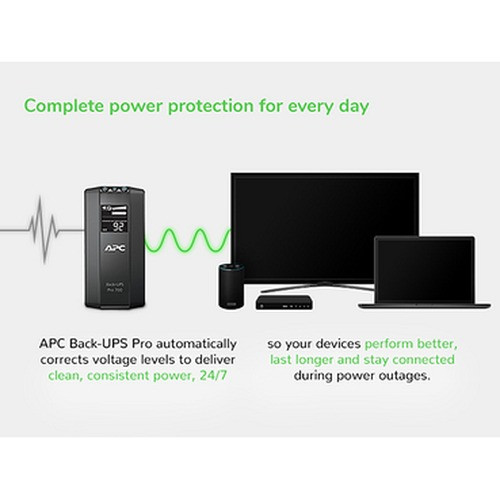
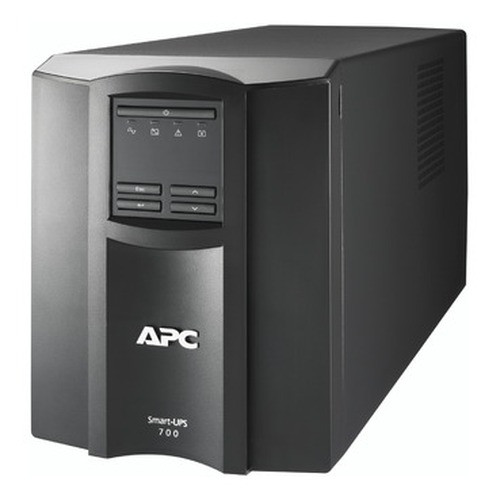
Both the APC BR700G and the APC SMT700X167 are 700VA line-interactive tower UPS units designed for 120V single-phase environments—a class commonly deployed to protect network switches, IP cameras, NVRs, and edge security appliances. The BR700G is positioned as a back-UPS entry model, while the SMT700X167 carries the Smart-UPS designation with a pure sine wave output and broader input voltage range. This comparison evaluates power capacity, output quality, and connectivity features relevant to physical-security system integrators and IT buyers selecting a UPS for critical loads.
In This Guide
Which unit delivers more usable power and how do their output waveforms differ?
The SMT700X167 provides 450 W of rated output power versus 420 W for the BR700G—a 7% advantage that can matter when powering NVRs or PoE switches that draw close to the UPS ceiling. Both units are rated at 700 VA.
Waveform type is a critical differentiator: the SMT700X167 outputs a true sine wave, while the BR700G produces a stepped approximation to a sine wave. Many modern switch-mode power supplies in cameras and NVRs tolerate a stepped approximation, but some active PFC power supplies require a true sine wave and may behave erratically or shut down on the BR700G's output during battery mode. Integrators deploying equipment with strict sine-wave requirements should account for this distinction.
The BR700G specifies a max configurable power of 420 W and 700 VA, with no expansion slots for additional battery modules. The SMT700X167 lists output power capacity as 0.7 kVA / 450 W; no additional power module slot data is provided in the available specs.
How do the two units differ in surge protection and input voltage tolerance?
The SMT700X167 offers a surge energy rating of 540 J compared to 354 J for the BR700G—a 53% higher rating that provides greater protection against transient overvoltage events on the AC line, relevant in installations where the utility feed is noisy or subject to lightning-induced surges.
Input voltage operating range is another key differentiator. The SMT700X167 accepts input from 100 V to 290 V, giving it extremely wide tolerance that reduces battery draw during brownouts and makes it suitable for installations with unstable utility power. The BR700G specifies an efficiency range of 88–143 V and a maximum input current of 12 A / 15 A switching capacity; a precise lower input voltage cutoff is not stated in the provided specs.
The SMT700X167 explicitly lists Automatic Voltage Regulation (AVR) as a confirmed feature. The BR700G's line-interactive topology inherently provides AVR, but the spec sheet does not call it out explicitly. AVR is particularly valuable in security installations where cameras and recorders must remain powered through brownouts without switching to battery.
Transfer time favors the SMT700X167 at 6 ms versus the BR700G's 8 ms typical / 12 ms maximum. While both are generally within the tolerance of modern switch-mode supplies, the faster transfer provides additional margin.
Which unit offers more outlet capacity and management connectivity?
The SMT700X167 provides 8 NEMA 5-15R outlets, all on a single protected circuit. The BR700G provides 6 NEMA 5-15R outlets total—3 UPS-backed and 3 surge-only. For security deployments where multiple devices (NVR, switch, cameras, monitor) all require battery-backed power, the SMT700X167's 8 fully backed outlets offer greater flexibility without needing to triage which devices get battery protection.
The SMT700X167 includes a USB port, which enables direct connection to a host server or NVR for graceful shutdown management via compatible UPS software. The BR700G specifications do not list a USB or communications port; it does include 1 free slot and optional Emergency Power Off (EPO), but no USB management interface is identified in the provided specs.
The BR700G lists data-line protection (coaxial CATV/SATV/modem/audio-video), which is a feature not mentioned in the SMT700X167 specs. For installations where a coax feed (e.g., cable modem or CATV) needs surge protection at the same point, this is a practical inclusion. The BR700G also specifies an LED status display with battery, on-line, and building wiring fault indicators. LED/alarm display details for the SMT700X167 are not detailed beyond confirming audible alarms are present.
Which should you choose: the BR700G or the SMT700X167?
Our take: The SMT700X167 is the stronger choice when load quality, surge tolerance, and outlet count are the primary decision criteria. It delivers 450 W versus 420 W, produces a true sine wave (versus stepped approximation) that is compatible with active PFC power supplies, provides a 540 J surge rating versus 354 J, transfers in 6 ms versus up to 12 ms, accepts a wider input range of 100–290 V versus the BR700G's narrower specified band, and supplies 8 fully battery-backed outlets versus 3 backed and 3 surge-only. Its USB port also enables graceful shutdown management. The BR700G remains a viable lower-cost option for deployments with legacy or simple resistive loads that do not require sine wave output, where coaxial data-line protection is needed at the UPS, or where the outlet split between backed and surge-only is acceptable. For NVR or server protection with active PFC supplies, select the SMT700X167.
Side-by-Side Comparison
Spec-for-spec, from manufacturer data.
| Specification | APC by Schneider Electric BR700G | APC by Schneider Electric SMT700X167 |
|---|---|---|
| UPS Topology | Line-Interactive | Line-Interactive |
| Rated Power (VA) | 700 VA | 700 VA |
| Rated Power (W) | 420 W | 450 W |
| Waveform Type | Stepped approximation to sine wave | Sine wave |
| Input Voltage Range | 88–143 V (efficiency range specified) | 100–290 V |
| Input Connection | NEMA 5-15P | NEMA 5-15P |
| Input Frequency | 50/60 Hz ±3 Hz auto-sensing | 50/60 Hz |
| Transfer Time | 8 ms typical / 12 ms maximum | 6 ms |
| Surge Energy Rating | 354 J | 540 J |
| Output Outlets (Total) | 6 (3 battery-backed + 3 surge-only) | 8 (all NEMA 5-15R) |
| Output Outlet Type | NEMA 5-15R | NEMA 5-15R |
| Automatic Voltage Regulation | Inherent (line-interactive; not explicitly stated) | Yes (explicitly specified) |
| USB Management Port | — | Yes |
| Data Line Protection | Coaxial (CATV/SATV/modem/AV) | — |
| Acoustic Level | 45 dBA | 45 dB |
| Form Factor | Tower, not rack-mountable | Tower (rack-mount not stated in specs) |
| Battery Type | Lead-acid, 12 V / 9 Ah | — |
| Typical Recharge Time | 12 hours | — |
Frequently Asked Questions
Which should you choose: the BR700G or the SMT700X167?
The SMT700X167 is the stronger choice when load quality, surge tolerance, and outlet count are the primary decision criteria. It delivers 450 W versus 420 W, produces a true sine wave (versus stepped approximation) that is compatible with active PFC power supplies, provides a 540 J surge rating versus 354 J, transfers in 6 ms versus up to 12 ms, accepts a wider input range of 100–290 V versus the BR700G's narrower specified band, and supplies 8 fully battery-backed outlets versus 3 backed and 3 surge-only. Its USB port also enables graceful shutdown management. The BR700G remains a viable lower-cost option for deployments with legacy or simple resistive loads that do not require sine wave output, where coaxial data-line protection is needed at the UPS, or where the outlet split between backed and surge-only is acceptable. For NVR or server protection with active PFC supplies, select the SMT700X167.
Can I use either the BR700G or SMT700X167 to protect an NVR with an active PFC power supply?
The SMT700X167 is the safer choice for active PFC power supplies because it outputs a true sine wave during battery operation. The BR700G outputs a stepped approximation to a sine wave, which some active PFC supplies do not tolerate—this can trigger shutdown or damage during a power outage. If your NVR documentation requires a sine wave UPS, the SMT700X167 meets that requirement; the BR700G does not based on the provided specs.
Which unit gives me more outlets for a multi-device security rack shelf?
The SMT700X167 provides 8 NEMA 5-15R outlets, all battery-backed. The BR700G provides 6 total outlets—3 battery-backed and 3 surge-protection-only. If you need to connect an NVR, a PoE switch, a monitor, and spare ports, the SMT700X167's 8 fully backed outlets offer more capacity without having to decide which devices lose power during an outage.
Does either UPS support software-based graceful shutdown of a connected server or NVR?
The SMT700X167 includes a USB port that can connect directly to a host device for graceful shutdown via compatible UPS management software. The BR700G specifications do not list a USB or network management port; graceful shutdown capability is not confirmed for the BR700G in the available specs. If automated shutdown on power loss is required, the SMT700X167 has the confirmed interface; the BR700G does not based on provided data.
More UPS Comparisons
- APC by Schneider Electric BR700G vs CyberPower OR700LCDRM1U
- APC by Schneider Electric BR700G vs CyberPower SL700U
- APC by Schneider Electric BR700G vs APC by Schneider Electric BE700G3
- CyberPower OR700LCDRM1U vs APC by Schneider Electric BE700G3
- CyberPower OR700LCDRM1U vs APC by Schneider Electric SMT700X167
- CyberPower OR700LCDRM1U vs CyberPower SL700U
UPS Buying Guides
Get a Second Opinion on Your Camera Choice
Share your site layout, coverage goals, and budget. Our team will validate the camera selection, flag anything we would change, and recommend products that match the use case.