
APC by Schneider Electric BR700G vs APC by Schneider Electric BE700G3: Specification Comparison
Both the APC BR700G and BE700G3 are 120 V, 700 VA / 420 W tower UPS units aimed at desktop and small-office equipment protection — the same power class, same form factor, and directly cross-shopped by buyers needing entry-level battery backup. The key architectural difference is topology: the BR700G is Line-Interactive while the BE700G3 is Standby (Offline). This comparison evaluates how that and other spec-level differences affect runtime behavior, protection quality, and outlet flexibility for a typical installation.
In This Guide
- Which UPS offers stronger power conditioning and faster transfer response?
- How do the outlet count, surge-only coverage, and data-line protection compare?
- What do the battery specifications indicate about backup duration and recovery time?
- Which should you choose: the BR700G or the BE700G3?
- Side-by-Side Specs
- FAQ
Which UPS offers stronger power conditioning and faster transfer response?
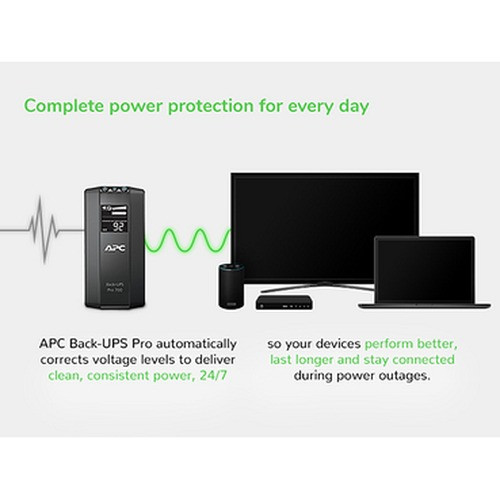
The BR700G uses a Line-Interactive topology with automatic voltage regulation (AVR), filtering described as 'full time multi-pole noise filtering: 5% of IEEE surge let-through, zero clamping response time.' Its transfer time is 8 ms typical, 12 ms maximum. Waveform output is a stepped approximation to a sinewave. Surge energy rating is 354 J.
The BE700G3 uses a Standby (Offline) topology, meaning it passes utility power directly to loads and only switches to battery when input falls outside acceptable limits. Its response time is 10 ms. Waveform is listed as pseudo sine. Its surge energy rating is 490 J — higher than the BR700G by 136 J.
For sensitive electronics where voltage sags and brownouts are common, the BR700G's line-interactive AVR provides continuous conditioning without drawing on battery runtime. The BE700G3 offers no AVR; every voltage deviation triggers a battery transfer. The BR700G's faster 8 ms typical transfer time also provides a tighter protection window compared to the BE700G3's 10 ms response.
How do the outlet count, surge-only coverage, and data-line protection compare?
The BR700G provides six NEMA 5-15R outlets: three battery-backed and three surge-only. It also includes coaxial data-line protection (CATV/SATV/modem/audio-video) and one free equipment slot. Its power cord is 6 ft (1.83 m) with a NEMA 5-15P plug and a 15 A switching current capacity.
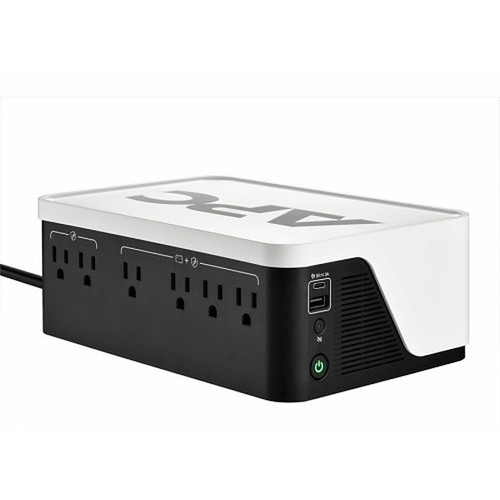
The BE700G3 spec sheet lists NEMA 5-15R outlets and a NEMA 5-15P plug but does not specify the total outlet count, the battery-backed vs. surge-only split, cable length, or any data-line protection. These values are absent from the provided specifications.
Buyers requiring a defined outlet mix — particularly dedicated surge-only outlets for peripherals — or coaxial/modem protection will find the BR700G fully specified on these points. The BE700G3's outlet configuration cannot be verified from the supplied spec data and would need to be confirmed against the product datasheet before purchase.
What do the battery specifications indicate about backup duration and recovery time?
The BR700G uses a 12 V lead-acid battery rated at 9.0 Ah, with 102 VAh capacity and 86 VAh runtime capacity. Typical recharge time is 12 hours. Battery charge draw is 7 W rated. The replacement battery is RBC17, a standard APC cartridge. The unit carries one included battery module and extendable runtime is listed as 0 (no external battery pack support).
The BE700G3 does not specify battery voltage, Ah rating, VAh capacity, recharge time, or a replacement battery part number in the provided specifications. Heat dissipation at 19.249 BTU/h is substantially lower than the BR700G's 48.5 BTU/h, which may reflect a smaller internal battery and lighter charging electronics, but this cannot be confirmed from specs alone.
The BR700G's published battery parameters allow integrators to calculate runtime for a given load and to plan battery replacement proactively using the RBC17 cartridge. The BE700G3 lacks these published figures, making runtime planning and maintenance scheduling dependent on sourcing the full datasheet separately.
Which should you choose: the BR700G or the BE700G3?
Our take: The BR700G is the stronger choice when power quality, defined outlet count, and documented battery serviceability are the decision criteria. Its Line-Interactive topology with AVR continuously corrects voltage without battery intervention — the BE700G3's Standby topology does not. The BR700G transfers in 8 ms typical versus the BE700G3's 10 ms, a meaningful margin for sensitive electronics. The BR700G specifies six outlets (3 battery-backed, 3 surge-only) plus coaxial data-line protection; the BE700G3's outlet count and data protection are unspecified in the supplied data. The BE700G3 does post a higher surge energy rating (490 J vs. 354 J) and substantially lower heat dissipation (19.249 vs. 48.5 BTU/h). The BE700G3 may suit cost-sensitive environments on stable utility power where surge absorption is the primary concern; the BR700G is the more appropriate choice for mixed-load office or security installations where voltage regulation, outlet segmentation, and planned battery replacement matter.
Side-by-Side Comparison
Spec-for-spec, from manufacturer data.
| Specification | APC by Schneider Electric BR700G | APC by Schneider Electric BE700G3 |
|---|---|---|
| UPS Topology | Line-Interactive | Standby (Offline) |
| Rated Capacity (VA) | 700 VA | 700 VA (0.7 kVA) |
| Rated Power (W) | 420 W | 420 W |
| Input Voltage | 120 V | 120 V |
| Input Connection | NEMA 5-15P | NEMA 5-15P |
| Output Connection | 3× NEMA 5-15R (battery) + 3× NEMA 5-15R (surge) | NEMA 5-15R (count not specified) |
| Transfer / Response Time | 8 ms typical / 12 ms max | 10 ms |
| Waveform | Stepped approximation to sinewave | Pseudo sine |
| Surge Energy Rating | 354 J | 490 J |
| Heat Dissipation | 48.5 BTU/h | 19.249 BTU/h |
| Noise Level | 45 dBA | 45 dB |
| Battery Voltage / Capacity | 12 V / 9.0 Ah | — |
| Battery Recharge Time | 12 h | — |
| Replacement Battery | RBC17 | — |
| Data Line Protection | Coaxial (CATV/SATV/modem/A-V) | — |
| Input Frequency | 50/60 Hz ±3 Hz auto-sensing | 50/60 Hz |
Frequently Asked Questions
Which should you choose: the BR700G or the BE700G3?
The BR700G is the stronger choice when power quality, defined outlet count, and documented battery serviceability are the decision criteria. Its Line-Interactive topology with AVR continuously corrects voltage without battery intervention — the BE700G3's Standby topology does not. The BR700G transfers in 8 ms typical versus the BE700G3's 10 ms, a meaningful margin for sensitive electronics. The BR700G specifies six outlets (3 battery-backed, 3 surge-only) plus coaxial data-line protection; the BE700G3's outlet count and data protection are unspecified in the supplied data. The BE700G3 does post a higher surge energy rating (490 J vs. 354 J) and substantially lower heat dissipation (19.249 vs. 48.5 BTU/h). The BE700G3 may suit cost-sensitive environments on stable utility power where surge absorption is the primary concern; the BR700G is the more appropriate choice for mixed-load office or security installations where voltage regulation, outlet segmentation, and planned battery replacement matter.
Does either UPS regulate voltage without switching to battery?
Yes — the BR700G's Line-Interactive topology includes automatic voltage regulation (AVR) that corrects sags and swells without engaging the battery. The BE700G3 uses a Standby (Offline) topology and does not regulate voltage; it switches to battery whenever input moves outside its operating range.
Which unit has a higher surge energy rating?
The BE700G3 is rated at 490 J, versus 354 J for the BR700G — a difference of 136 J. Surge energy rating reflects the joules a UPS can absorb before the protection degrades, so the BE700G3 has a higher stated rating on this single metric.
Can I plan battery replacement on both units without contacting support?
For the BR700G, yes: the specs identify the replacement battery as RBC17, a standard APC cartridge available through normal distribution channels. The BE700G3's provided specifications do not list a replacement battery part number, so a buyer would need to consult the full APC datasheet or support resources to confirm the correct replacement cartridge.
More UPS Comparisons
- APC by Schneider Electric BR700G vs CyberPower OR700LCDRM1U
- APC by Schneider Electric BR700G vs CyberPower SL700U
- APC by Schneider Electric BR700G vs APC by Schneider Electric SMT700X167
- CyberPower OR700LCDRM1U vs APC by Schneider Electric BE700G3
- CyberPower OR700LCDRM1U vs APC by Schneider Electric SMT700X167
- CyberPower OR700LCDRM1U vs CyberPower SL700U
UPS Buying Guides
Get a Second Opinion on Your Camera Choice
Share your site layout, coverage goals, and budget. Our team will validate the camera selection, flag anything we would change, and recommend products that match the use case.