
CyberPower OR700LCDRM1U vs APC by Schneider Electric BE700G3: Specification Comparison
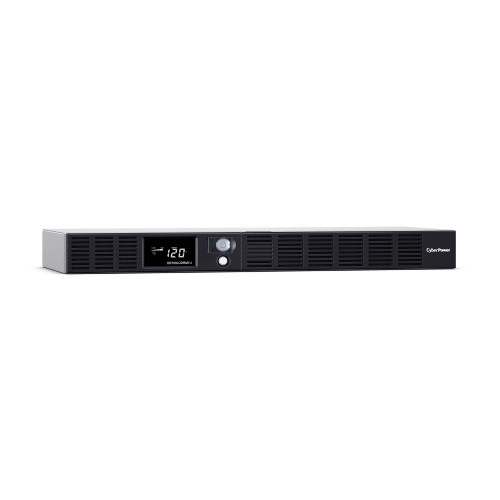
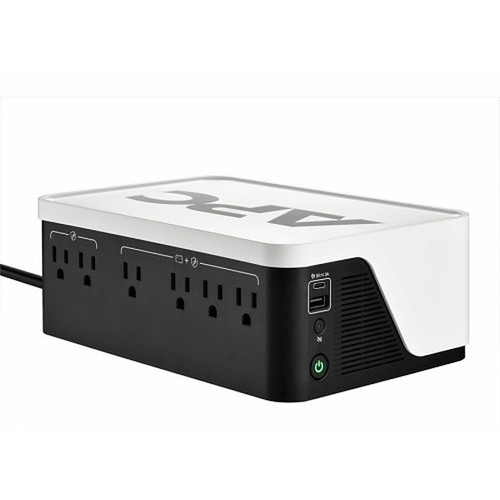
Both the CyberPower OR700LCDRM1U and the APC BE700G3 are 700VA-class uninterruptible power supplies designed to protect connected equipment from power disturbances. The CyberPower is a 1U rackmount unit targeting IT infrastructure and network closets, while the APC is a desktop/tower unit aimed at workstation and small-office use. Despite sharing the same VA rating, their form factors, topologies, and feature sets serve different deployment contexts — a distinction buyers should weigh carefully.
In This Guide
Which UPS topology and runtime better protect sensitive loads?
The OR700LCDRM1U uses a Line Interactive topology with Automatic Voltage Regulation (AVR), which conditions incoming voltage continuously — stepping it up or down without switching to battery — and transfers to battery in under 4 ms. At half load (200 W) it delivers 11 minutes of runtime; at full load (400 W) it delivers 3 minutes. Its battery bank consists of two sealed lead-acid 6V/8Ah cells.
The BE700G3 uses a Standby (Offline) topology, which passes utility power directly to the load and only switches to battery when a fault is detected. Its specified response time is 10 ms — more than twice the OR700LCDRM1U's 4 ms transfer time. The BE700G3's output waveform is pseudo sine wave, a characteristic of most standby designs. APC's provided spec sheet does not include a runtime curve or runtime figures at any load level for the BE700G3.
For loads sensitive to voltage fluctuations — network switches, NVRs, IP camera PoE injectors — the Line Interactive topology with AVR provides continuous conditioning that a standby design does not. The 4 ms vs. 10 ms transfer time difference is also relevant for equipment with tight hold-up time requirements.
How do form factor, outlet count, and surge protection compare?
The OR700LCDRM1U is a 1U rackmount chassis measuring 17.05 × 1.75 × 9.25 in (433 × 44 × 235 mm) and weighing 18.5 lb (8.39 kg). It provides 6 × NEMA 5-15R outlets total: 4 with battery backup and surge protection, and 2 with surge protection only. It also includes data-line surge protection on RJ-11 and RJ-45 (10/100 Mbps) ports.
The BE700G3 is a desktop/tower unit. Its spec sheet lists NEMA 5-15R AC outlets and a NEMA 5-15P input plug, but does not specify total outlet count, the split between battery-backed and surge-only outlets, or the presence of data-line protection. Its surge energy rating is specified at 490 J; the OR700LCDRM1U's spec sheet does not provide a joule rating for comparison.
For installations in equipment racks — security head-end cabinets, network closets, server rooms — the 1U rackmount profile of the OR700LCDRM1U is the appropriate form factor. The BE700G3's desktop enclosure is suited to under-desk or shelf deployment. If data-line protection for Ethernet or telephone circuits is a requirement, only the OR700LCDRM1U specifies that feature.
Which unit offers more management capability and meets more compliance standards?
The OR700LCDRM1U includes a multifunction LCD display showing load level, input/output voltage, and estimated runtime. Management interfaces are USB and Serial (DB-9), enabling software-initiated graceful shutdown. Optional SNMP management is available via the RMCARD205 accessory (sold separately), enabling network-based monitoring and alerting. The unit carries UL1778, cUL 107.1, FCC DOC Class B, RoHS, and ENERGY STAR certifications and includes a $75,000 Connected Equipment Guarantee (registration required). Warranty is 3 years covering both electronics and battery.
The BE700G3 includes audible alarms for on-battery and low-battery conditions and specifies a noise level of 45 dB and heat dissipation of 19.249 BTU/h. Its spec sheet does not list USB or serial management ports, an LCD display, SNMP capability, software shutdown support, safety certifications, a connected equipment guarantee value, or warranty duration.
For managed IT environments requiring graceful shutdown integration, compliance documentation, or remote monitoring via SNMP, the OR700LCDRM1U provides specified pathways that the BE700G3's available spec data does not support.
Which should you choose: the OR700LCDRM1U or the BE700G3?
Our take: The OR700LCDRM1U is the stronger choice when the installation is rack-based, requires continuous voltage conditioning, or demands management integration. Its Line Interactive topology with AVR provides continuous voltage correction absent from the BE700G3's Standby design, and its transfer time of under 4 ms is less than half the BE700G3's specified 10 ms. The OR700LCDRM1U specifies 11 minutes of runtime at half load — a figure APC does not publish for the BE700G3 at all. It also adds USB/serial management, an optional SNMP card path, RJ-11/RJ-45 data-line protection, and a $75,000 connected equipment guarantee. The BE700G3's desktop form factor and standby topology suit a workstation or point-of-sale deployment where rack space is unavailable and continuous voltage conditioning is not required. Buyers equipping a security or network equipment rack should specify the OR700LCDRM1U; buyers protecting a single desktop workstation should evaluate the BE700G3 on outlet count and runtime data that APC has not published in the provided spec sheet.
Side-by-Side Comparison
Spec-for-spec, from manufacturer data.
| Specification | CyberPower OR700LCDRM1U | APC by Schneider Electric BE700G3 |
|---|---|---|
| UPS Topology | Line Interactive with AVR | Standby (Offline) |
| Capacity (VA) | 700 VA | 700 VA (0.7 kVA) |
| Capacity (Watts) | 400 W | 420 W |
| Transfer Time | <4 ms | 10 ms |
| Output Waveform | Not specified | Pseudo sine wave |
| Form Factor | Rackmount 1U | Desktop/Tower |
| Dimensions (W×H×D) | 17.05 × 1.75 × 9.25 in | — |
| Weight | 18.5 lb (8.39 kg) | — |
| Runtime at Half Load | 11 min (200 W) | — |
| Runtime at Full Load | 3 min (400 W) | — |
| Total Outlets (NEMA 5-15R) | 6 | — |
| Battery-Backed Outlets | 4 | — |
| Surge-Only Outlets | 2 | — |
| Surge Energy Rating (Joules) | — | 490 J |
| Data Line Protection | RJ-11, RJ-45 (10/100 Mbps) | — |
| Management Interfaces | USB, Serial (DB-9), optional SNMP | — |
| LCD Display | Yes (multifunction) | No |
| Audible Alarms | Not specified | Yes (on-battery, low battery) |
| Battery Type | Sealed Lead-Acid, 2 × 6V/8Ah | — |
| Certifications | UL1778, cUL 107.1, FCC Class B, RoHS, ENERGY STAR | — |
| Connected Equipment Guarantee | $75,000 (registration required) | — |
| Warranty | 3 years (electronics and battery) | — |
| Noise Level | — | 45 dB |
| Heat Dissipation | — | 19.249 BTU/h |
Frequently Asked Questions
Which should you choose: the OR700LCDRM1U or the BE700G3?
The OR700LCDRM1U is the stronger choice when the installation is rack-based, requires continuous voltage conditioning, or demands management integration. Its Line Interactive topology with AVR provides continuous voltage correction absent from the BE700G3's Standby design, and its transfer time of under 4 ms is less than half the BE700G3's specified 10 ms. The OR700LCDRM1U specifies 11 minutes of runtime at half load — a figure APC does not publish for the BE700G3 at all. It also adds USB/serial management, an optional SNMP card path, RJ-11/RJ-45 data-line protection, and a $75,000 connected equipment guarantee. The BE700G3's desktop form factor and standby topology suit a workstation or point-of-sale deployment where rack space is unavailable and continuous voltage conditioning is not required. Buyers equipping a security or network equipment rack should specify the OR700LCDRM1U; buyers protecting a single desktop workstation should evaluate the BE700G3 on outlet count and runtime data that APC has not published in the provided spec sheet.
Is the OR700LCDRM1U or BE700G3 better for protecting IP security cameras and NVRs in a rack?
The OR700LCDRM1U is the appropriate choice for rack-mounted security equipment. It is a 1U rackmount unit with a Line Interactive topology that conditions voltage continuously, a transfer time under 4 ms, 4 battery-backed NEMA 5-15R outlets, and RJ-45 data-line surge protection. The BE700G3 is a desktop unit with a Standby topology and a 10 ms transfer time; it is not designed for rack installation.
Can either UPS be monitored remotely over the network?
The OR700LCDRM1U supports optional SNMP management via the separately sold RMCARD205 card and includes USB and Serial (DB-9) ports for local software-based monitoring and graceful shutdown. The BE700G3's provided specifications do not list any management port, SNMP capability, or software interface.
How do the warranties and equipment protection guarantees compare?
The OR700LCDRM1U carries a 3-year warranty covering both electronics and battery, plus a $75,000 Connected Equipment Guarantee upon registration. The BE700G3's provided spec sheet does not state a warranty duration or a connected equipment guarantee value, so a direct comparison cannot be made from the available data.
More UPS Comparisons
- APC by Schneider Electric BR700G vs CyberPower OR700LCDRM1U
- APC by Schneider Electric BR700G vs CyberPower SL700U
- APC by Schneider Electric BR700G vs APC by Schneider Electric BE700G3
- APC by Schneider Electric BR700G vs APC by Schneider Electric SMT700X167
- CyberPower OR700LCDRM1U vs APC by Schneider Electric SMT700X167
- CyberPower OR700LCDRM1U vs CyberPower SL700U
UPS Buying Guides
Get a Second Opinion on Your Camera Choice
Share your site layout, coverage goals, and budget. Our team will validate the camera selection, flag anything we would change, and recommend products that match the use case.