
CyberPower SL700U vs APC by Schneider Electric BE700G3: Specification Comparison
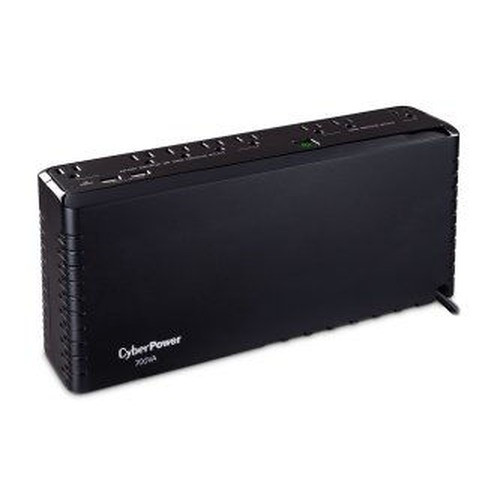
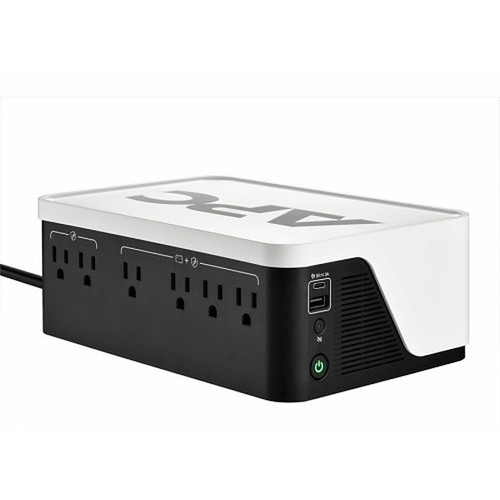
The CyberPower SL700U and APC BE700G3 are both 700 VA standby (offline) UPS units targeting home office, small office, and light IT loads on standard North American 120 V circuits. Both share the same VA rating, standby topology, and 50/60 Hz compatibility. The comparison centers on wattage headroom, input voltage tolerance, surge protection capability, waveform quality, and transfer speed — the four axes that determine which unit better protects a given set of connected equipment.
In This Guide
- Which unit delivers more usable wattage and handles wider input voltage swings?
- How do the two units compare on surge energy absorption and switchover speed?
- Does waveform type or published environmental data affect equipment compatibility?
- Which should you choose: the SL700U or the BE700G3?
- Side-by-Side Specs
- FAQ
Which unit delivers more usable wattage and handles wider input voltage swings?
The BE700G3 offers 420 W of output power versus the SL700U's 370 W — a 50 W (roughly 13.5 %) advantage at identical 700 VA capacity, meaning APC's unit can sustain a heavier continuous load before hitting its limit.
On the input side, however, the SL700U accepts a range of 96 V–140 V, giving it a 44 V window that allows it to ride through browndowns and mild overvoltages without switching to battery. The BE700G3 specifies a fixed 120 V input (min and max both listed as 120 V), meaning its input tolerance window is not documented in the provided specs. The SL700U additionally specifies Automatic Voltage Regulation (AVR), which actively corrects input voltage before it reaches connected equipment. AVR is not listed for the BE700G3.
For installations in areas with unstable utility voltage — common in older buildings or behind long wire runs — the SL700U's wider input window and confirmed AVR capability are directly relevant. For stable, well-regulated utility environments, the BE700G3's higher watt rating provides more headroom for power-hungry loads.
How do the two units compare on surge energy absorption and switchover speed?
The SL700U carries an 890 J surge energy rating — 81.6 % higher than the BE700G3's 490 J. Higher joule ratings indicate the surge suppressor can absorb more cumulative energy from transients before degrading, which matters in environments with frequent or severe lightning events or utility switching surges.
On transfer time, the SL700U switches from line to battery in 8 ms versus the BE700G3's 10 ms. Both figures are within the tolerance of most active PFC power supplies (typically ≤ 20 ms), so in practice neither difference is likely to cause a connected device to reboot. However, the SL700U's 8 ms figure provides a slightly larger safety margin for power supplies with tighter hold-up times.
The SL700U also explicitly lists EMI/RFI noise filtering in its spec sheet; this feature is not listed for the BE700G3. EMI/RFI filtering can reduce line noise reaching sensitive analog or audio equipment, though it has negligible impact on modern switching power supplies.
Does waveform type or published environmental data affect equipment compatibility?
The SL700U produces a sine waveform on battery, while the BE700G3 produces a pseudo-sine (stepped approximation) waveform. This distinction is meaningful for a specific class of loads: active PFC power supplies (found in many modern workstations, NAS devices, and some medical equipment) are certified to operate with true sine wave UPS output. Running an active PFC supply on a pseudo-sine UPS can cause audible buzz, reduced efficiency, or, in some cases, erratic behavior. Passive PFC and non-PFC loads are generally unaffected by waveform shape.
The BE700G3 provides two environmental data points absent from the SL700U spec sheet: a heat dissipation figure of 19.249 BTU/h and an audible noise level of 45 dB. These are useful for data-closet airflow budgeting and noise-sensitive environments respectively; equivalent figures for the SL700U are not provided in the supplied specs.
The BE700G3 also lists specific outlet type (NEMA 5-15R) and plug type (NEMA 5-15P), confirming North American compatibility. The SL700U lists output voltage as 120 V and a 15 A maximum current, but outlet and plug types are not listed in the provided specs.
Which should you choose: the SL700U or the BE700G3?
Our take: The SL700U is the stronger choice when waveform compatibility, input voltage tolerance, or surge absorption are the primary concerns. Its true sine wave output makes it safe for active PFC power supplies — a category the BE700G3's pseudo-sine waveform may stress. Its 890 J surge rating is 81.6 % higher than the BE700G3's 490 J, its 8 ms transfer time beats the BE700G3's 10 ms, and its documented 96–140 V input range with AVR provides meaningful protection in unstable utility environments where the BE700G3's input tolerance is unspecified. Conversely, the BE700G3 delivers 420 W versus the SL700U's 370 W — a 50 W advantage that matters when the connected load approaches the unit's watt ceiling. Choose the SL700U for active PFC equipment, surge-prone sites, or questionable utility quality; choose the BE700G3 when raw watt capacity is the binding constraint and utility power is stable.
Side-by-Side Comparison
Spec-for-spec, from manufacturer data.
| Specification | CyberPower SL700U | APC by Schneider Electric BE700G3 |
|---|---|---|
| UPS Topology | Standby (Offline) | Standby (Offline) |
| Output Capacity (VA) | 700 VA | 700 VA |
| Output Power (W) | 370 W | 420 W |
| Waveform (on battery) | Sine | Pseudo sine |
| Input Voltage Min | 96 V | 120 V |
| Input Voltage Max | 140 V | 120 V |
| Input Frequency | 50/60 Hz | 50/60 Hz |
| Output Voltage | 120 V | 120 V |
| Output Frequency | 50/60 Hz | 50/60 Hz |
| Automatic Voltage Regulation (AVR) | Yes | — |
| Surge Energy Rating | 890 J | 490 J |
| Transfer Time | 8 ms | 10 ms |
| Maximum Current | 15 A | — |
| EMI/RFI Noise Filtering | Yes | — |
| Audible Noise Level | — | 45 dB |
| Heat Dissipation | — | 19.249 BTU/h |
Frequently Asked Questions
Which should you choose: the SL700U or the BE700G3?
The SL700U is the stronger choice when waveform compatibility, input voltage tolerance, or surge absorption are the primary concerns. Its true sine wave output makes it safe for active PFC power supplies — a category the BE700G3's pseudo-sine waveform may stress. Its 890 J surge rating is 81.6 % higher than the BE700G3's 490 J, its 8 ms transfer time beats the BE700G3's 10 ms, and its documented 96–140 V input range with AVR provides meaningful protection in unstable utility environments where the BE700G3's input tolerance is unspecified. Conversely, the BE700G3 delivers 420 W versus the SL700U's 370 W — a 50 W advantage that matters when the connected load approaches the unit's watt ceiling. Choose the SL700U for active PFC equipment, surge-prone sites, or questionable utility quality; choose the BE700G3 when raw watt capacity is the binding constraint and utility power is stable.
Can I use either of these UPS units with a modern desktop PC that has an active PFC power supply?
The SL700U is the safer choice for active PFC power supplies because it outputs a true sine wave on battery. The BE700G3 produces a pseudo-sine (stepped) waveform, which some active PFC supplies handle poorly — symptoms can include audible buzz, reduced efficiency, or instability. If your PC's power supply is active PFC, confirm compatibility with APC before deploying the BE700G3, or select the SL700U to avoid the issue entirely.
Which unit will protect my equipment better during frequent power surges or lightning storms?
Based on the provided specs, the SL700U's 890 J surge energy rating substantially outperforms the BE700G3's 490 J. A higher joule rating means the suppressor can absorb more cumulative surge energy before its protection degrades. For sites with frequent utility switching events, nearby lightning activity, or known power quality issues, the SL700U's surge rating provides a larger protective margin.
My office experiences brownouts where voltage drops below 110 V — which UPS handles that better?
The SL700U specifies an input operating range of 96 V to 140 V with Automatic Voltage Regulation (AVR), which means it can correct incoming voltage and pass conditioned power to connected equipment without switching to battery until voltage drops below 96 V. The BE700G3's specs list both minimum and maximum input voltage as 120 V, and AVR is not listed. For brownout-prone environments, the SL700U's documented wide input range and AVR make it the more appropriate choice based on the available specifications.
More UPS Comparisons
- APC by Schneider Electric BR700G vs CyberPower OR700LCDRM1U
- APC by Schneider Electric BR700G vs CyberPower SL700U
- APC by Schneider Electric BR700G vs APC by Schneider Electric BE700G3
- APC by Schneider Electric BR700G vs APC by Schneider Electric SMT700X167
- CyberPower OR700LCDRM1U vs APC by Schneider Electric BE700G3
- CyberPower OR700LCDRM1U vs APC by Schneider Electric SMT700X167
UPS Buying Guides
Get a Second Opinion on Your Camera Choice
Share your site layout, coverage goals, and budget. Our team will validate the camera selection, flag anything we would change, and recommend products that match the use case.