
CyberPower PR2200RT2UC vs CyberPower OL2K2RTHD: Specification Comparison
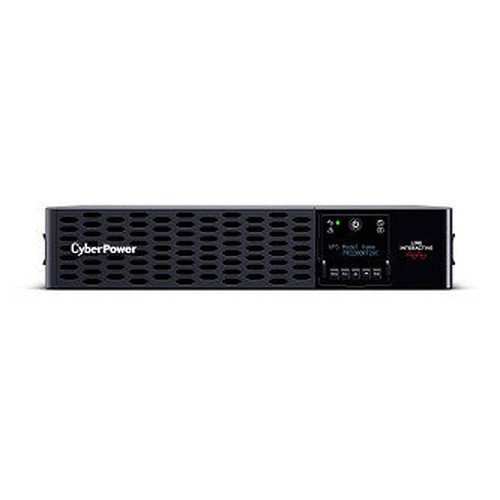
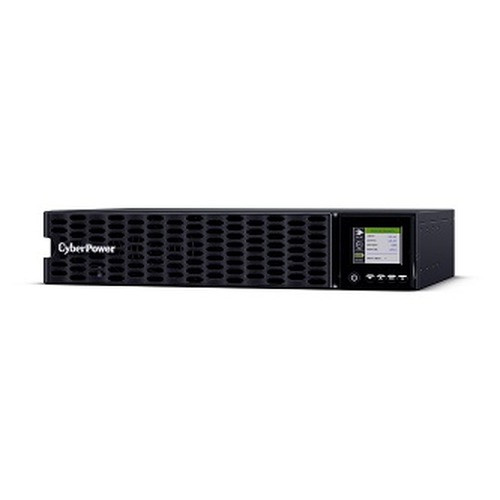
Both the CyberPower PR2200RT2UC and OL2K2RTHD are 2200 VA, 2U rack-mount UPS units targeting small-to-medium data center and server room deployments. The comparison centers on topology — Line-Interactive versus Online Double-Conversion — and the trade-offs that follow: protection depth, wattage output, heat load, noise, runtime, and management depth. Neither unit is an accessory; both serve the same 2200 VA class. Buyers cross-shopping these will be weighing cost of operation and protection level against actual connected load requirements.
In This Guide
- Which topology delivers better power protection for sensitive equipment?
- How do output wattage and runtime under load differ between these two units?
- Which unit offers broader management, connectivity, and environmental certification?
- Which should you choose: the PR2200RT2UC or the OL2K2RTHD?
- Side-by-Side Specs
- FAQ
Which topology delivers better power protection for sensitive equipment?
The PR2200RT2UC uses Line-Interactive topology with a 6 ms transfer time to battery. It provides sine-wave output during a transfer event, which is safe for most server power supplies, but the 6 ms gap — while within ATX power supply hold-up specs — means connected loads do experience a brief transition. Its surge energy rating is 2430 J, and it includes EMI/RFI noise filtering.
The OL2K2RTHD uses Online Double-Conversion topology with a 0 ms transfer time. In double-conversion, the inverter continuously powers the load; there is no transfer event at all. The output voltage is regulated to 100–125 VAC ±2%, and harmonic distortion is kept below 5%. Its surge suppression rating is 710 J — lower than the PR2200RT2UC — but in a double-conversion design, the inverter already isolates connected equipment from line surges, making the joule rating less directly comparable. The OL2K2RTHD also includes both automatic and manual bypass.
For environments with sensitive electronics, medical-grade equipment, or locations with chronic power quality issues (voltage sags, surges, frequency instability), the 0 ms transfer time and continuous inverter operation of the OL2K2RTHD represent meaningfully deeper protection. The PR2200RT2UC's Line-Interactive design is broadly adequate for standard server hardware but cannot match the isolation provided by double-conversion.
How do output wattage and runtime under load differ between these two units?
The PR2200RT2UC delivers a full 2200 W at a power factor of 1.0. This is the higher real-power output of the two units. The spec sheet does not include runtime figures at full or half load for the PR2200RT2UC.
The OL2K2RTHD is rated at 1800 W despite its 2200 VA capacity, reflecting a power factor of approximately 0.82. Buyers with loads approaching 2000 W should note this 200 W headroom difference. However, the OL2K2RTHD does provide explicit runtime data: 3.1 minutes at full load (1800 W) and 10.3 minutes at half load (900 W), using 3 sealed lead-acid batteries. It also offers an ECO mode with efficiency greater than 96%, which reduces operating cost and thermal output in that mode (176 BTU/hr in ECO vs. 497 BTU/hr online).
For loads that can be kept under 1800 W, the OL2K2RTHD's runtime figures give installers concrete planning data. The PR2200RT2UC's 2200 W real-power output is the better fit for loads between 1800 W and 2200 W where the OL2K2RTHD would be overloaded.
Which unit offers broader management, connectivity, and environmental certification?
The OL2K2RTHD specifies communication ports of USB, Serial, SNMP, and EPO (Emergency Power Off). It ships with PowerPanel Business Edition management software and supports an optional RMCARD205 for remote management. It carries safety certifications of UL1778 and CSA C22.2 No.107.3, an FCC Part 15 Class A rating, and defined operating parameters: 0–9,843 ft elevation, 0–90% non-condensing humidity, 32–104°F. It includes a 20 A circuit breaker and provides both NEMA 5-20R (×7) and NEMA L5-20R (×1) outlet types. Warranty is three years.
The PR2200RT2UC specifies 8× NEMA 5-20R outlets and cloud connectivity (implied by the 'Cloud' designation in its product name and a 10 ft cord). However, the provided spec sheet does not enumerate communication ports, management software, safety certifications, operating temperature range, humidity range, elevation limits, or warranty terms for the PR2200RT2UC.
Buyers requiring documented environmental compliance, named safety certifications, SNMP integration, EPO, or a management software bundle will find the OL2K2RTHD's specifications more complete. The PR2200RT2UC's cloud feature suggests network management capability, but those specifics are absent from the provided data and cannot be confirmed from these specs alone.
Which should you choose: the PR2200RT2UC or the OL2K2RTHD?
Our take: The OL2K2RTHD is the stronger choice when continuous, zero-transfer-time power protection and documented management integration are the top priorities. Its Online Double-Conversion topology eliminates the 6 ms transfer gap present in the PR2200RT2UC, and its 0 ms transfer time versus 6 ms is a meaningful difference for sensitive or high-availability loads. The OL2K2RTHD also provides explicit runtime figures (3.1 min full / 10.3 min half load), SNMP/EPO/serial ports, UL1778 certification, and a three-year warranty — none of which appear in the PR2200RT2UC's provided specifications. However, the PR2200RT2UC delivers 2200 W real power versus the OL2K2RTHD's 1800 W cap, making it the correct choice for loads between 1800 W and 2200 W. The OL2K2RTHD's higher thermal output in online mode (497 BTU/hr vs. 135 BTU/hr) is also a relevant cooling-budget factor for dense deployments.
Side-by-Side Comparison
Spec-for-spec, from manufacturer data.
| Specification | CyberPower PR2200RT2UC | CyberPower OL2K2RTHD |
|---|---|---|
| Topology | Line-Interactive | Online Double-Conversion |
| Capacity (VA) | 2200 VA | 2200 VA |
| Capacity (Watts) | 2200 W | 1800 W |
| Power Factor | 1.0 | 0.82 (derived) |
| Waveform | Sine | Sine Wave |
| Transfer Time | 6 ms | 0 ms |
| Input Voltage Range | 75–149 V | 100–125 VAC |
| Input Frequency Range | 47–63 Hz | 40–70 Hz |
| Outlet Configuration | 8× NEMA 5-20R | 7× NEMA 5-20R, 1× NEMA L5-20R |
| Surge Suppression | 2430 J | 710 J |
| Noise Level | 52.5 dB | 24.2–57.1 dBA |
| Thermal Dissipation | 135 BTU/hr | 176 BTU/hr (ECO) / 497 BTU/hr (online) |
| Runtime at Full Load | — | 3.1 min |
| Runtime at Half Load | — | 10.3 min |
| Communication Ports | — | USB, Serial, SNMP, EPO |
| Warranty | — | Three-Year Limited |
Frequently Asked Questions
Which should you choose: the PR2200RT2UC or the OL2K2RTHD?
The OL2K2RTHD is the stronger choice when continuous, zero-transfer-time power protection and documented management integration are the top priorities. Its Online Double-Conversion topology eliminates the 6 ms transfer gap present in the PR2200RT2UC, and its 0 ms transfer time versus 6 ms is a meaningful difference for sensitive or high-availability loads. The OL2K2RTHD also provides explicit runtime figures (3.1 min full / 10.3 min half load), SNMP/EPO/serial ports, UL1778 certification, and a three-year warranty — none of which appear in the PR2200RT2UC's provided specifications. However, the PR2200RT2UC delivers 2200 W real power versus the OL2K2RTHD's 1800 W cap, making it the correct choice for loads between 1800 W and 2200 W. The OL2K2RTHD's higher thermal output in online mode (497 BTU/hr vs. 135 BTU/hr) is also a relevant cooling-budget factor for dense deployments.
Can either unit handle a load close to 2200 W?
Only the PR2200RT2UC is rated for 2200 W real power output. The OL2K2RTHD's watt rating is 1800 W despite its 2200 VA capacity. Loads between 1800 W and 2200 W would overload the OL2K2RTHD but remain within the PR2200RT2UC's spec.
Which unit is better for a rack environment that needs SNMP monitoring and an EPO connection?
The OL2K2RTHD specifies USB, Serial, SNMP, and EPO ports and includes PowerPanel Business Edition software. The PR2200RT2UC's provided specifications do not list communication port types or management software, so SNMP and EPO capability cannot be confirmed from the available data.
Is the PR2200RT2UC or OL2K2RTHD quieter in normal operation?
The PR2200RT2UC is rated at 52.5 dB. The OL2K2RTHD has a range of 24.2 dBA to 57.1 dBA depending on load and mode. At lower loads or in ECO mode the OL2K2RTHD may be quieter, but at peak it can exceed the PR2200RT2UC's noise level. Direct comparison requires knowing the actual operating load point.
More UPS Comparisons
- CyberPower PR2200RTXL2UC vs APC by Schneider Electric SRT2200RMXLA
- CyberPower PR2200RTXL2UC vs APC by Schneider Electric SRT2200XLA
- CyberPower PR2200RTXL2UC vs APC by Schneider Electric SRT2200RMXLA-NC
- CyberPower PR2200RTXL2UC vs APC by Schneider Electric SMT2200I
- CyberPower PR2200RTXL2UC vs CyberPower OL2K2RTHD
- CyberPower PR2200RTXL2UC vs CyberPower OL2200RTXL2U
UPS Buying Guides
Get a Second Opinion on Your Camera Choice
Share your site layout, coverage goals, and budget. Our team will validate the camera selection, flag anything we would change, and recommend products that match the use case.