
CyberPower PR2000RT2UC vs Panduit U02S12V: Specification Comparison
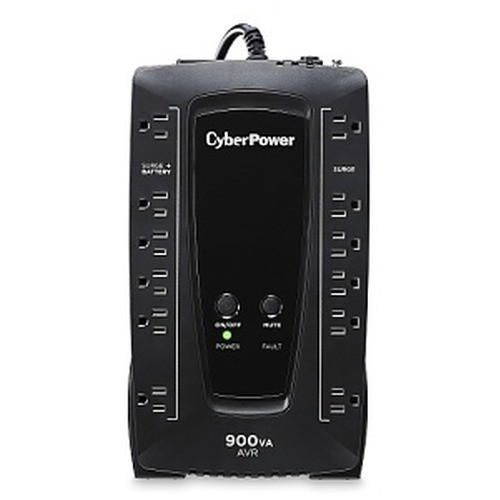
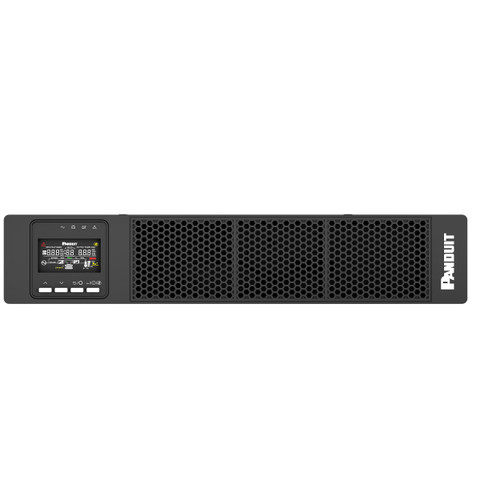
Both the CyberPower PR2000RT2UC and the Panduit U02S12V are 2000VA rack-mount line-interactive UPS units delivering pure sine wave output, placing them squarely in the same procurement tier for small-to-midsize server rooms, edge deployments, and enterprise rack installations. This comparison examines the three dimensions that most drive a buying decision for this class: power conditioning and electrical performance, physical and environmental integration, and standards compliance and manageability.
In This Guide
- How do the two units compare on power conditioning quality and electrical performance?
- How do the two units differ in physical form factor and rack integration?
- Which unit offers stronger standards compliance and manageability credentials?
- Which should you choose: the PR2000RT2UC or the U02S12V?
- Side-by-Side Specs
- FAQ
How do the two units compare on power conditioning quality and electrical performance?
Both units deliver pure sine wave output, making them safe for active PFC power supplies found in modern servers and network equipment. The CyberPower PR2000RT2UC provides a rated output of 2000 W at 2000 VA (power factor 1.0), with an input operating range of 75–149 V and input frequency tolerance of 47–63 Hz. Its surge energy rating is 2430 J, and its transfer time to battery is 6 ms. EMI/RFI filtering is explicitly listed in its specifications.
The Panduit U02S12V is rated at 2000 VA but its watt rating is not provided in the available specifications. It specifies a transfer time of under 4 ms — faster than the CyberPower's stated 6 ms — and total harmonic distortion below 3% THD, a spec absent from the CyberPower data sheet. Panduit also lists automatic AVR (Automatic Voltage Regulation) and frequency regulation of 60 Hz ± 0.1 Hz. The CyberPower's input window (75–149 V) and output voltage (120 V) are documented; equivalent input voltage range data is not provided for the Panduit.
How do the two units differ in physical form factor and rack integration?
Both units are 2U rack-mount devices designed for 19-inch EIA-310 racks. The Panduit U02S12V provides explicit dimensional data: 17.3 in (440 mm) wide and 3.4 in (86.5 mm) tall. Depth and weight are not listed in the available Panduit specifications. The CyberPower PR2000RT2UC is specified as a 2U unit and ships with a 10-foot input cord terminating in a 5-20P plug; its output receptacles are 8× NEMA 5-20R. Physical dimensions and weight are not provided in the available CyberPower specifications.
The Panduit U02S12V is positioned by its manufacturer for data center, edge, and enterprise MTDC (Multi-Tenant Data Center) environments, suggesting a hardened feature set for high-availability deployments. The CyberPower PR2000RT2UC includes cloud management capability ('Cloud' in the product name and SKU), though the specific cloud management platform, protocol details, and network interface type are not enumerated in the provided specifications. Noise level for the PR2000RT2UC is listed at 55.5 dB; no acoustic spec is provided for the U02S12V. Heat dissipation for the PR2000RT2UC is 124.5 BTU/h; this figure is absent from the Panduit spec set.
Which unit offers stronger standards compliance and manageability credentials?
The Panduit U02S12V carries UL 1778 and cUL certifications, which are the relevant North American safety standards for UPS equipment. It is marketed under Panduit's SteadySine™ sub-brand, implying a product line with defined reliability positioning. No additional certifications (e.g., Energy Star, ROHS, FCC) are listed in the available specifications.
The CyberPower PR2000RT2UC's available specifications do not list UL 1778 or any other safety certification, though such certifications are typical for products in this class — buyers should confirm with the manufacturer's full data sheet. The PR2000RT2UC does include audible alarms and EMI/RFI filtering as documented features. Its cloud management feature implies remote monitoring capability, but the management interface, SNMP support, and compatible software platforms are not detailed in the provided specifications. Neither unit's battery runtime, battery type, or battery replacement procedure is documented in the supplied spec sets.
Which should you choose: the PR2000RT2UC or the U02S12V?
Our take: The PR2000RT2UC is the stronger choice when full output watt rating, a wide input voltage window, and documented cloud manageability are priorities. It is the only unit here with a confirmed 2000 W real-power rating (power factor 1.0), an explicit 75–149 V input tolerance useful in environments with voltage sag, and a 2430 J surge rating. The U02S12V counters with a faster transfer time (<4 ms vs. 6 ms), a specified <3% THD figure, and UL 1778/cUL safety certifications that are documented in the provided specs — credentials relevant for data center compliance requirements. The Panduit's MTDC and enterprise positioning also suggests suitability for higher-availability environments. Buyers in regulated data centers or MTDC deployments where certification documentation is a procurement requirement will lean toward the U02S12V; those needing confirmed watt output, broad input tolerance, or remote cloud monitoring should favor the PR2000RT2UC pending Panduit watt and input-voltage spec confirmation.
Side-by-Side Comparison
Spec-for-spec, from manufacturer data.
| Specification | CyberPower PR2000RT2UC | Panduit U02S12V |
|---|---|---|
| UPS Topology | Line-Interactive | Line-Interactive (AVR) |
| Capacity (VA) | 2000 VA | 2000 VA |
| Output Power (Watts) | 2000 W | — |
| Power Factor | 1.0 | — |
| Output Waveform | Sine Wave | Pure Sine Wave |
| Transfer Time | 6 ms | <4 ms |
| Input Voltage Range | 75–149 V | — |
| Input Frequency | 47–63 Hz | — |
| Output Voltage | 120 V | — |
| Output Frequency | 50/60 Hz | 60 Hz ± 0.1 Hz |
| Total Harmonic Distortion | — | <3% THD |
| Surge Energy Rating | 2430 J | — |
| EMI/RFI Filtering | Yes | — |
| Safety Certification | — | UL 1778, cUL |
| Form Factor | 2U Rack-Mount | 2U Rack-Mount |
| Noise Level | 55.5 dB | — |
Frequently Asked Questions
Which should you choose: the PR2000RT2UC or the U02S12V?
The PR2000RT2UC is the stronger choice when full output watt rating, a wide input voltage window, and documented cloud manageability are priorities. It is the only unit here with a confirmed 2000 W real-power rating (power factor 1.0), an explicit 75–149 V input tolerance useful in environments with voltage sag, and a 2430 J surge rating. The U02S12V counters with a faster transfer time (<4 ms vs. 6 ms), a specified <3% THD figure, and UL 1778/cUL safety certifications that are documented in the provided specs — credentials relevant for data center compliance requirements. The Panduit's MTDC and enterprise positioning also suggests suitability for higher-availability environments. Buyers in regulated data centers or MTDC deployments where certification documentation is a procurement requirement will lean toward the U02S12V; those needing confirmed watt output, broad input tolerance, or remote cloud monitoring should favor the PR2000RT2UC pending Panduit watt and input-voltage spec confirmation.
Which unit has faster switchover to battery — the PR2000RT2UC or the U02S12V?
Based on the provided specifications, the Panduit U02S12V has a faster documented transfer time at under 4 ms, compared to the CyberPower PR2000RT2UC's stated 6 ms. Both are within the tolerance of most active-PFC server power supplies, but the U02S12V's margin is tighter and may matter in sensitive applications.
Does either unit carry UL 1778 safety certification?
The Panduit U02S12V explicitly lists UL 1778 and cUL in its provided specifications. The CyberPower PR2000RT2UC's provided specifications do not include a UL 1778 listing. Buyers with compliance requirements should request the full certification documentation from CyberPower directly before purchasing.
Which UPS is better suited for a multi-tenant data center (MTDC) deployment?
The Panduit U02S12V is explicitly positioned for Data Center, Edge, and Enterprise MTDC applications in its provided specifications, and it carries documented UL 1778/cUL certification and a <3% THD rating — all relevant to MTDC procurement standards. The CyberPower PR2000RT2UC does not specify MTDC suitability or THD in the provided specs, though it offers cloud management and a broader input voltage range. On the basis of the available specifications alone, the U02S12V is the more clearly positioned option for MTDC environments.
More UPS Comparisons
- APC by Schneider Electric SMX2000LV vs CyberPower PR2000RTXL2UC
- APC by Schneider Electric SMX2000LV vs CyberPower CP2000PFCRM2U
- APC by Schneider Electric SMX2000LV vs CyberPower PR2000RT2UCN
- APC by Schneider Electric SMX2000LV vs Middle Atlantic UPX-EXPANRUN-OL20
- APC by Schneider Electric SMX2000LV vs APC by Schneider Electric SMX2000LVNCUS
- APC by Schneider Electric SMX2000LV vs APC by Schneider Electric SMX2000RMLV2U
UPS Buying Guides
Get a Second Opinion on Your Camera Choice
Share your site layout, coverage goals, and budget. Our team will validate the camera selection, flag anything we would change, and recommend products that match the use case.