
APC by Schneider Electric SMX2000LV vs Middle Atlantic UPX-EXPANRUN-OL20: Specification Comparison
Both the APC Smart-UPS X SMX2000LV and the Middle Atlantic Nexsys UPX-EXPANRUN-OL20 are rack-mountable, 120 VAC input UPS units rated at or near 2000VA, targeting IT and physical-security infrastructure installations. The comparison centers on three decision-critical axes: power architecture and output capability, physical form factor and runtime expandability, and management and integration depth. The two units differ significantly in topology, output type, and intended deployment context, making this a genuine cross-shop for installers evaluating rack UPS options in this power class.
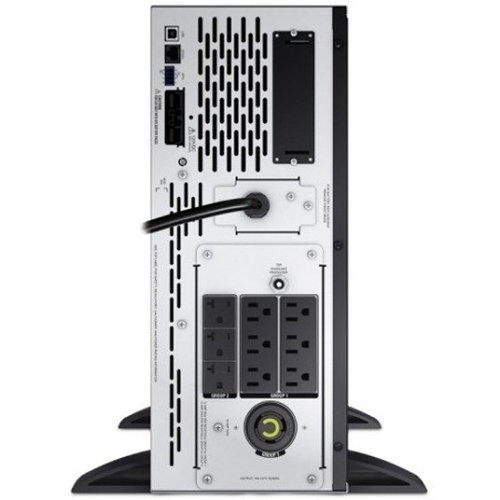
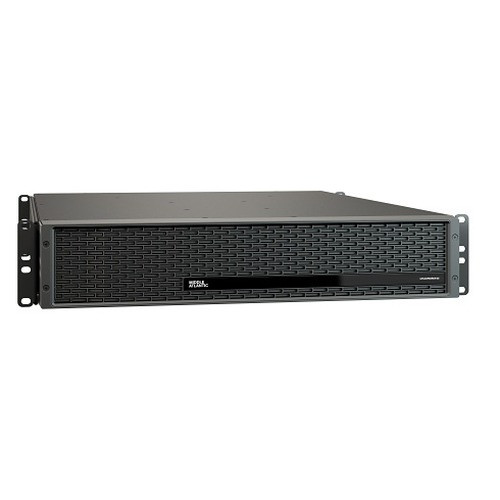
In This Guide
- What are the differences in power architecture, output capability, and load protection between the SMX2000LV and UPX-EXPANRUN-OL20?
- How do the two units compare in rack footprint, weight, and runtime expandability?
- Which unit offers more comprehensive monitoring, management, and software integration capabilities?
- Which should you choose: the SMX2000LV or the UPX-EXPANRUN-OL20?
- Side-by-Side Specs
- FAQ
What are the differences in power architecture, output capability, and load protection between the SMX2000LV and UPX-EXPANRUN-OL20?
The SMX2000LV uses a Line-Interactive topology with a sine wave output, rated at 1920VA / 1800W with 120V AC output across six NEMA 5-15R, three NEMA 5-20R, and one NEMA L5-20R receptacles. Transfer time is specified at 2–4 ms typical, 8 ms maximum. Input is via a NEMA 5-20P plug, and harmonic distortion is listed at less than 5%.
The UPX-EXPANRUN-OL20 uses an Online (double-conversion) topology, rated at 2000VA. Its AC output is 110–127 VAC at 15A via NEMA 5-15R receptacle(s), and it also exposes a 48 VDC output bus. Input is via a NEMA 5-15P plug. Online topology provides zero transfer time to battery since the load is continuously powered from the inverter. Wattage (W) rating is not specified in the provided specs for the UPX-EXPANRUN-OL20.
Key distinction: the SMX2000LV provides a higher confirmed watt rating (1800W) and a wider receptacle mix, while the UPX-EXPANRUN-OL20's Online topology eliminates transfer-time risk entirely. The 48 VDC output on the Middle Atlantic unit is notable for AV and security panel loads that accept DC directly, but its continuous watt capacity is not stated in the provided specs.
How do the two units compare in rack footprint, weight, and runtime expandability?
The SMX2000LV occupies 4U of rack space and weighs 85.0 lbs (38.64 kg). Its internal battery delivers 690 VAh at a 229W rated load. The unit supports external battery expansion via SMX120BP modules: one module adds 2,070 VAh, scaling to 14,490 VAh with ten modules. Internal battery life is specified at 3–5 years, with a typical recharge time of 3 hours and a replacement battery cross-reference of APCRBC143. Power cord is 8 ft (2.44 m) with a NEMA 5-20P plug.
The UPX-EXPANRUN-OL20 occupies 2U and weighs 63.9 lbs (29 kg), making it physically lighter and shallower (16 in / 40.6 cm depth vs. the APC's shipping depth of approximately 24.94 in). Power cord is 6 ft (1.8 m) with a NEMA 5-15P plug. The product name includes 'RUN Time Unit,' and the model number contains 'EXPANRUN,' suggesting this unit is itself a runtime expansion module within the Nexsys ecosystem, though the spec set does not explicitly document a standalone internal battery runtime figure or an external expansion module path beyond the base unit.
For installations with tight rack space budgets, the UPX-EXPANRUN-OL20's 2U footprint is a clear advantage. For installations requiring documented, scalable extended runtime, the SMX2000LV's published expansion matrix (up to 14,490 VAh via chained modules) provides a concrete upgrade path.
Which unit offers more comprehensive monitoring, management, and software integration capabilities?
The SMX2000LV provides a multi-function LCD front panel displaying UPS status, load percentage, battery state, configuration menus, and diagnostics, supplemented by LED indicators for online, on-battery, replace-battery, overload, and fault states. Communication interfaces include USB (HID-compliant), DB9 RS-232, an EPO (Emergency Power Off) contact closure, and one SmartSlot expansion slot for optional network management cards. With a network card installed, the unit supports SNMP and web-based monitoring, APC PowerChute Network Shutdown software, remote access, event logging, and firmware updates.
The UPX-EXPANRUN-OL20's spec set lists 'NEXSYS UPS' as a special feature and references FCC, RoHS, and patent certifications. No front-panel display, communication interface types, software compatibility, SNMP support, remote monitoring capability, or management port specifications are documented in the provided specs. TAA compliance is listed as No.
For installations requiring documented SNMP integration, shutdown software, or remote monitoring, the SMX2000LV provides a fully specified management stack. The UPX-EXPANRUN-OL20's management and integration capabilities cannot be assessed from the provided spec data.
Which should you choose: the SMX2000LV or the UPX-EXPANRUN-OL20?
Our take: The SMX2000LV is the stronger choice when documented management depth, a confirmed watt rating, and a scalable extended-runtime path are required. It specifies 1800W continuous output, a 2–4 ms transfer time, USB/RS-232/SmartSlot interfaces, SNMP-capable expansion, and a published battery expansion matrix scaling from 690 VAh to 14,490 VAh. The UPX-EXPANRUN-OL20 holds three concrete advantages: Online (double-conversion) topology eliminates transfer time entirely, its 2U footprint saves two rack units over the SMX2000LV's 4U, and its 48 VDC output bus serves security panels and AV equipment that accept DC directly. However, continuous watt rating, runtime figures, and management interface specs are absent from the provided data for the Middle Atlantic unit. Installers protecting sensitive loads that cannot tolerate any transfer gap should weight the Online topology heavily; integrators needing auditable remote monitoring and expandable runtime with full spec documentation should weight the SMX2000LV's published capabilities.
Side-by-Side Comparison
Spec-for-spec, from manufacturer data.
| Specification | APC by Schneider Electric SMX2000LV | Middle Atlantic UPX-EXPANRUN-OL20 |
|---|---|---|
| VA Rating | 1920 VA | 2000 VA |
| Watt Rating | 1800 W | Not specified in provided specs |
| UPS Topology | Line-Interactive | Online (double-conversion) |
| Transfer Time | 2–4 ms typical, 8 ms max | Zero (Online topology) |
| Input Voltage | 120 V (also 100/110/127 V) | 120 VAC |
| Input Plug | NEMA 5-20P | NEMA 5-15P |
| AC Output Voltage | 120 V (also 100/110/127 V) | 110–127 VAC |
| DC Output | — | 48 VDC |
| Output Receptacles | (6) NEMA 5-15R, (3) NEMA 5-20R, (1) NEMA L5-20R | NEMA 5-15R (quantity not specified) |
| Rack Units | 4U | 2U |
| Weight | 85.0 lbs (38.64 kg) | 63.9 lbs (29 kg) |
| Depth | Not specified (shipping depth 24.94 in) | 16 in (40.6 cm) |
| Power Cord Length | 8 ft (2.44 m) | 6 ft (1.8 m) |
| Runtime Expandability | Yes — SMX120BP modules, up to 14,490 VAh documented | Not specified in provided specs |
| Communication Interfaces | USB (HID), RS-232 (DB9), SmartSlot, EPO contact closure | Not specified in provided specs |
| Output Frequency | 50/60 Hz ±3 Hz (sync to mains) | Not specified in provided specs |
| Operating Temperature | Not specified in provided specs (storage: 5–113°F) | 32°–104°F (0°–40°C) |
| TAA Compliant | Not specified in provided specs | No |
| Wave Form | Sine wave | Not specified in provided specs |
| Acoustic Level | 55 dBA | Not specified in provided specs |
Frequently Asked Questions
Which should you choose: the SMX2000LV or the UPX-EXPANRUN-OL20?
The SMX2000LV is the stronger choice when documented management depth, a confirmed watt rating, and a scalable extended-runtime path are required. It specifies 1800W continuous output, a 2–4 ms transfer time, USB/RS-232/SmartSlot interfaces, SNMP-capable expansion, and a published battery expansion matrix scaling from 690 VAh to 14,490 VAh. The UPX-EXPANRUN-OL20 holds three concrete advantages: Online (double-conversion) topology eliminates transfer time entirely, its 2U footprint saves two rack units over the SMX2000LV's 4U, and its 48 VDC output bus serves security panels and AV equipment that accept DC directly. However, continuous watt rating, runtime figures, and management interface specs are absent from the provided data for the Middle Atlantic unit. Installers protecting sensitive loads that cannot tolerate any transfer gap should weight the Online topology heavily; integrators needing auditable remote monitoring and expandable runtime with full spec documentation should weight the SMX2000LV's published capabilities.
Is the SMX2000LV or UPX-EXPANRUN-OL20 better for installations where transfer time to battery must be zero?
The UPX-EXPANRUN-OL20 uses an Online (double-conversion) topology, which continuously powers the load from the inverter — transfer time is effectively zero. The SMX2000LV is Line-Interactive with a specified transfer time of 2–4 ms typical and 8 ms maximum. For loads that cannot tolerate any power interruption, the UPX-EXPANRUN-OL20's topology is the architecturally correct choice based on the provided specs.
Which unit is easier to scale for longer runtimes as my rack load grows?
The SMX2000LV has a fully documented external battery expansion path: up to ten SMX120BP battery modules can be chained, scaling from a base 690 VAh up to 14,490 VAh, with each module's runtime contribution listed in the specs. The UPX-EXPANRUN-OL20's spec set does not document an equivalent expansion matrix or standalone runtime figure in the provided data, so its extended-runtime scalability cannot be confirmed from specs alone.
Can either unit integrate with SNMP-based monitoring platforms or shutdown software for IT environments?
The SMX2000LV supports SNMP and web monitoring via an optional network management card installed in its SmartSlot, and it is explicitly compatible with APC PowerChute Network Shutdown software. USB (HID-compliant) and RS-232 interfaces are built in. The UPX-EXPANRUN-OL20's provided specs do not list any communication interfaces, SNMP support, or software compatibility, so IT monitoring integration capability cannot be confirmed from the available spec data.
More UPS Comparisons
- APC by Schneider Electric SMX2000LV vs CyberPower PR2000RTXL2UC
- APC by Schneider Electric SMX2000LV vs CyberPower CP2000PFCRM2U
- APC by Schneider Electric SMX2000LV vs CyberPower PR2000RT2UCN
- APC by Schneider Electric SMX2000LV vs APC by Schneider Electric SMX2000LVNCUS
- APC by Schneider Electric SMX2000LV vs APC by Schneider Electric SMX2000RMLV2U
- CyberPower PR2000RTXL2UC vs Middle Atlantic UPX-EXPANRUN-OL20
UPS Buying Guides
Get a Second Opinion on Your Camera Choice
Share your site layout, coverage goals, and budget. Our team will validate the camera selection, flag anything we would change, and recommend products that match the use case.